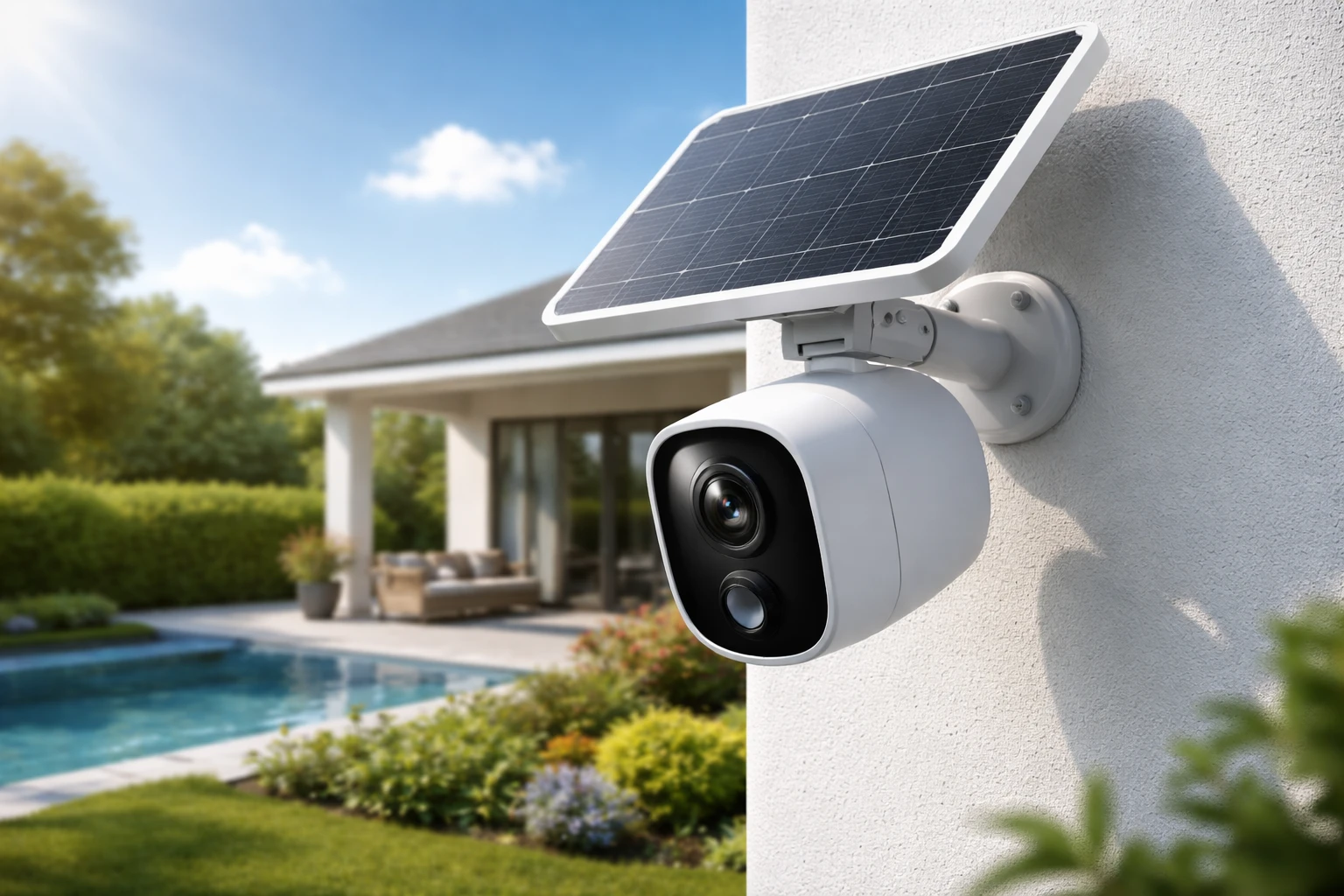
The Best Solar Security Cameras 2026 are no longer niche gadgets—they’re quickly becoming the smartest way to secure homes, businesses, and remote properties without the headache of wiring. I’ve tested a lot of cameras over the years, and one thing is clear: solar-powered options have finally matured. They’re reliable. They’re efficient. And when set up correctly, they practically run themselves.
In this guide, I’ll break down the Best Solar Security Cameras 2026, show you how they actually perform in real-world conditions, and help you choose the right one without wasting money. No fluff. Just practical, actionable insight.
Our Top Picks for 2026 (Quick Comparison)
Before we dive deep, here’s a quick snapshot of the top performers.
| Camera | Resolution | Connectivity | Solar Efficiency | Best For | Price Range |
| Reolink Argus 3 Pro | 2K | WiFi | Excellent | All-around use | Mid |
| Eufy SoloCam S340 | 3K (dual lens) | WiFi | Very Good | Budget buyers | Low |
| Reolink Go Plus | 2K | 4G LTE | Excellent | No WiFi areas | Mid-High |
These are not random picks. They earned their place through consistent performance, not marketing claims.
Best Solar Security Cameras 2026 (In-Depth Reviews)
Best Overall: Reolink Argus 3 Pro
If you want one camera that does almost everything right, this is it.
The Reolink Argus 3 Pro strikes a balance that most brands struggle to hit. Sharp video, dependable solar charging, and stable connectivity. It just works.
What stands out immediately is the clarity. The 2K resolution gives you enough detail to identify faces, license plates (at reasonable distances), and movement patterns without straining.
The solar panel is efficient. Even with moderate sunlight, it keeps the battery topped up. That means fewer interruptions and less maintenance.
Why it wins:
- Reliable solar charging even in partial sunlight
- Strong motion detection with fewer false alerts
- Dual-band WiFi improves connection stability
Where it falls short:
- App interface could be smoother
- Night color mode depends on lighting conditions
Best for: Homeowners who want a “set it and forget it” solution.
Best Budget: Eufy SoloCam S340
This camera punches above its weight. Seriously.
The Eufy SoloCam S340 delivers impressive performance at a lower price point, and it doesn’t feel like a compromise. The dual-lens system adds flexibility, allowing you to capture wider scenes while still zooming into details.
The solar panel isn’t massive, but it’s efficient enough for most environments. If you’re getting decent sunlight, you’ll rarely need to recharge manually.
What makes it special:
- 3K resolution with dual-lens tracking
- No subscription required for core features
- Strong value for the price
Trade-offs:
- Slightly weaker performance in low-light conditions
- Limited advanced customization
Best for: Budget-conscious users who still want modern features.
Best for No WiFi: Reolink Go Plus
No WiFi? No problem.
The Reolink Go Plus is built for places where traditional cameras simply don’t work. Farms, construction sites, vacation homes—this is where it shines.
It uses 4G LTE instead of WiFi, which means you can install it almost anywhere. Pair it with a solar panel, and you’ve got a fully independent security system.
Key strengths:
- Works without WiFi using LTE
- Strong battery + solar combination
- Solid video quality for remote monitoring
Limitations:
- Requires a data plan
- Slight delay in live view compared to WiFi
Best for: Off-grid locations and remote properties.
Other Notable Mentions
Not every great camera makes the top three, but these deserve attention:
- Arlo Go 2 LTE – Premium build with flexible connectivity
- TP-Link Tapo C420 – Great ecosystem integration
- EufyCam S330 – Long battery life and strong ecosystem
They’re solid options. Just not as well-rounded as the top picks.
How We Test Solar Cameras
Anyone can read specs. That’s easy. Real testing? That’s where things get interesting.
Real-World Testing Conditions
We install cameras the way actual users would. No ideal setups. No perfect sunlight angles.
- Mounted on walls, fences, and rooftops
- Tested in heat, rain, and cloudy conditions
- Monitored over extended periods
This matters because solar performance changes drastically outside lab conditions.
Key Testing Criteria
We evaluate each camera based on what actually impacts daily use:
1. Video Quality
- Day clarity vs night clarity
- Motion sharpness
- Detail retention
2. Motion Detection
- Accuracy of alerts
- False alarm frequency
- Detection range
3. Battery vs Solar Performance
- How fast it charges
- How long it lasts without sunlight
- Consistency over time
4. Connectivity
- WiFi stability
- LTE reliability
- App responsiveness
5. User Experience
- Ease of setup
- App usability
- Notification clarity
Solar Performance Testing
This is where many cameras fail.
We specifically measure:
- Minimum sunlight needed for daily operation
- Charging rate under partial sunlight
- Battery drain during heavy activity
Some cameras claim “infinite power.” That’s rarely true. Realistically, you need 2–4 hours of decent sunlight per day for consistent performance.
Durability & Reliability
Weather matters. A lot.
We check:
- IP ratings for water resistance
- Long-term exposure to heat and moisture
- Build quality under stress
If a camera can’t survive outdoors, it doesn’t belong on this list.
Buyer’s Guide: How to Choose the Best Solar Security Camera
Choosing from the Best Solar Security Cameras 2026 isn’t about picking the most expensive model. It’s about matching the camera to your environment.
1. Video Quality Matters More Than You Think
Don’t settle for basic resolution.
- 1080p = acceptable
- 2K = ideal balance
- 3K+ = best for detail
Higher resolution means better identification. That’s the whole point of security.
2. Solar Panel Efficiency
This is the backbone of your system.
A weak panel means constant recharging. A strong one means independence.
Look for:
- Adjustable panel angle
- High conversion efficiency
- Compatibility with external panels
3. Battery Capacity
Solar doesn’t replace the battery—it supports it.
You still need enough backup for cloudy days.
Rule of thumb:
- Light use → smaller battery is fine
- High traffic areas → go bigger
4. Connectivity Options
This is where many buyers make mistakes.
| Option | Best For | Limitations |
| WiFi | Homes with stable internet | Limited range |
| LTE | Remote areas | Requires data plan |
If you don’t have reliable WiFi, don’t force it. Go LTE.
5. Storage Options
Storage affects long-term costs.
- Local storage = no monthly fees
- Cloud storage = more convenience
Choose based on your preference for control vs accessibility.
6. Smart Features & Detection
Modern cameras are smarter than ever.
Look for:
- Person detection
- Vehicle detection
- Custom alert zones
These reduce unnecessary alerts and improve usability.
7. Installation & Placement
Even the Best Solar Security Cameras 2026 will fail if installed poorly.
Best practices:
- Place panels facing direct sunlight
- Avoid shaded areas
- Mount cameras at optimal angles
Small adjustments can make a big difference.
Solar vs Wired Security Cameras
Let’s keep it simple.
| Feature | Solar Cameras | Wired Cameras |
| Installation | Easy | Complex |
| Maintenance | Low | Moderate |
| Flexibility | High | Limited |
| Reliability | Depends on sunlight | Very stable |
Solar wins on convenience. Wired still wins on consistency.
Common Mistakes to Avoid
I see these mistakes all the time.
Don’t make them.
- Installing panels in shaded areas
- Ignoring battery size
- Choosing WiFi cameras for remote locations
- Overlooking storage costs
Fix these early, and your system will run smoothly.
Who Should Buy a Solar Security Camera in 2026?
Solar cameras aren’t for everyone—but they’re perfect for many.
They’re ideal for:
- Homeowners wanting easy installation
- Renters who can’t run wires
- Rural property owners
- Business owners needing flexible setups
If you value simplicity and flexibility, solar is hard to beat.
Final Verdict
The Best Solar Security Cameras 2026 deliver something that felt unrealistic just a few years ago: reliable, wire-free security with minimal upkeep.
If you want the safest bet, go with the Reolink Argus 3 Pro. It’s balanced, dependable, and proven.
If budget matters, the Eufy SoloCam S340 gives you impressive performance without overspending.
And if you’re off-grid, the Reolink Go Plus is the clear winner.
Choose based on your environment. That’s the real secret.
Get the right setup, and your camera will quietly do its job—day after day, powered by nothing but sunlight.
FAQs
They use built-in batteries that recharge through a connected solar panel, allowing continuous operation without wired power.
Yes, they run on stored battery power and use infrared or spotlight night vision to capture footage in low light.
Most need about 2–4 hours of direct sunlight per day to maintain consistent performance.
Yes, but performance depends on battery capacity; larger batteries handle multiple cloudy days better.
Yes, models like LTE cameras use cellular networks instead of WiFi, making them ideal for remote areas.
Very little—just occasional cleaning of the solar panel and checking battery health.
Higher resolution isn’t required, but it significantly improves image clarity and identification.
Only if you choose cloud storage; many cameras offer free local storage with no subscription.
Install it in a location with direct sunlight and a clear view of the area you want to monitor.
Yes, the Best Solar Security Cameras 2026 offer reliable, low-maintenance security with easy installation.