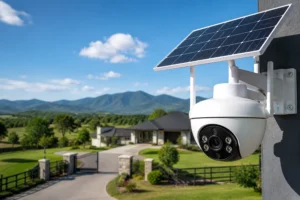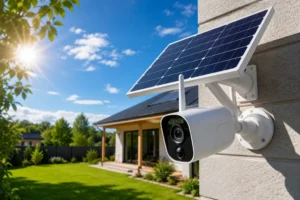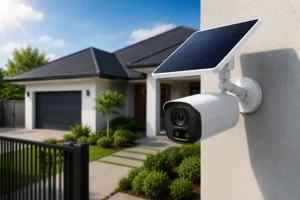
Cold weather changes everything. Batteries drain faster. Sunlight fades earlier. Snow shows up uninvited. So it’s only fair to ask: Do solar cameras work in winter?
Short answer? Yes—they do. But not the same way they do in summer. And if you expect them to perform without adjustments, you’re setting yourself up for frustration.
Let’s break it down properly. No fluff. Just what actually matters.
How Solar Cameras Work (Quick Breakdown)
At their core, solar cameras are simple systems built around three essential components:
- A solar panel that captures sunlight
- A rechargeable battery that stores energy
- The camera unit that uses that stored power
During the day, sunlight hits the panel. Energy gets converted and stored in the battery. At night—or during cloudy periods—the camera runs on that stored power.
That’s the magic. And also the limitation.
Because once winter arrives, the balance between energy collected and energy used shifts.
What Changes in Winter?
Winter isn’t just colder. It’s less forgiving.
Shorter Days and Reduced Sunlight
Daylight shrinks. Fast.
Instead of long, bright summer days, you’re dealing with limited charging windows. Sometimes just a few hours. Add cloud cover, and that window gets even tighter.
Less sunlight = less energy stored. Simple math.
Lower Sun Angle
The sun sits lower in the sky during winter. That affects how directly sunlight hits your solar panel.
A poorly angled panel might miss most of that light. You’re not just losing hours—you’re losing efficiency.
Snow and Ice Coverage
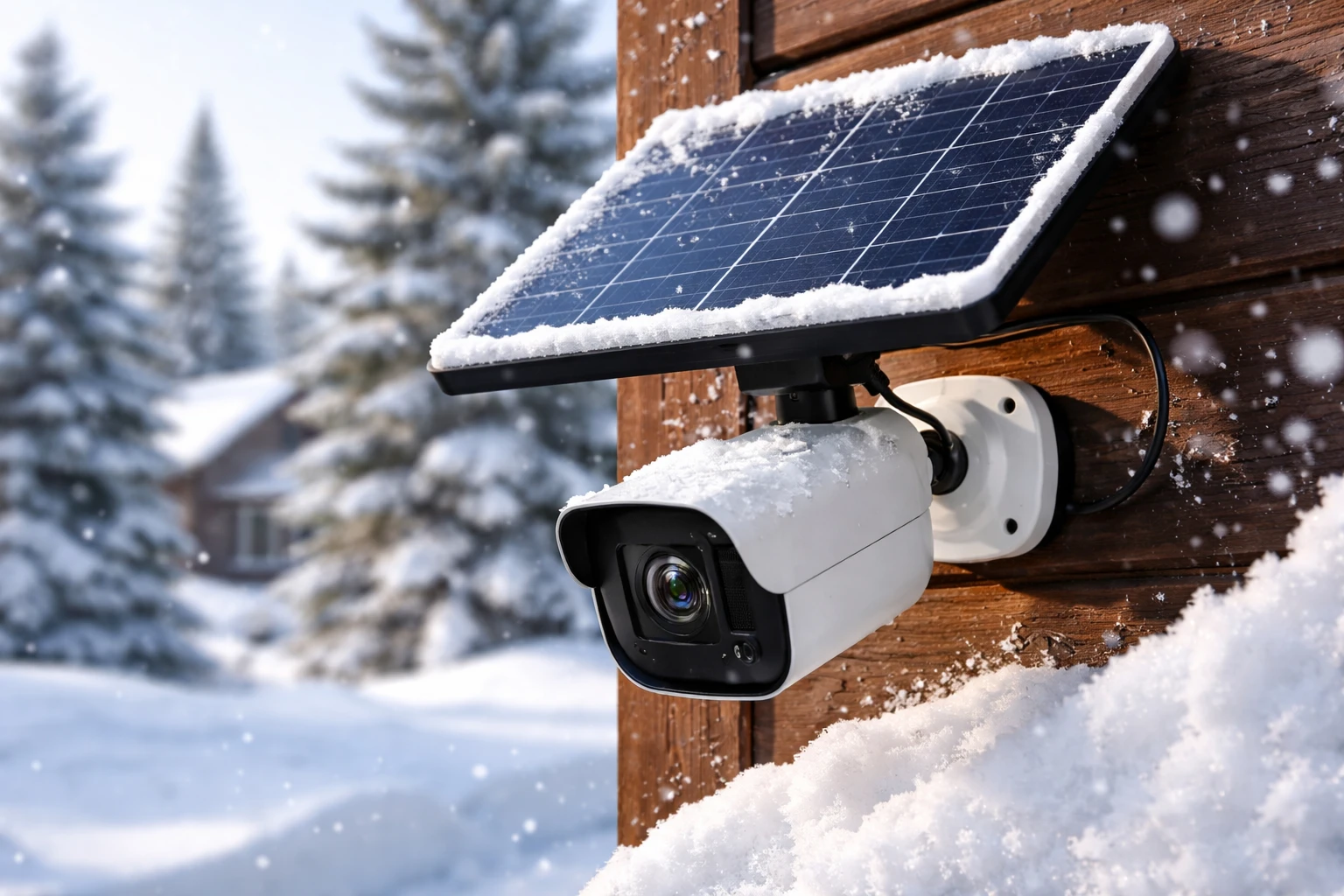
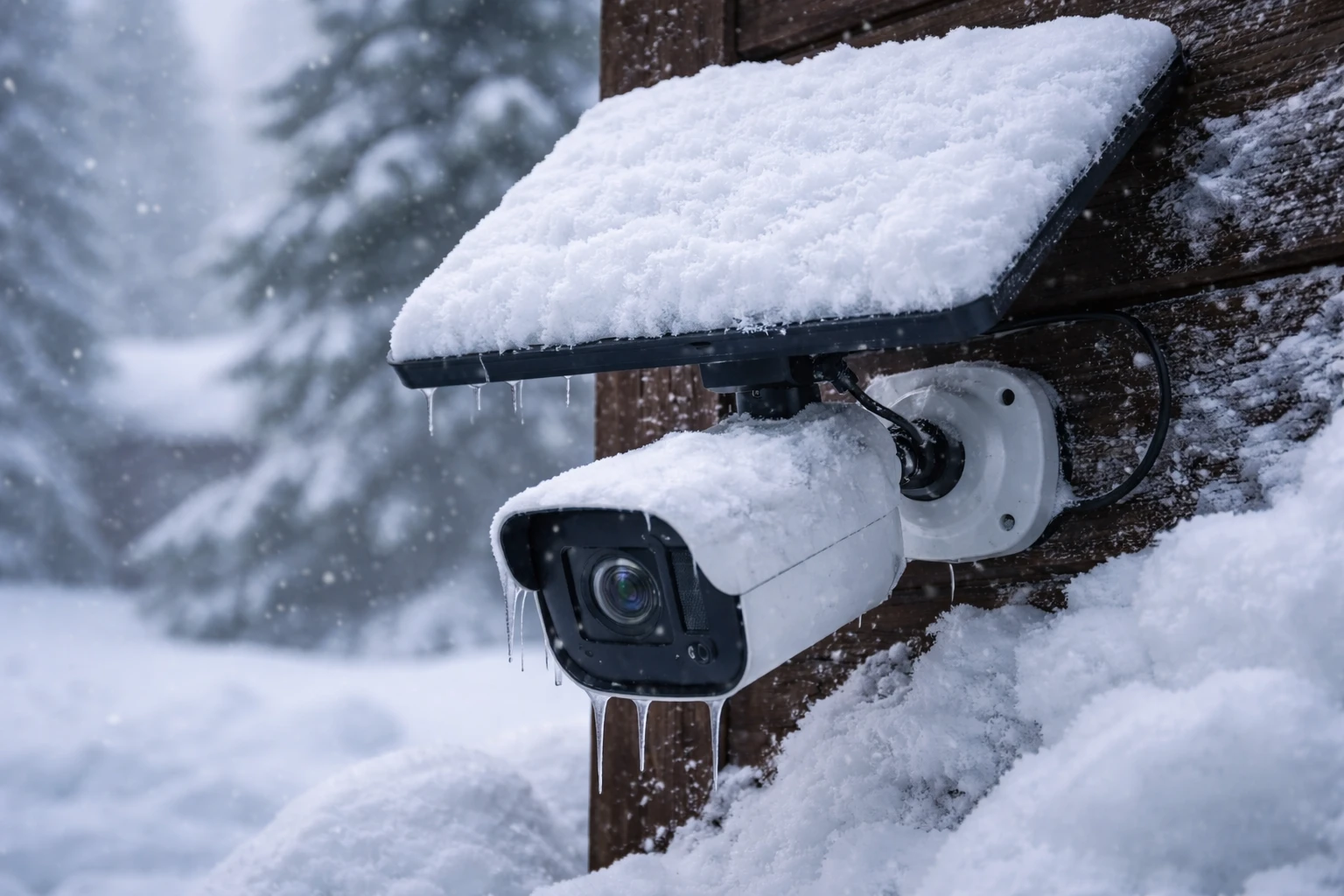
Here’s the obvious one. Snow builds up on panels. Ice sticks around.
And when your panel is covered, it’s basically offline. No sunlight gets through. No charging happens.
That’s not a defect. It’s physics.
Do Solar Cameras Work in Winter? (The Real Answer)
So, do solar cameras work in winter? Yes—but with conditions.
They work best when:
- They get consistent sunlight exposure
- The battery is strong and well-maintained
- The camera isn’t overworking itself
They struggle when:
- Sunlight is limited for extended periods
- Temperatures drop too low
- The panel is blocked or poorly positioned
Think of it this way. In summer, solar cameras run effortlessly. In winter, they rely heavily on stored energy and smart setup.
Battery Performance in Cold Weather
This is where most people underestimate the problem.
How Cold Affects Batteries
Cold temperatures slow down chemical reactions inside batteries. That means:
- Reduced capacity
- Faster apparent drain
- Slower charging
Even if your panel is getting sunlight, the battery might not store energy efficiently.
Battery Types Matter
Not all batteries are equal. Here’s a quick comparison:
| Battery Type | Winter Performance | Notes |
| Lithium-ion | Moderate | Common but less efficient in extreme cold |
| LiFePO4 (Lithium Iron Phosphate) | Strong | Better stability and cold tolerance |
If winter performance matters, battery type is not optional. It’s critical.
Extreme Cold Scenarios
At very low temperatures, some batteries stop charging entirely. Others may shut down temporarily to protect themselves.
That’s when users think their camera “stopped working.”
It didn’t fail. It paused.
Key Factors That Determine Winter Performance
Not all setups behave the same. These variables make a huge difference.
1. Geographic Location
Where you live matters. A lot.
- Northern regions: Less sunlight, harsher winters
- Southern regions: Milder conditions, better performance
If you’re in a snow-heavy area, expect limitations.
2. Sunlight Exposure
Full sun beats partial shade. Always.
Even a few hours of direct sunlight can keep a system running. But shaded installations? Those struggle fast.
3. Camera Activity Level
Every motion alert costs energy.
More triggers = faster battery drain.
If your camera is in a high-traffic area, winter performance will drop faster than expected.
4. Panel Size and Efficiency
Bigger panels collect more energy. Higher efficiency panels make better use of weak sunlight.
This is one of the easiest upgrades—and one of the most overlooked.
Realistic Expectations During Winter
Let’s reset expectations.
Solar cameras in winter:
- May not run continuously without interruption
- Might experience downtime during long cloudy periods
- Often rely on battery reserves more than live charging
That doesn’t mean they’re unreliable. It means they need support.
How to Improve Solar Camera Performance in Winter
Here’s where you take control. Small adjustments can make a big difference.
Optimize Panel Placement
Angle your panel toward the winter sun. That usually means a steeper tilt than summer setups.
Avoid shade. Even partial obstruction matters more in winter.
Keep Panels Clean
Snow doesn’t slide off automatically.
Make it a habit:
- Brush off snow
- Remove ice carefully
- Check after storms
A clean panel = active charging.
Upgrade Your Solar Setup
Consider:
- Larger panels
- Dual-panel configurations
- Higher efficiency models
More input equals more stability.
Adjust Camera Settings
This is underrated.
Reduce energy usage by:
- Lowering motion sensitivity
- Shortening recording clips
- Limiting notifications
You don’t need maximum performance all the time.
Choose the Right Camera
Some cameras are built for cold weather. Others aren’t.
Look for:
- Wide operating temperature ranges
- High-capacity batteries
- Efficient power management systems
Don’t assume all models are equal.
Best Use Cases for Solar Cameras in Winter
Solar cameras can still shine—if used correctly.
Ideal scenarios:
- Areas with moderate winter sunlight
- Backup security systems
- Low-traffic monitoring zones
They’re great for flexibility. Just not always for high-demand environments in harsh climates.
When Solar Cameras May Struggle
Let’s be honest. There are limits.
You may face issues if:
- Snow covers panels for days
- Cloudy weather persists
- Temperatures drop far below freezing
- The camera is constantly triggered
In these cases, performance drops noticeably.
Alternatives to Consider
If winter conditions are extreme, you might need a backup plan.
Options include:
- Wired security cameras (consistent power)
- Hybrid systems (solar + wired charging)
- Battery-powered units with manual charging
It’s not about replacing solar. It’s about reinforcing it.
Pros and Cons of Solar Cameras in Winter
Let’s summarize clearly.
Pros
- No wiring required
- Flexible installation
- Eco-friendly power source
- Long-term cost savings
Cons
- Dependent on sunlight
- Reduced efficiency in cold weather
- Requires maintenance (cleaning, positioning)
- Performance varies by location
Common Myths About Solar Cameras in Winter
Let’s clear the noise.
“They don’t work at all in winter”
False. They work—but not passively. Setup matters.
“Snow always ruins performance”
Not always. Only when it blocks the panel.
“Cloudy days mean zero charging”
Also false. Panels still generate power—just less of it.
Final Verdict: Are Solar Cameras Worth It in Winter?
So, do solar cameras work in winter? Yes. But they demand attention.
If you install them correctly, maintain them regularly, and adjust your expectations, they can perform surprisingly well—even in colder months.
If you ignore those factors? You’ll see inconsistent results.
Here’s my take.
Solar cameras are not a “set it and forget it” solution in winter. They’re a system. And like any system, they need tuning.
Do that—and they’ll keep watching, even when the temperature drops.
Ignore it—and you’ll be troubleshooting in the cold.
Choose wisely.
FAQs
They can run temporarily on stored battery power, but extended periods without sunlight will eventually drain the system.
Yes, but charging is slower and less efficient, which can impact overall performance over time.
It depends on usage and battery size, but most can last a few days to a couple of weeks without strong sunlight.
Snow can block the solar panel, preventing charging, but the camera will still operate until the battery runs out.
Many models operate down to around -4°F (-20°C), but performance may drop significantly in extreme cold.
Yes, solar panels still generate energy in winter, though at a reduced rate due to weaker sunlight.
Adjust panel angle, keep it clean, reduce camera activity, and ensure it gets maximum sunlight exposure.
In some cases, yes—especially during long periods of snow or heavy cloud cover.
They can be, but they require regular maintenance and may need supplemental power solutions.
It depends—solar cameras offer flexibility, while wired systems provide more consistent power in harsh conditions.