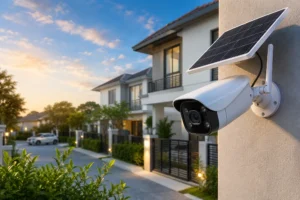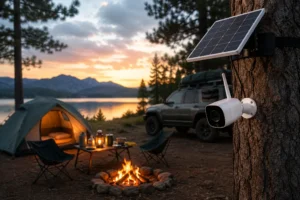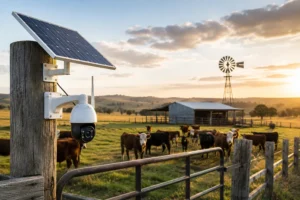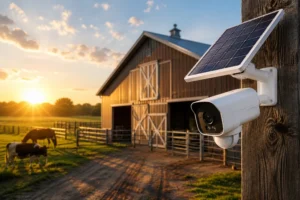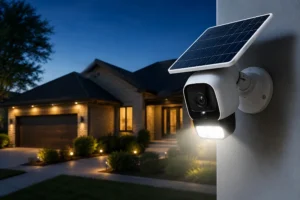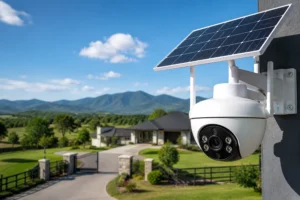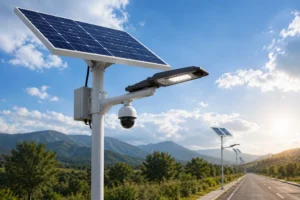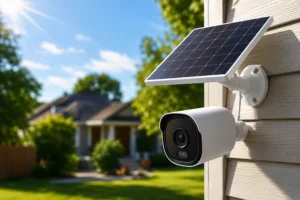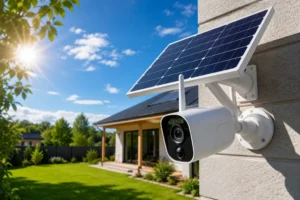
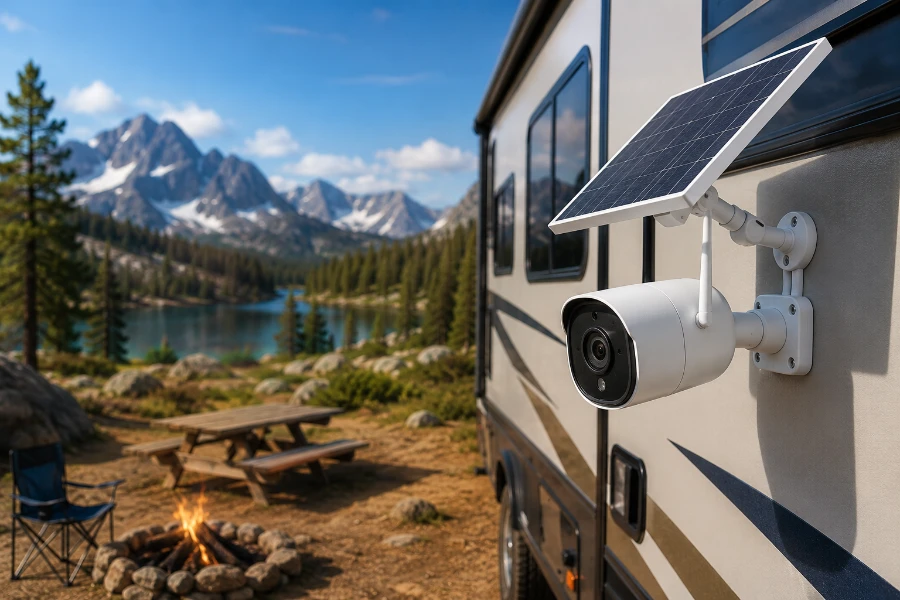
Traveling with a camper gives you freedom. Freedom to park beside lakes, disappear into mountain forests, stay overnight in desert pull-offs, or spend weeks exploring unfamiliar places. But freedom also creates a challenge. Security.
That is exactly why interest in a camper security camera solar setup has exploded among RV owners, van lifers, trailer travelers, and weekend campers. People want reliable surveillance without depending on campground electricity, extension cords, or complicated wiring.
And honestly, it makes sense.
A solar-powered camper security system works quietly in the background while you sleep, hike, fish, shop, or explore nearby towns. It can monitor your trailer door, protect expensive gear, watch storage compartments, and even help you check on pets inside the camper from miles away.
Modern systems are smarter than most people expect. Some use LTE connections instead of campground WiFi. Others include AI motion detection, color night vision, two-way audio, and weather-resistant solar panels designed for year-round outdoor use.
The best part?
Most camper owners can install one in under an hour.
Why Camper Security Matters More Than Ever
Campers are valuable. Not just the vehicle itself, but everything inside it.
Generators, batteries, tools, portable grills, bikes, fishing equipment, laptops, cooking gear, and solar equipment can disappear quickly in the wrong environment. Even quiet campgrounds are not immune to theft.
And unlike a traditional home, campers are often left unattended for long periods.
You may leave for:
- Hiking trips
- Grocery runs
- Beach days
- National park visits
- Long travel stops
- Fuel station breaks
That creates opportunities for theft or vandalism.
A camper security camera solar system helps close that gap.
Visible cameras alone can discourage suspicious activity. Motion alerts add another layer of awareness. Real-time video access allows owners to check their camper anytime from their phone.
That peace of mind matters more than people realize.
Why Solar Cameras Make Sense for Campers
Traditional wired security systems work fine for houses. Campers are different.
You are dealing with:
- Limited battery power
- Constant movement
- Tight spaces
- Remote parking areas
- Off-grid locations
- Weather exposure
A wired camera system often becomes frustrating fast.
Solar cameras solve several major problems immediately.
No Constant Charging
This is huge.
A properly positioned solar panel keeps the camera battery charged during daylight hours. That means less maintenance and fewer dead cameras during trips.
Modern solar charging systems rely heavily on Photovoltaics technology, which converts sunlight into electrical energy that can continuously recharge the camera battery throughout the day.
Easier Installation
No drilling through walls for long power cables.
No routing complicated wiring through cabinets.
Most solar camper cameras use simple mounting brackets and wireless apps for setup.
Better Off-Grid Capability
Many RV travelers camp far away from stable power sources.
A camper security camera solar setup continues working even when shore power is unavailable.
That flexibility is one of the biggest advantages.
What Makes a Good Camper Security Camera Solar System?
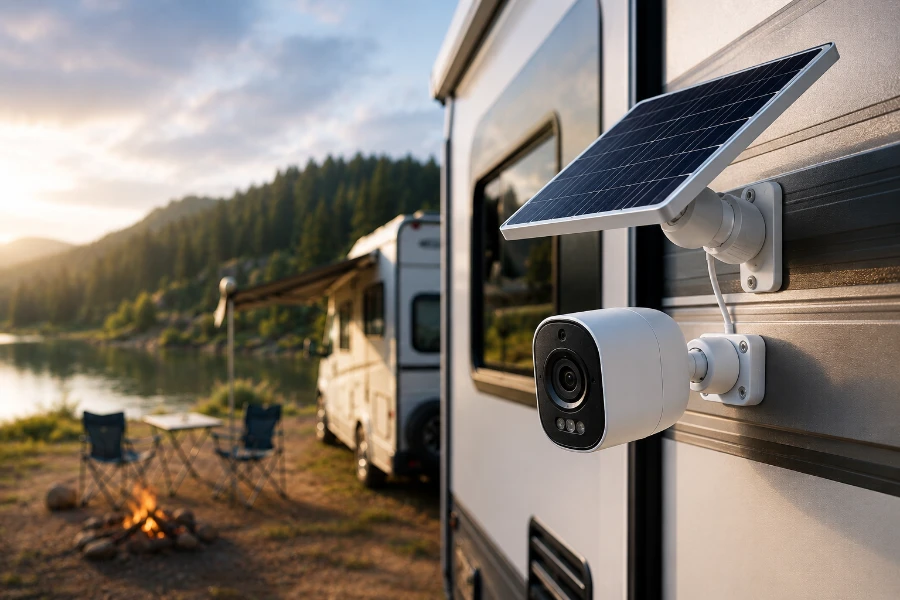
Not all cameras perform equally outdoors.
Some work great in suburban homes but struggle badly in remote campsites.
When choosing a system, I recommend focusing on practical performance instead of flashy marketing terms.
Video Quality
Poor video is nearly useless after dark.
At minimum, choose a 1080p camera. Many newer systems now offer 2K resolution, which provides noticeably sharper detail for license plates, faces, and movement around the camper.
Here is a quick comparison:
| Resolution | Image Quality | Best Use |
| 1080p | Good | Basic monitoring |
| 2K | Very sharp | Most camper setups |
| 4K | Extremely detailed | Large RV sites |
For most travelers, 2K is the sweet spot.
Night Vision Performance
Campers are most vulnerable at night.
Look for cameras with:
- Infrared night vision
- Spotlight capability
- Color night vision
- Wide dynamic range
Color night vision can make a massive difference in identifying clothing, vehicles, or suspicious movement.
Motion Detection
Cheap motion sensors trigger constantly.
Leaves move. Bugs fly. Shadows shift.
A better camper security camera solar system uses smart detection technology that can distinguish between:
- Humans
- Animals
- Vehicles
- General movement
That reduces false alerts dramatically.
Cellular Cameras vs WiFi Cameras
This is one of the most important decisions camper owners make.
WiFi Cameras
WiFi models are usually cheaper and work well in established campgrounds.
But campground WiFi is notoriously unreliable.
Signal strength changes constantly. Speeds fluctuate. Some campgrounds barely support basic browsing, let alone video streaming.
LTE Solar Cameras
LTE cameras use SIM cards and cellular networks.
That means they work almost anywhere with mobile signal coverage.
For remote travelers, LTE systems are often the better option.
Especially if you:
- Boondock regularly
- Camp off-grid
- Store your RV remotely
- Travel long distances
- Leave your camper unattended often
Yes, LTE cameras require a data plan. But the flexibility can be worth every dollar.
Best Places to Install Cameras on a Camper
Placement matters more than many people realize.
A great camera installed poorly still creates blind spots.
Entry Door Area
This is the most important viewing angle.
It monitors:
- Visitors
- Package deliveries
- Suspicious activity
- Attempted entry
Mount the camera slightly above eye level for the best angle.
Rear Storage Compartments
Campers often carry expensive outdoor equipment underneath.
Generators, hoses, electrical gear, and tools are common theft targets.
Adding coverage near storage compartments increases overall protection significantly.
Roof-Level Mounting
Higher mounting positions provide wider visibility.
This works especially well for:
- Large RVs
- Travel trailers
- Fifth wheels
Just avoid excessive height that reduces facial visibility.
Hitch Area
Trailer theft remains a serious problem.
Monitoring the hitch area can help detect tampering attempts before a trailer disappears.
Off-Grid Camping Creates Different Security Needs
Remote camping changes everything.
There may be:
- No neighbors nearby
- No campground staff
- No lighting
- Weak internet
- Long emergency response times
That is why a camper security camera solar system becomes especially valuable during off-grid travel.
You cannot rely on campground infrastructure because there often is none.
A solar-powered setup creates independence.
The camera continues operating while:
- Your camper batteries recharge
- You explore trails
- You leave for supplies
- You sleep overnight in isolated areas
Some advanced cameras even allow live viewing from another state entirely.
That level of remote access would have seemed excessive a decade ago.
Now it feels normal.
Travelers staying in isolated parks or public camping lands should also follow outdoor safety guidance from the National Park Service – Camping Safety, especially when leaving campers unattended for extended periods.
Weather Resistance Is Non-Negotiable
Campers face brutal outdoor conditions.
Heat. Dust. Rain. Snow. Coastal humidity. Wind.
Your security system must survive all of it.
Look for cameras with strong IP weather ratings.
| Rating | Protection Level |
| IP65 | Dust-tight and rain-resistant |
| IP66 | Strong water resistance |
| IP67 | Temporary water immersion protection |
For most camper applications, IP66 is ideal.
Also pay attention to operating temperature ranges.
Extreme heat inside RV storage lots can damage low-quality electronics surprisingly fast.
Installation Tips That Actually Matter
A solar camper camera is only as good as its installation.
Small mistakes can destroy performance.
Avoid Shade
This sounds obvious. Yet many solar panels end up partially blocked by:
- Roof racks
- Air conditioning units
- Trees
- Satellite antennas
Even partial shade reduces charging efficiency.
Position panels where they receive maximum sunlight during peak daylight hours.
Test Signal Strength First
Never mount the camera permanently before testing connectivity.
Cellular and WiFi signals vary dramatically depending on:
- Mountains
- Trees
- Metal structures
- Campground layout
Test the app connection from multiple spots before final installation.
Secure Mounting Hardware Properly
Campers vibrate constantly while traveling.
Weak mounting screws loosen over time.
Use weather-resistant mounting hardware and periodically inspect the installation.
Common Mistakes Camper Owners Make
I see these problems repeatedly.
Choosing Indoor Cameras
Indoor cameras fail outdoors surprisingly fast.
Condensation alone can destroy electronics.
Always choose true outdoor-rated models.
Ignoring Data Usage
LTE cameras can consume large amounts of data if recording continuously.
Motion-triggered recording helps reduce data usage significantly.
Installing Cameras Too Low
Low mounting positions create poor viewing angles and easier tampering access.
Higher placement improves both visibility and security.
Forgetting About Storage Lots
Many RV thefts happen while campers sit in long-term storage.
A camper security camera solar system can continue protecting the RV even when parked for months.
That is one of the most overlooked benefits.
How Solar Cameras Improve Everyday RV Life
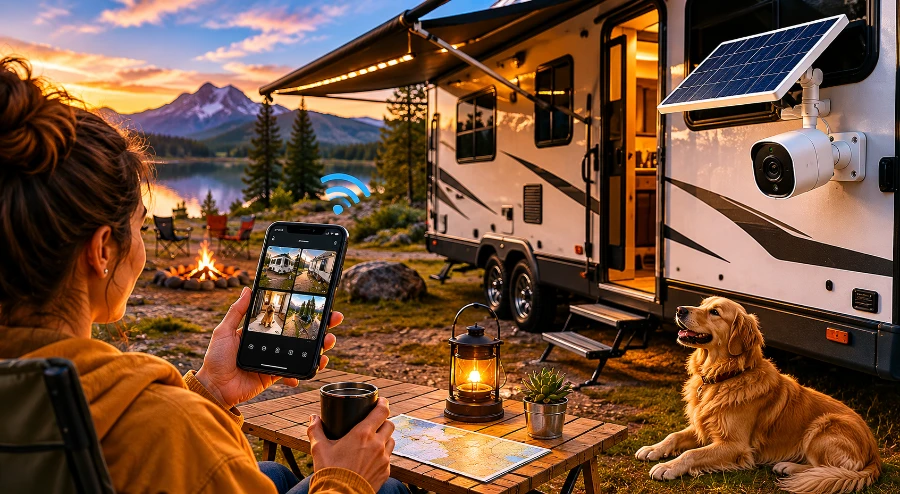
Security is only part of the story.
Solar camper cameras improve convenience too.
Checking Pets Remotely
Many RV travelers bring dogs.
Remote viewing allows owners to monitor pets while shopping or hiking nearby.
That extra reassurance matters.
Monitoring Deliveries or Maintenance
Long-term campers sometimes receive deliveries at campsites or RV parks.
Cameras help track package arrivals and maintenance visits.
Watching Weather Conditions
Some cameras provide surprisingly useful weather visibility.
You can quickly check:
- Rain intensity
- Wind conditions
- Snow buildup
- Campsite activity
without leaving the camper.
Cost Breakdown of a Camper Security Camera Solar Setup
Prices vary widely depending on features.
Here is a realistic estimate for a quality setup:
| Equipment | Estimated Cost |
| Solar Security Camera | $120–$350 |
| LTE Data Plan | $10–$40/month |
| Mounting Accessories | $20–$60 |
| Extra Solar Panel | $40–$100 |
| Cloud Storage | $3–$15/month |
Budget systems exist, but reliability matters with outdoor security equipment.
Cheap cameras often fail at the worst possible moment.
Are Solar Camper Security Cameras Worth It?
For many RV owners, absolutely.
Especially for people who:
- Travel frequently
- Camp remotely
- Store expensive equipment
- Leave campers unattended often
- Want easier monitoring
- Prefer wireless setups
The value goes beyond theft prevention.
A camper security camera solar system creates awareness. And awareness changes how confidently people travel.
You stop wondering whether your camper is safe while hiking three miles away from camp.
You stop worrying constantly during overnight parking.
And you stop guessing.
That confidence alone has value.
The Future of Camper Security Is Clearly Solar
The technology keeps improving fast.
Modern systems now offer:
- AI motion filtering
- Better battery efficiency
- Faster LTE connectivity
- Improved solar charging
- Smarter mobile apps
- Wider viewing angles
And installation continues getting easier.
What once required complicated RV electrical work can now be installed with a few screws and a smartphone app.
That shift matters.
Because camper travel is growing rapidly, especially among people seeking flexibility, remote travel, and off-grid adventures.
Security systems are evolving alongside that lifestyle.
Final Thoughts
A camper represents freedom. Adventure. Mobility. Independence.
But protecting that investment matters.
A reliable camper security camera solar setup gives RV owners an extra layer of protection without adding complicated wiring, constant charging, or major power demands. It fits naturally into modern camper travel because it works almost anywhere.
That is the real advantage.
Whether you camp in crowded RV resorts, isolated desert pull-offs, national forests, or long-term storage lots, solar-powered cameras provide visibility when you cannot physically be there.
And in many situations, visibility is everything.
FAQs
Yes. Many solar camper cameras use LTE cellular connections with SIM cards, allowing remote monitoring even in off-grid camping areas.
Most quality cameras can run several days to weeks on battery power alone, depending on motion activity and sunlight exposure.
Most outdoor-rated models are designed to handle rain, dust, wind, and heat, especially cameras with IP65 or IP66 weather resistance ratings.
The best locations are near the camper entry door, storage compartments, hitch area, or roof edges for wider visibility.
Yes, although charging efficiency may decrease. Most systems store enough battery power to continue operating through several cloudy days.
Yes. Most modern systems include mobile apps that allow live viewing, motion alerts, playback, and camera control from almost anywhere.
Not usually. Basic LTE data plans for security cameras are often affordable and use relatively low data when motion recording is enabled.
Visible cameras can discourage theft attempts, while motion alerts and recorded footage help improve overall camper security and awareness.
No. Most solar-powered camper cameras are designed for simple DIY installation using brackets, screws, and mobile app setup.
Yes. Even occasional travelers benefit from added security during campground stays, roadside stops, and long-term camper storage.