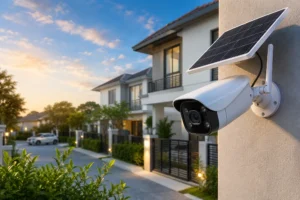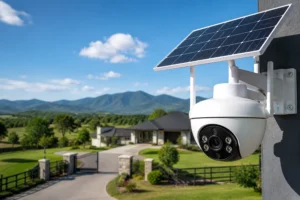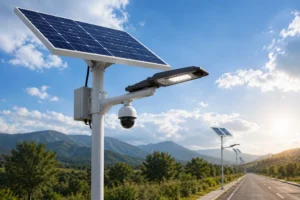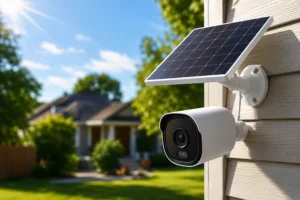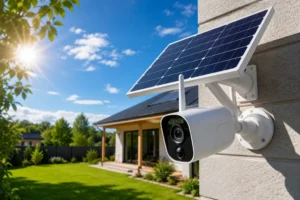
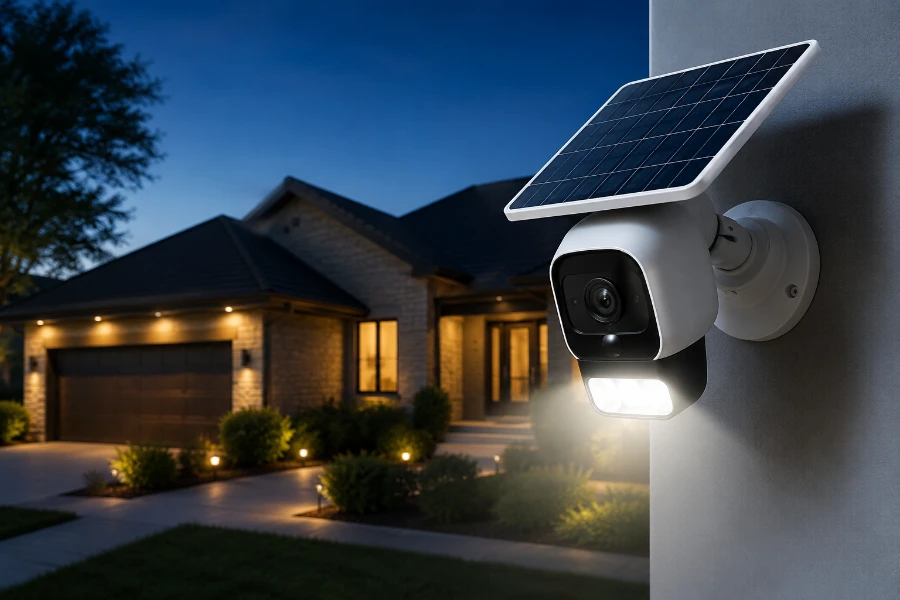
Security has changed fast. Homeowners no longer want bulky wired systems that require electricians, trenching, and rising power bills. They want something smarter. Cleaner. Easier to install. That’s exactly why the solar security camera with floodlight has exploded in popularity over the last few years.
And honestly? The appeal makes sense.
You get surveillance, motion detection, nighttime lighting, and renewable power in one compact setup. No hardwiring. No monthly electricity drain from the camera itself. Just sunlight powering a security system that actively watches your property day and night.
Most modern solar security camera with floodlight systems rely on advanced photovoltaics technology to maintain battery charging efficiency throughout the day.
But not every system performs the same.
Some cameras struggle during cloudy weather. Others have weak floodlights that barely illuminate a driveway. And many cheap models send nonstop false alerts that quickly become annoying.
I’ve seen buyers focus only on camera resolution while ignoring battery capacity, solar charging efficiency, or floodlight brightness. Big mistake! Those overlooked details usually determine whether the system becomes genuinely useful or just another gadget mounted on the wall.
This guide breaks everything down clearly. No fluff. Just practical information that helps you choose the right solar security camera with floodlight for your property.
What Is a Solar Security Camera With Floodlight?
A solar security camera with floodlight combines several important security tools into one device:
- Solar panel
- Rechargeable battery
- HD surveillance camera
- Motion detection system
- LED floodlight
- Wi-Fi connectivity
- Mobile app controls
The solar panel charges the internal battery during daylight hours. That battery powers both the camera and floodlight throughout the night.
When motion is detected, the system can:
- Turn on bright floodlights
- Start recording video
- Send alerts to your smartphone
- Trigger sirens or voice warnings
- Activate two-way audio
That combination creates both visibility and deterrence. Intruders hate attention. Bright lights instantly remove hiding spots.
Most modern systems also support cloud storage or local microSD storage, giving users flexibility depending on budget and privacy preferences.
Why Solar Security Cameras With Floodlights Are Becoming So Popular
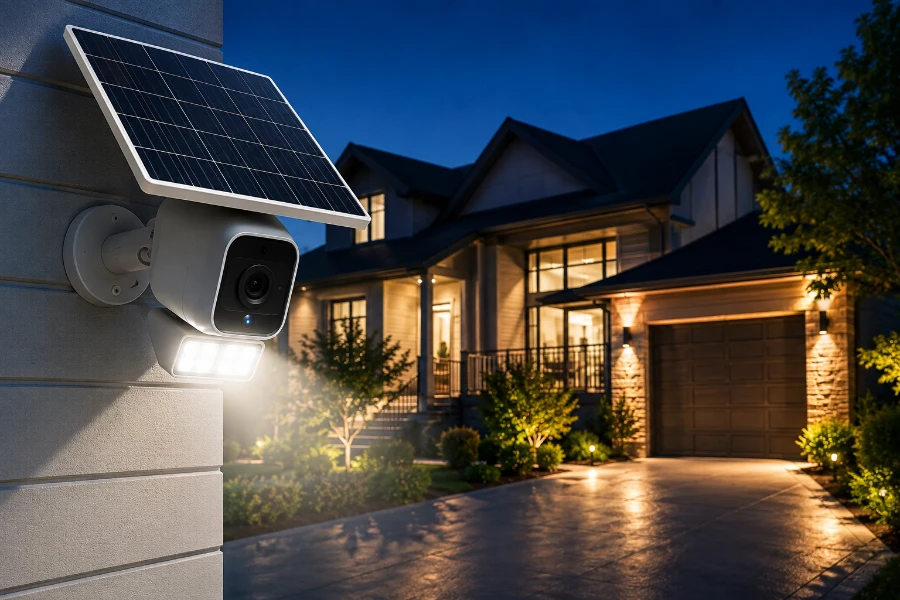
Traditional security systems often come with installation headaches. Wires. Drilling. Electrical work. Monthly monitoring costs.
A solar security camera with floodlight removes much of that complexity.
No Wiring Needed
This is one of the biggest selling points.
You can mount many solar cameras in less than an hour using basic tools. That flexibility matters for:
- Driveways
- Detached garages
- Gates
- Barns
- Construction sites
- Remote properties
- Cabins
No nearby power outlet? No problem.
Lower Operating Costs
Once installed, the sun handles most of the energy needs.
That may not sound dramatic initially, but over time, reducing electrical consumption across multiple cameras can save noticeable money.
Especially for larger properties.
Better Security Visibility
Floodlights dramatically improve nighttime recording quality.
Without proper lighting, many security cameras capture grainy footage after dark. A bright LED floodlight changes everything. Faces become clearer. Vehicles become easier to identify. Movement becomes more visible.
Useful During Power Outages
This matters more than many homeowners realize.
A wired security system may fail during outages unless backed by generators or battery systems. A solar security camera with floodlight often continues operating independently thanks to its internal battery storage.
That can be a huge advantage during storms.
Key Features Buyers Should Look For
Not all solar cameras are built equally. Some prioritize lighting. Others focus on video quality. The best systems balance both.
Floodlight Brightness Matters
Brightness is typically measured in lumens.
| Lumens | Performance |
| 300–700 | Small entryways |
| 700–1500 | Driveways and patios |
| 1500+ | Large yards and commercial areas |
For most homes, 1000–2000 lumens works well.
Anything lower may look impressive in product photos but disappoint in real-world darkness.
Video Resolution
Higher resolution improves detail capture.
Common options include:
- 1080p
- 2K
- 4K
1080p still works fine for many homeowners. But if you want better facial recognition or license plate visibility, 2K offers a noticeable improvement without dramatically increasing storage demands.
Battery Capacity
This is where many cheap cameras struggle.
A solar security camera with floodlight uses significant power because floodlights consume far more energy than standard surveillance recording alone.
Look for:
- Large battery capacity
- Efficient solar charging
- Battery optimization settings
Properties with frequent cloudy weather need larger batteries even more.
Motion Detection Accuracy
False alerts drive users crazy.
Good systems use PIR (passive infrared) sensors combined with AI motion filtering. That helps distinguish between:
- Humans
- Vehicles
- Animals
- Tree movement
Smart filtering reduces unnecessary notifications dramatically.
Weather Resistance
Outdoor security equipment must survive tough conditions.
Check for:
- IP65 rating minimum
- Waterproof housing
- Dust resistance
- Heat tolerance
- Wind resistance
Many nighttime recording systems use infrared radiation to improve visibility in low-light environments without requiring constant floodlight activation.
Best Places to Install a Solar Security Camera With Floodlight
Placement affects performance more than people expect.
A powerful camera installed in the wrong location still performs poorly.
Front Entrances
This remains the most common location.
Packages. Visitors. Deliveries. Unexpected activity. Front doors see constant movement.
A floodlight also improves visitor visibility at night.
Driveways
Driveways are ideal because floodlights can illuminate:
- Vehicles
- License plates
- Garage entrances
- Side access points
Wide-angle coverage works especially well here.
Backyards and Side Gates
These are frequent blind spots on many properties.
Intruders often avoid well-lit front entrances and move toward darker side areas instead.
That makes floodlight coverage valuable.
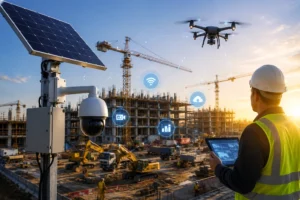
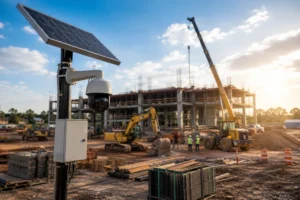
Construction Sites
Construction theft continues increasing across many regions.
Solar-powered systems work well because:
- Temporary installation is easy
- No permanent wiring required
- Floodlights discourage nighttime trespassing
Many contractors now rely heavily on mobile solar surveillance systems.
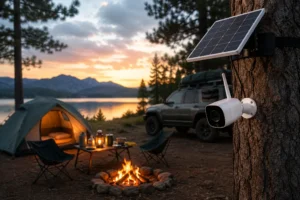
Farms and Rural Properties
Large rural properties often lack convenient power access.
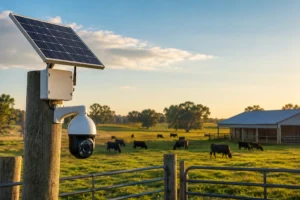
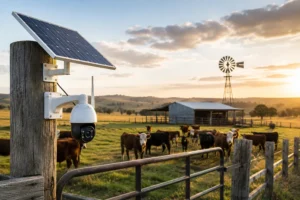
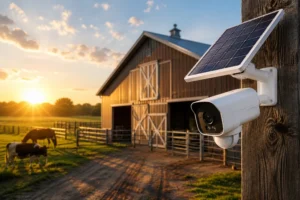
That’s where a solar security camera with floodlight becomes extremely useful. Barns, livestock areas, equipment storage zones, and gates can all be monitored without trenching electrical lines across long distances.
Solar Panel Placement Matters More Than Buyers Think
Here’s the truth.
Many “bad” solar cameras are actually poorly installed solar cameras.
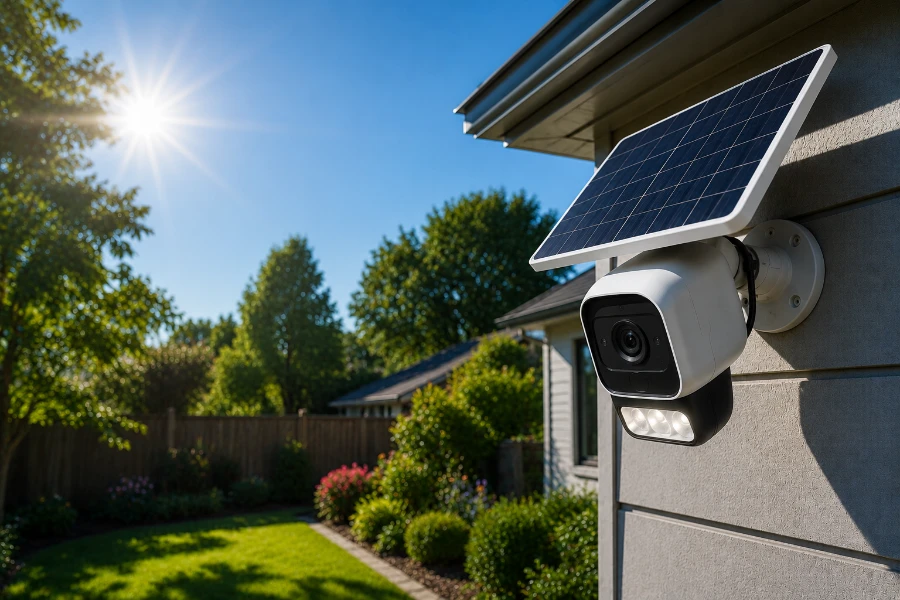
Maximize Sunlight Exposure
The solar panel needs direct sunlight for optimal charging.
Best practices include:
- South-facing positioning when possible
- Minimal tree shade
- Avoiding roof overhang shadows
- Proper panel angle adjustment
Even partial shading can reduce charging efficiency significantly.
Keep the Panel Clean
Dust buildup matters.
Pollen, dirt, bird droppings, and debris slowly reduce charging performance. Cleaning the panel occasionally improves efficiency more than many users realize.
Simple maintenance goes a long way.
Avoid Weak Mounting Locations
A shaky mount creates:
- Poor motion detection
- Vibration issues
- Misaligned lighting
- Inconsistent recording angles
Solid installation matters for long-term reliability.
Can Solar Cameras Work on Cloudy Days?
Yes. But expectations should remain realistic.
Most quality solar security camera with floodlight systems store extra power in internal rechargeable batteries. That reserve helps the system continue operating during cloudy conditions or nighttime use.
However, performance depends heavily on:
- Battery size
- Camera usage frequency
- Floodlight brightness settings
- Motion activity volume
- Solar panel size
Heavy motion activity drains batteries faster.
For example, a busy commercial entrance with constant nighttime movement may consume more energy than a quiet residential backyard.
That’s why battery capacity matters so much.
Final Thoughts
The modern solar security camera with floodlight delivers far more than simple surveillance. It combines visibility, convenience, energy efficiency, and smart security features into one practical system.
Today’s models offer stronger batteries, brighter floodlights, sharper video quality, and smarter motion detection than earlier generations ever could. That makes them increasingly attractive for homeowners, businesses, farms, and remote properties alike.
But smart buying still matters.
Focus on battery performance. Floodlight brightness. Weather resistance. Motion detection quality. Those factors usually matter more than flashy marketing claims.
Choose the right system, install it properly, and a solar security camera with floodlight can become one of the most useful security upgrades on your property.
FAQs
The solar panel charges an internal battery during the day, which powers the camera and floodlight at night. Motion detection typically activates recording and lighting automatically.
Yes, most systems store backup power in rechargeable batteries. Performance depends on battery size, solar charging efficiency, and how often the floodlight activates.
Direct sunlight improves charging performance significantly, but many cameras can still operate with partial sunlight. Heavy shade may reduce battery life and nighttime performance.
Most outdoor models are designed with weather-resistant ratings like IP65 or IP66. That helps protect the camera from rain, dust, and outdoor exposure.
For most homes, a floodlight between 1000 and 2000 lumens provides strong nighttime visibility. Larger properties may require even brighter lighting coverage.
Yes, modern systems use LED floodlights, infrared night vision, or color night vision to capture clear nighttime footage.
Some models can still record locally to a microSD card without Wi-Fi, but remote viewing and smartphone alerts usually require an internet connection.
Battery life varies by usage, but many systems can operate several days on a full charge. Frequent motion detection and floodlight activation drain batteries faster.
Ideal locations include driveways, front doors, backyards, garages, and side gates where both visibility and sunlight exposure are strong.
For many homeowners and businesses, yes. They offer flexible installation, lower operating costs, and reliable outdoor security without complicated wiring.