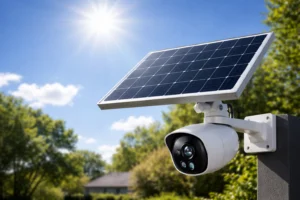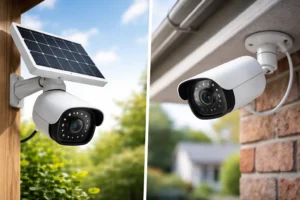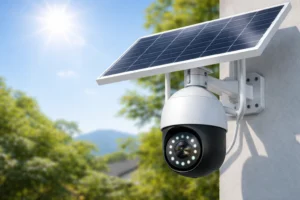
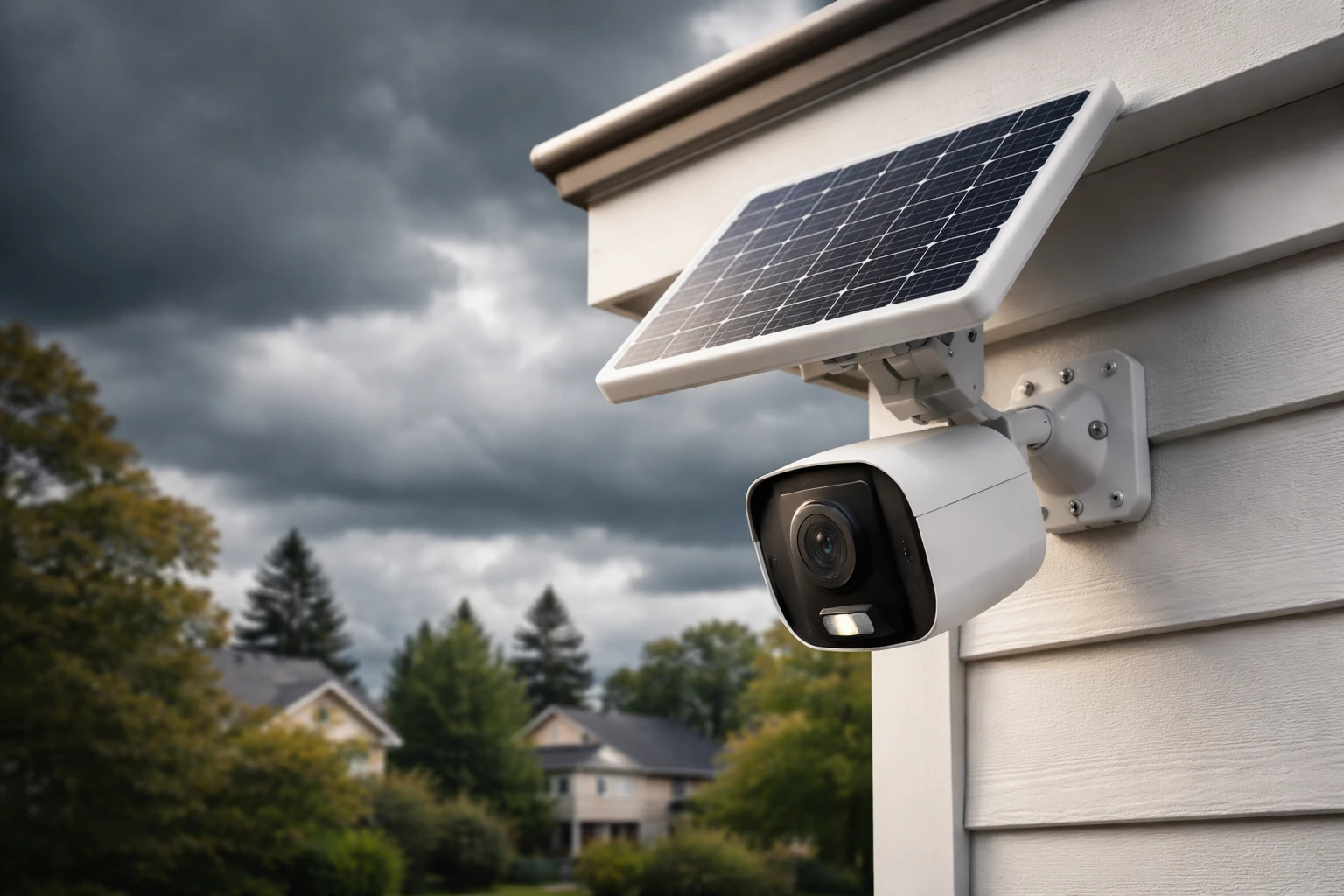
You installed a solar camera for peace of mind. Clean setup, no wires, powered by the sun—simple. But then the weather shifts. Clouds roll in. Days pass with little sunlight. Suddenly, the question hits hard: how long do solar cameras last without sun?
It’s a practical concern. And the answer isn’t one-size-fits-all. Some cameras keep going for days. Others struggle sooner than you expect. The difference comes down to how they’re built—and how you use them.
Let’s break it down clearly, with real-world insight you can actually use.
How Solar Cameras Work (Quick Breakdown)
Before we get into how long solar cameras last without sun, you need a quick understanding of what’s happening behind the scenes.
Solar Panel Functionality
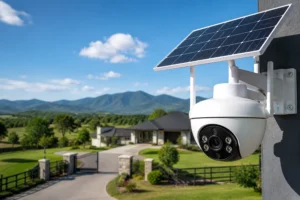
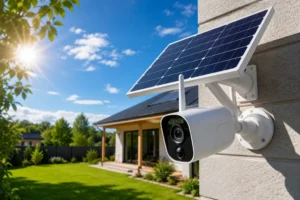
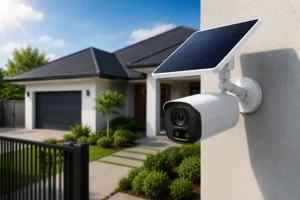
The solar panel collects sunlight and converts it into electricity. That energy doesn’t power the camera directly in most cases. Instead, it charges a battery.
No sunlight? No charging. Simple.
Built-In Battery Storage
This is where everything really happens. The battery stores energy during sunny periods so the camera can run at night or during cloudy days.
Typical capacities range from:
- 5,000mAh (entry-level)
- 10,000–15,000mAh (mid-range)
- 20,000mAh+ (high-end)
More capacity equals more runtime when there’s no sun.
Power Consumption Basics
Not all cameras use power the same way.
- Standby mode: Minimal energy usage
- Motion detection: Moderate usage
- Live view / recording: High usage
Every alert. Every clip. And every time you open the app—it all drains the battery.
How Long Do Solar Cameras Last Without Sun? (Short Answer)
Let’s get straight to it.
Most solar cameras last between 1 to 7 days without sun.
That’s the honest range. But here’s the catch—it depends heavily on several factors:
- Battery size
- Usage frequency
- Recording settings
- Environmental conditions
A lightly used camera with a large battery might last a full week. A busy camera in a high-traffic area? Maybe just a day or two.
So when people ask, how long do solar cameras last without sun, the real answer is: it depends on how hard you’re pushing it.
Key Factors That Affect Battery Life Without Sunlight
Let’s go deeper. These are the variables that truly determine how long solar cameras last without sun.
Battery Capacity
This is your foundation.
A larger battery gives you more buffer when sunlight disappears. It’s that simple.
| Battery Size | Estimated Runtime Without Sun |
| 5,000mAh | 1–2 days |
| 10,000mAh | 2–4 days |
| 20,000mAh+ | 4–7 days |
If you live in a cloudy region, bigger is always better.
Camera Usage Frequency
This one surprises people.
A camera that triggers 50 times per day will drain much faster than one triggered 5 times per day.
High-traffic zones include:
- Front doors
- Driveways
- Busy streets
Every motion alert equals battery consumption.
Recording Mode
There are two main modes:
- Motion-based recording: Efficient, saves power
- Continuous recording: Drains battery fast
If your camera records 24/7, don’t expect it to last long without sun. Not even close.
Night Vision Usage
Night is when solar cameras work hardest.
Infrared LEDs and spotlights pull significant power. If your camera is active all night, expect battery drain to increase sharply.
Wi-Fi Signal Strength
Weak signal? Your camera works harder to stay connected.
That means:
- More power used
- Faster battery drain
A stable connection isn’t just about performance—it directly affects how long solar cameras last without sun.
Temperature Conditions
Weather matters more than most people realize.
- Cold temperatures: Reduce battery efficiency
- Extreme heat: Can degrade battery health over time
In colder climates, battery life can drop by 20–30%.
Real-World Scenarios (What to Expect)
Let’s make this practical. Here’s what actually happens in different conditions.
Cloudy Weather (1–3 Days Without Sun)
Not all clouds are equal. Some light still gets through.
- Partial charging may still occur
- Battery drains slowly
- Most cameras perform fine for short periods
Heavy Rain or Storms (2–5 Days)
Now we’re talking low solar input.
- Minimal charging
- Battery becomes the main power source
- Performance depends on prior charge level
Winter Months (Short Days, Low Sun Angle)
This is where problems show up.
- Less sunlight overall
- Lower charging efficiency
- Longer nights = more usage
Expect shorter runtimes unless you optimize your setup.
Fully Shaded Installations
This is the worst-case scenario.
If your panel gets little to no direct sunlight:
- Charging becomes inconsistent
- Battery drains steadily
- Runtime drops significantly
If you’re in full shade, you’re relying almost entirely on stored power.
Battery Life Comparison Table
Here’s a quick snapshot to help you visualize things.
| Usage Level | Battery Size | Estimated Days Without Sun |
| Low usage | 10,000mAh | 3–5 days |
| Medium usage | 10,000mAh | 2–3 days |
| High usage | 10,000mAh | 1–2 days |
| Low usage | 20,000mAh | 5–7 days |
| High usage | 20,000mAh | 2–4 days |
This is why the same camera model can perform very differently from one home to another.
Signs Your Solar Camera Is Running Low on Power
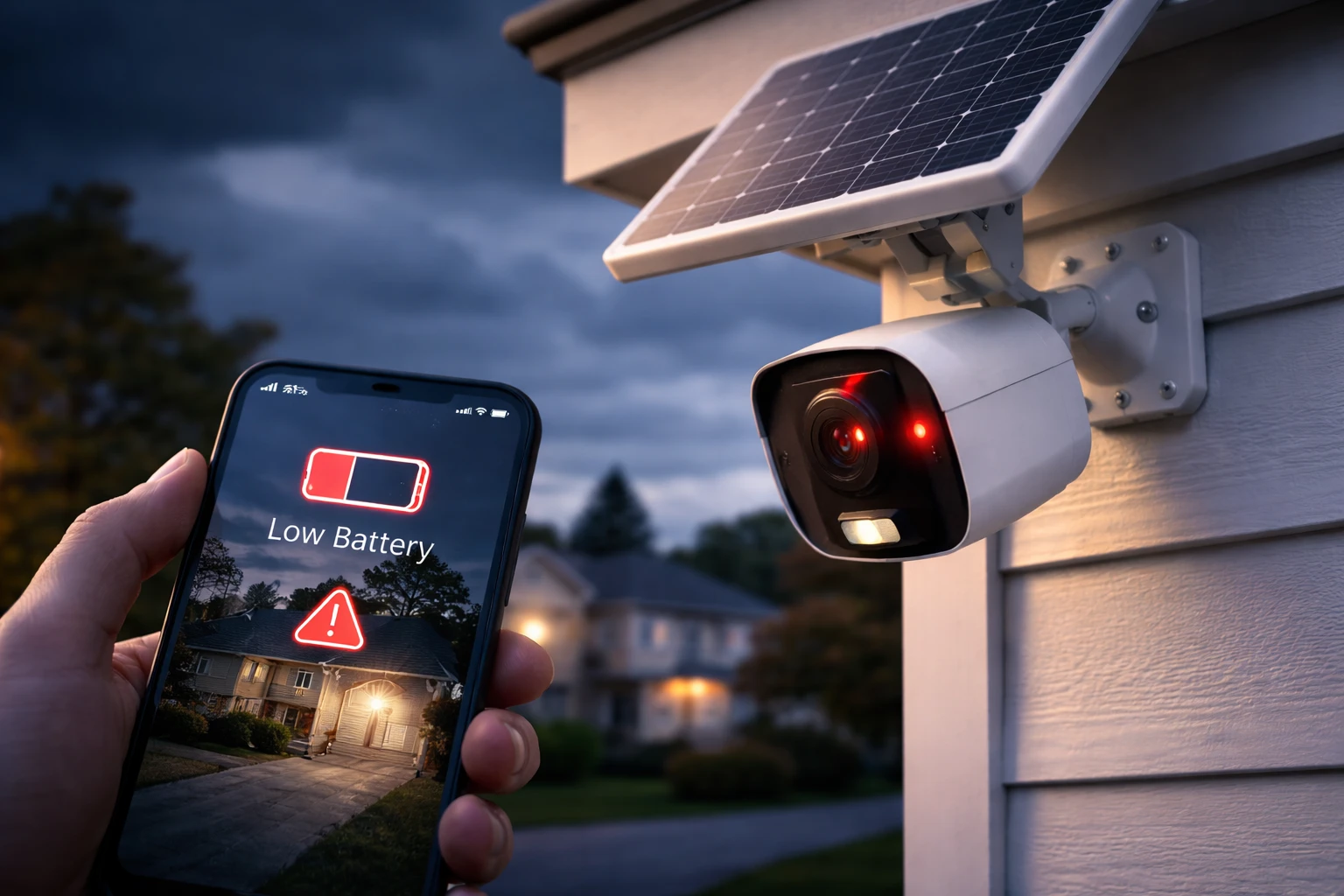
You don’t want surprises. Watch for these signs:
- Notifications arrive late
- Video clips become shorter or less frequent
- Camera disconnects randomly
- App shows low battery warnings
When you see these, your system is nearing its limit.
How to Extend Solar Camera Battery Life Without Sun
This is where you win.
If you want to maximize how long solar cameras last without sun, small adjustments make a big difference.
Optimize Camera Settings
Start here.
- Lower motion sensitivity
- Reduce clip length
- Turn off unnecessary alerts
Less activity = less drain.
Adjust Placement
Even a slight reposition can help.
- Aim the panel toward direct sunlight
- Avoid shadows from roofs, trees, or walls
A few extra hours of sunlight per day can extend runtime significantly.
Use Power-Saving Modes
Most modern cameras offer this.
- Sleep modes
- Scheduled recording
- Reduced frame rates
Use them. They exist for a reason.
Upgrade Battery or Panel (If Supported)
Some systems allow expansion.
- External solar panels
- Higher-capacity batteries
If you’re serious about uptime, this is worth considering.
Improve Wi-Fi Signal
Don’t overlook this.
- Move your router closer
- Use a Wi-Fi extender
A stable connection reduces unnecessary power usage.
When You Might Need a Backup Power Source
Sometimes, solar alone isn’t enough.
Situations where backup helps:
- Long periods of bad weather
- High-security areas
- Constant motion zones
Backup Options
- Plug-in charging when needed
- Portable power banks
- Hybrid solar + wired setups
Think of it as insurance for your security system.
Are Solar Cameras Reliable Without Sunlight?
Let’s be honest.
Solar cameras are reliable—but not invincible.
Pros
- Energy independence
- Easy installation
- Lower long-term cost
Cons
- Weather dependency
- Battery limitations
- Performance varies by setup
So, how long do solar cameras last without sun in real-world conditions? Long enough—if you plan correctly.
Choosing the Right Solar Camera for Low-Sun Conditions
If sunlight is limited where you live, choose wisely.
What to Look For
- High battery capacity (15,000mAh+)
- Efficient motion detection
- Adjustable solar panel
- Strong low-power standby mode
Don’t just look at price. Look at endurance.
Common Myths About Solar Cameras and Sunlight
Let’s clear a few things up.
- “They stop working immediately without sun.”
Not true. Batteries keep them running. - “Solar panels always keep batteries full.”
Only under ideal conditions. - “All solar cameras perform the same.”
Far from it. Specs and usage matter.
Final Thoughts
So, how long do solar cameras last without sun?
In most cases, anywhere from 1 to 7 days. Sometimes more. Sometimes less. It all depends on how the system is set up—and how it’s used.
Here’s the key takeaway: solar cameras aren’t just about sunlight. They’re about balance. Battery capacity, smart settings, proper placement, and realistic expectations all play a role.
Dial those in, and your camera won’t just survive cloudy days—it’ll perform through them.
And that’s what you really want. Reliable security. No surprises.
FAQs
Most solar cameras last between 1 to 7 days without sun, depending on battery size and usage.
Yes, they can still operate and may even get partial charging, but performance depends on how much light reaches the panel.
No, they rely on stored battery power and continue working until the battery is depleted.
Frequent motion alerts, continuous recording, and night vision features consume the most power.
Reduce motion sensitivity, shorten recording times, and enable power-saving modes to extend battery life.
Yes, cold temperatures can reduce battery efficiency and shorten how long the camera lasts.
Motion detection is more energy-efficient and helps extend battery life without sunlight.
Yes, many models support plug-in charging or power banks as backup during long periods without sun.
Yes, weak signals force the camera to use more power, draining the battery faster.
No, battery capacity, features, and efficiency vary widely between models.