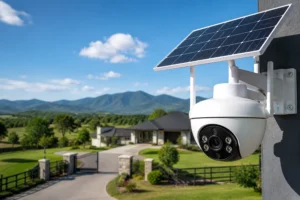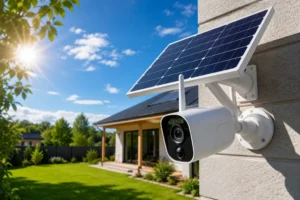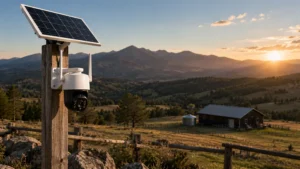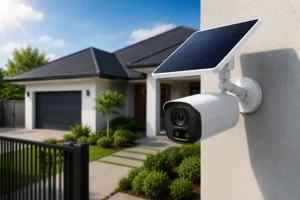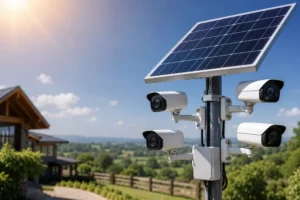
You’ve probably seen them mounted on fences, garages, or even trees—small cameras paired with sleek solar panels, quietly watching everything. But let’s get straight to it: how does a solar security camera work, and can it really replace traditional wired systems?
Short answer? Yes, it can. Long answer? It depends on how it’s set up—and how well you understand what’s happening behind the scenes.
This isn’t just about sunlight powering a camera. It’s a system. A smart one. And once you understand it, you can make better buying and installation decisions immediately.
What Is a Solar Security Camera?
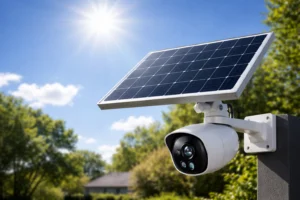
A solar security camera is a wireless surveillance device powered by sunlight instead of direct electrical wiring. Simple concept. Smart execution.
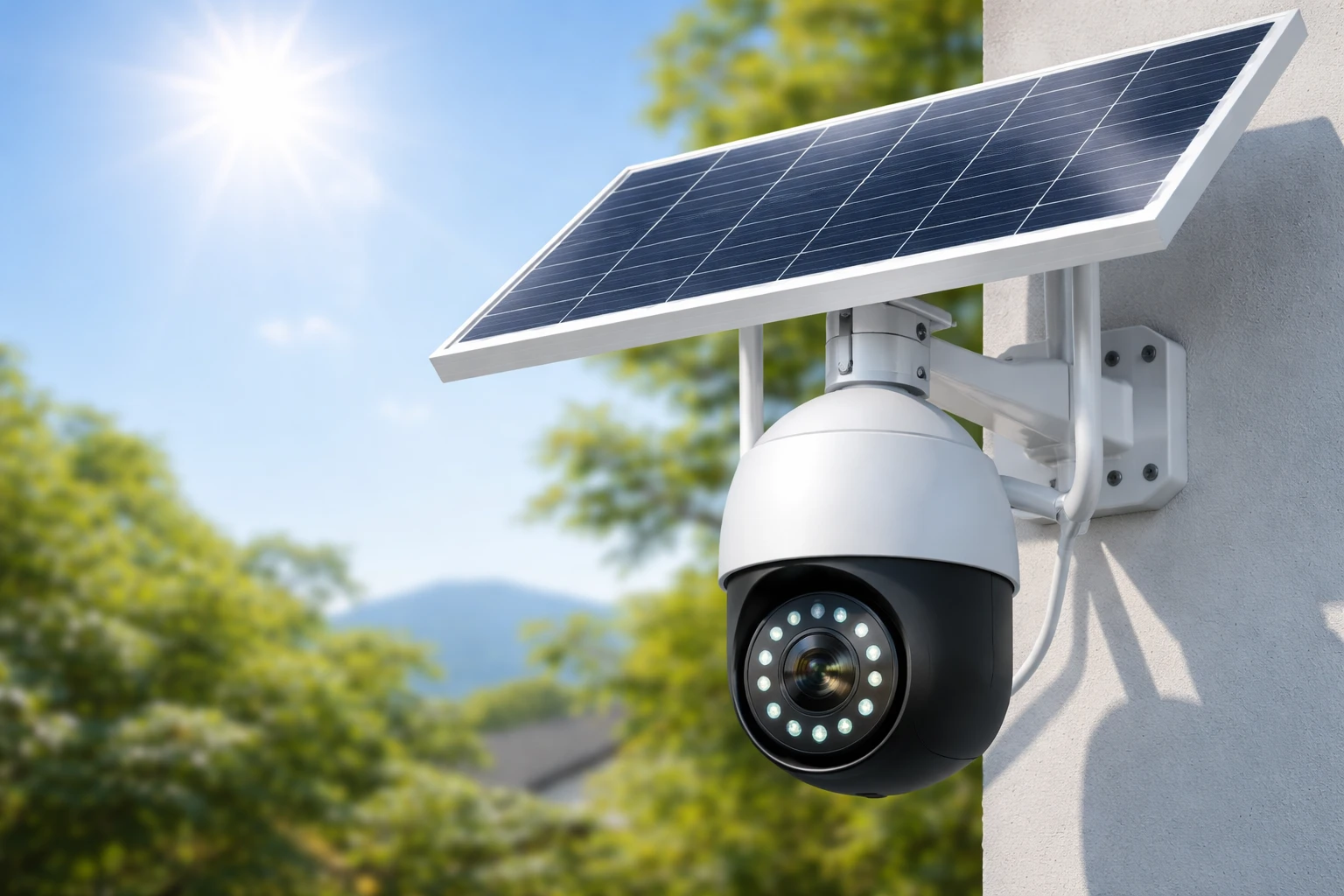
At its core, it combines four essential elements:
- A solar panel that captures energy
- A rechargeable battery that stores that energy
- A camera unit that records footage
- A connectivity module (WiFi or 4G) that sends data
That’s it. No trenching wires. No electrical work. Just placement and optimization.
And yet, many people still ask: how does a solar security camera work in real-world conditions? Let’s break that down properly.
How Does a Solar Security Camera Work? (Step-by-Step)
Here’s the actual flow of energy and operation. Nothing complicated—but every step matters.
- Sunlight hits the solar panel
The panel absorbs sunlight using photovoltaic cells. - Energy is converted into electricity
The sunlight becomes usable electrical power instantly. - Electricity charges the battery
The camera doesn’t rely on real-time sunlight. It stores power. - Battery powers the camera 24/7
Even at night, the camera runs off stored energy. - Camera records and transmits footage
It detects motion, records video, and sends alerts to your phone.
So when someone asks, how does a solar security camera work at night?—the answer is simple: it doesn’t need the sun at that moment. It already saved what it needed earlier.
Key Components Explained in Detail
Understanding the parts helps you avoid bad purchases. Let’s go deeper.
Solar Panel
This is where everything starts.
Solar panels use photovoltaic cells to convert sunlight into electricity. The more direct sunlight, the more efficient the charge.
Actionable tip:
Mount the panel facing the direction with the longest sun exposure. Even a slight angle adjustment can improve charging significantly.
Rechargeable Battery
This is the backbone of reliability.
A good solar camera doesn’t run on sunlight—it runs on stored energy. The battery ensures continuous operation during:
- Nighttime
- Cloudy weather
- Rainy days
Most systems use lithium-ion batteries, which are durable and efficient.
What to look for:
- Higher mAh = longer runtime
- Replaceable batteries = longer product lifespan
Camera System
This is where security happens.
Modern solar cameras come packed with features:
- Motion detection
- HD or 4K video
- Wide-angle lenses
- Smart tracking
They don’t record 24/7 continuously (most of the time). Instead, they activate when motion is detected. This saves power—and extends battery life.
Connectivity & Storage
Your camera is only useful if you can access the footage.
You’ll typically get two options:
| Feature | WiFi Cameras | 4G/LTE Cameras |
| Connection | Requires local WiFi | Uses SIM card |
| Best for | Homes with internet | Remote/off-grid areas |
| Cost | Lower | Higher (data plan needed) |
Storage options include:
- Cloud storage (subscription-based)
- SD card (local storage)
Day vs Night Operation
Here’s where things get interesting.
During the day:
- Solar panel charges the battery
- Camera may run partially on solar input
At night:
- Battery takes over completely
- Camera continues normal operation
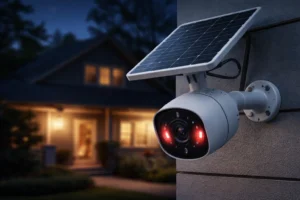
Night vision is powered using infrared (IR) LEDs. These allow the camera to “see” in total darkness.
So again, if you’re wondering how does a solar security camera work after sunset, the answer is battery + infrared technology. Clean. Efficient. Reliable.
What Happens on Cloudy or Rainy Days?
This is the real test.
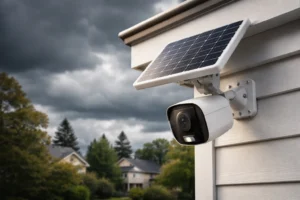
Solar cameras don’t fail instantly when the sun disappears. Instead, they rely on stored energy.
Typical performance:
- 1–3 days backup with moderate use
- Reduced performance if weather persists
Smart adjustment tip:
- Lower motion sensitivity during bad weather
- Reduce recording length per event
- Turn off non-essential features
This extends battery life when solar input is low.
Installation: How Everything Connects
Installation is where most people mess up. Don’t.
Here’s how to do it right:
Step-by-Step Setup
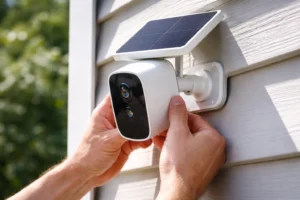
- Mount the camera at 8–10 feet high
- Position the solar panel separately (if needed)
- Angle the panel toward maximum sunlight
- Connect panel to camera (usually plug-and-play)
- Sync the camera to your app
Placement Tips
- Avoid shaded areas
- Keep the panel clean
- Don’t install facing direct glare or reflective surfaces
A bad angle can reduce charging by 30–50%. That’s not a small mistake.
Advantages of Solar Security Cameras
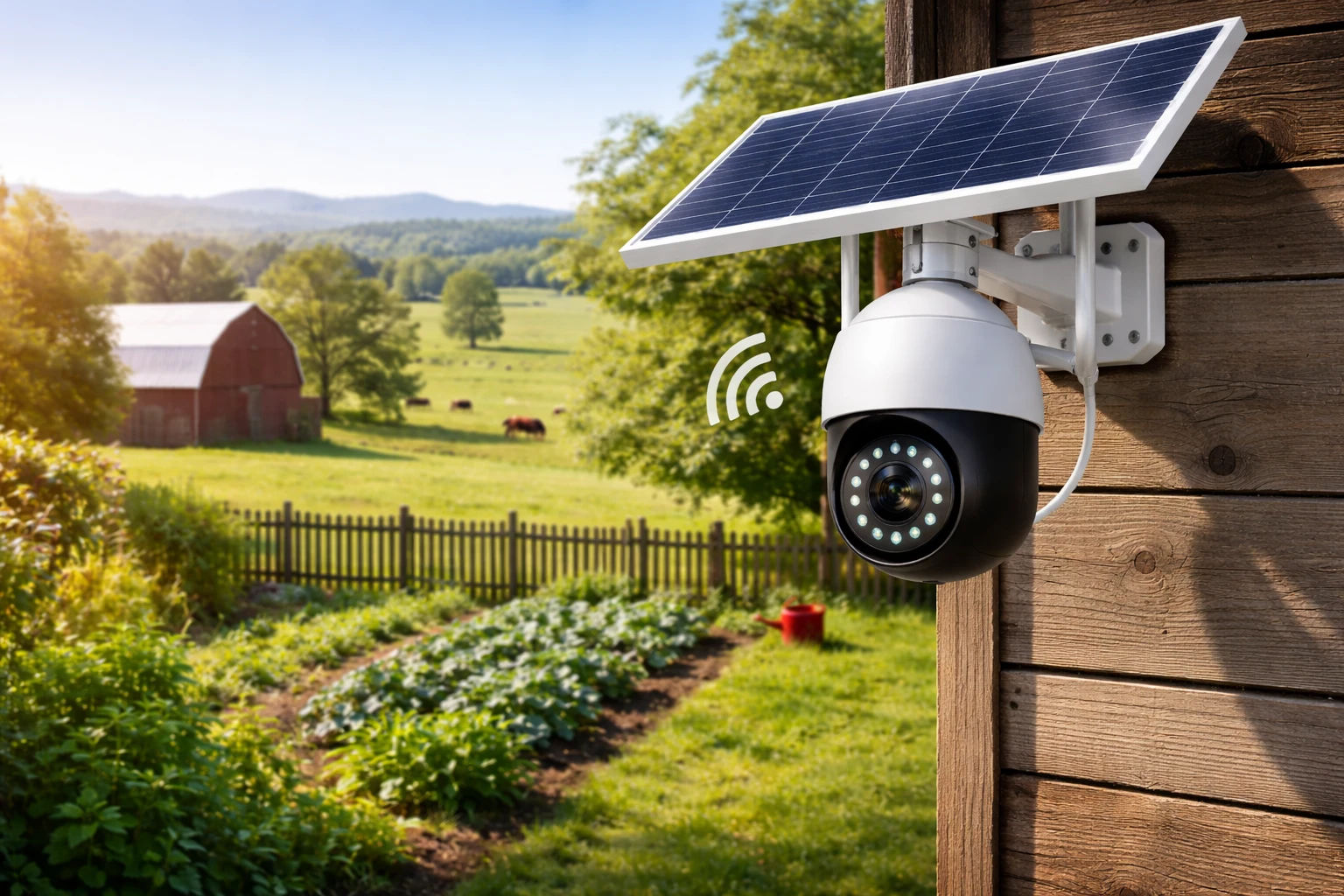
Why are people switching? Because it just makes sense.
- No wiring required
- Lower electricity costs
- Flexible placement anywhere
- Ideal for remote areas
- Environmentally friendly
And once you fully understand how does a solar security camera work, the appeal becomes obvious—it’s independence.
Limitations You Should Know
Let’s keep this realistic.
Solar cameras aren’t perfect.
- Depend on sunlight availability
- Battery capacity limits uptime
- Connectivity issues in weak signal areas
But here’s the key: most issues are preventable with proper setup.
Smart Features That Make a Difference
Modern solar cameras are smarter than ever.
Look for features like:
- Motion detection alerts
- AI detection (people, vehicles, pets)
- Mobile app access
- Two-way audio communication
These aren’t gimmicks. They improve real-world usability.
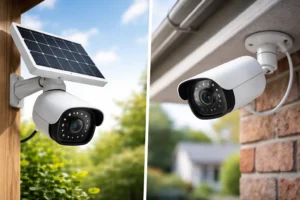
Solar vs Traditional Wired Cameras
Here’s a quick comparison that matters.
| Feature | Solar Camera | Wired Camera |
| Power Source | Solar + Battery | Direct electricity |
| Installation | Easy | Complex |
| Flexibility | High | Limited |
| Maintenance | Low | Moderate |
| Reliability | Weather-dependent | Stable |
If you need flexibility, solar wins. If you want constant power without thinking, wired still has its place.
Tips to Maximize Performance
This is where you gain an edge.
Do This Consistently:
- Clean the solar panel monthly
- Check battery levels regularly
- Adjust motion sensitivity
- Position for maximum sunlight
Avoid These Mistakes:
- Installing under shade
- Ignoring firmware updates
- Overloading storage
Small tweaks. Big impact.
Common Myths About Solar Security Cameras
Let’s clear a few things up.
“They don’t work at night.”
False. They run on stored battery power.
“They need constant sunlight.”
Not true. They need enough sunlight to recharge.
“They are less reliable.”
Only if installed poorly.
Understanding how does a solar security camera work removes these misconceptions instantly.
Who Should Use a Solar Security Camera?
These systems aren’t for everyone—but they’re perfect for certain situations.
- Homeowners wanting easy installation
- Rural property owners
- Construction site managers
- RV and off-grid users
- Farms and large land areas
If running wires sounds like a headache, solar is your answer.
Final Thoughts
So, how does a solar security camera work in the real world?
It captures sunlight. Stores energy. Powers itself. Records motion. Sends alerts. All without needing a single wire.
Simple concept. Powerful execution.
But here’s the real takeaway: performance depends on setup. Get the angle wrong, ignore maintenance, or choose the wrong model—and you’ll think the system failed. It didn’t. The setup did.
Set it up right, though? It runs quietly in the background, doing its job day and night.
That’s the goal. And now you know exactly how to get there.
FAQs
It uses a solar panel to generate power and stores it in a rechargeable battery, eliminating the need for wired electricity.
It runs on stored battery power and uses infrared night vision to capture footage in low-light or dark conditions.
They perform best in direct sunlight, but they can still charge in indirect light, just at a slower rate.
Most can operate for 1–3 days on battery alone, depending on usage and battery capacity.
Yes, but extended cloudy periods may reduce battery levels, especially if the camera is heavily used.
Most use motion detection to save power, recording only when activity is detected.
You can install it almost anywhere, as long as the solar panel receives enough sunlight and there’s a stable connection.
Some use WiFi, while others use 4G/LTE with a SIM card, making them suitable for remote areas.
Keep the solar panel clean, check battery levels, and ensure the camera firmware is updated regularly.
It depends on your needs—solar cameras offer flexibility and easy installation, while wired cameras provide constant power.