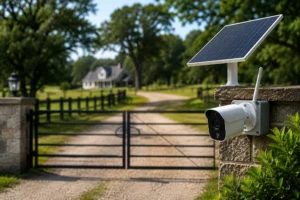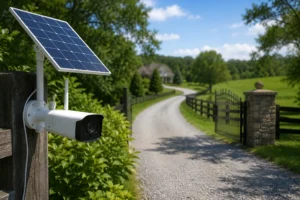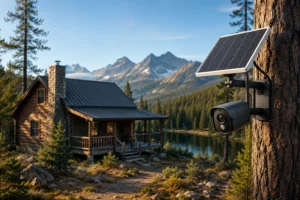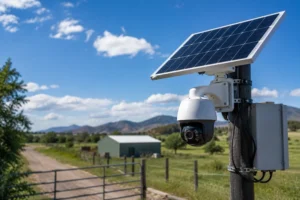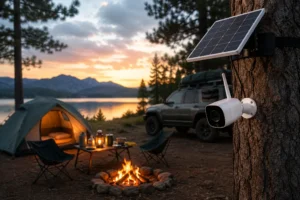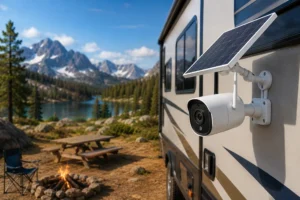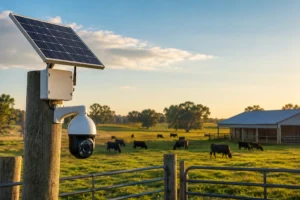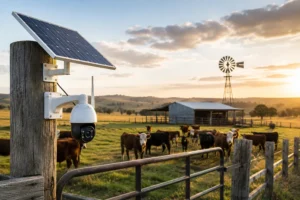
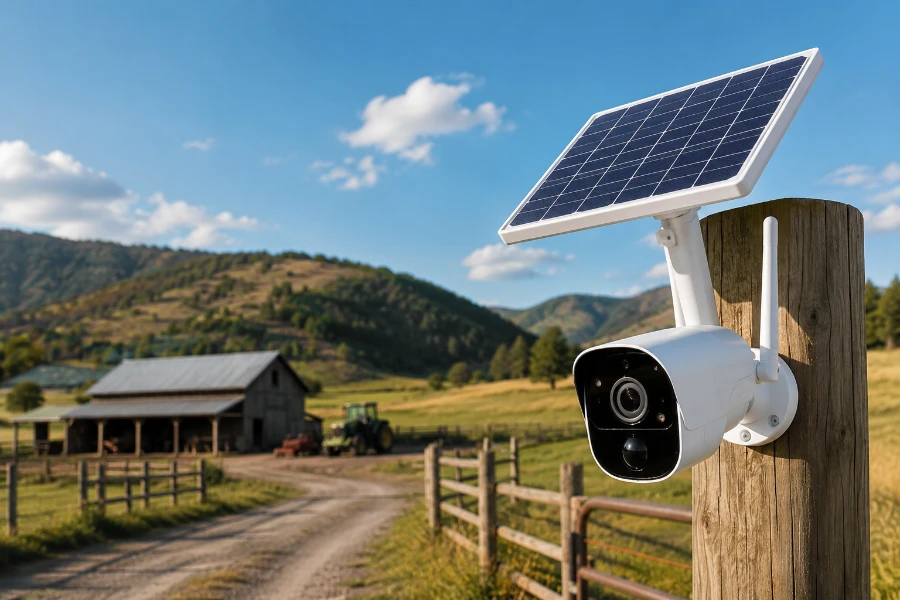
Security has changed dramatically over the last decade. Most surveillance systems assume there is always a reliable internet connection available. Reality is different. Many farms, ranches, construction sites, remote cabins, and equipment yards have little or no connectivity. That is exactly where a solar camera no internet solution shines.
A solar camera no internet setup allows property owners to monitor and record activity without depending on Wi-Fi, broadband, or monthly cloud subscriptions. It combines solar power, battery storage, and local recording into a self-sufficient security system that can operate almost anywhere.
For many people, that independence is the biggest advantage of all.
What Is a Solar Camera Without Internet?
A solar camera without internet is a surveillance camera powered by solar energy that stores footage locally instead of sending it to the cloud.
The idea is simple.
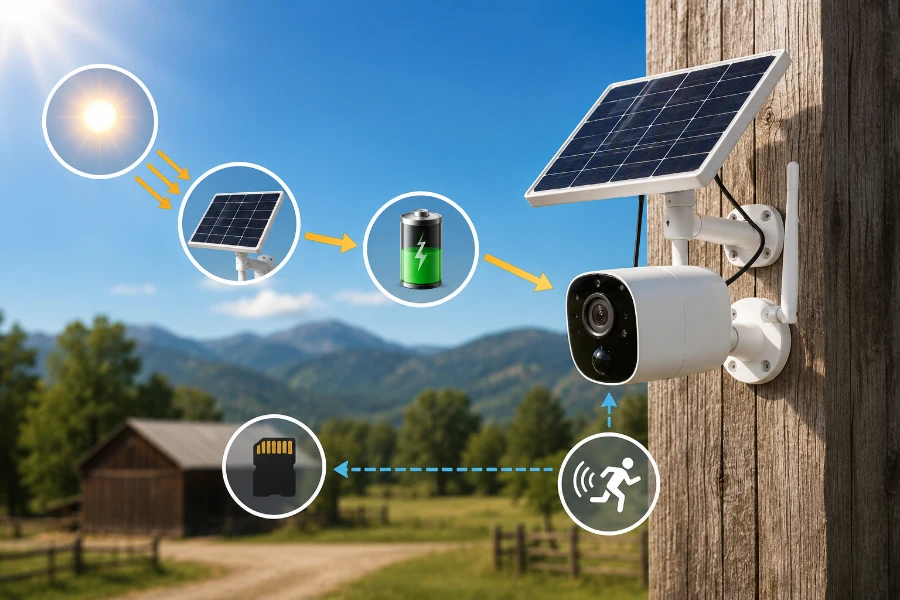
Solar panels capture sunlight. Batteries store the energy. The camera uses that stored power to monitor and record activity throughout the day and night.
Unlike traditional security systems, these cameras do not require:
- Wi-Fi
- Ethernet connections
- Monthly internet plans
- Cloud subscriptions
Instead, recordings are saved directly to:
- MicroSD cards
- Internal memory
- Local NVR systems
- Portable storage devices
This allows the camera to continue operating even in locations where internet access is impossible.
How Offline Recording Works
When motion is detected, the camera automatically begins recording.
Depending on the model, footage may be stored continuously or only when motion events occur.
Motion-triggered recording offers several advantages:
- Longer battery life
- Reduced storage usage
- Faster footage review
- Lower maintenance requirements
The result is a highly efficient surveillance system designed specifically for off-grid environments.
| Feature | Traditional Internet Camera | Solar Camera No Internet |
| Requires Wi-Fi | Yes | No |
| Cloud Storage | Usually | No |
| Monthly Fees | Common | Rare |
| Off-Grid Operation | Limited | Excellent |
| Local Recording | Optional | Primary |
| Installation Complexity | Moderate | Simple |
Why People Choose Solar Cameras Without Internet
There are plenty of reasons someone may choose a solar camera no internet system over a conventional security setup.
Many of them come down to practicality.
Remote Locations Often Lack Connectivity
Not every property is located inside a city.
Many valuable assets sit in remote locations, including:
- Agricultural equipment
- Livestock
- Fuel tanks
- Construction materials
- Utility infrastructure
- Recreational properties
Unfortunately, these locations are often attractive targets for theft and vandalism.
A solar camera no internet system provides surveillance coverage where traditional security systems simply cannot function.
Reduced Operating Costs
Monthly expenses add up.
Internet service.
Cloud storage.
Monitoring subscriptions.
Equipment upgrades.
The list continues.
By eliminating internet requirements, property owners can significantly reduce long-term surveillance costs.
Once installed, a solar camera no internet system often requires little more than occasional maintenance and storage management.
Greater Privacy and Data Control
Privacy concerns continue to grow.
Many organizations prefer keeping sensitive footage under their direct control rather than storing it on remote servers.
Because recordings remain local, property owners maintain complete ownership of their data.
That level of control is becoming increasingly valuable.
How Solar Cameras Work Without Internet
Many people assume surveillance cameras require a constant connection to operate.
They do not.
Modern solar-powered cameras can function entirely independently.
Solar Energy Collection
Everything begins with the solar panel.
Solar panels use photovoltaic technology to convert sunlight into usable electricity. If you’re interested in the science behind the process, you can learn more about photovoltaic systems.
The electricity generated during the day charges an internal battery.
That stored energy powers the camera after sunset and during periods of poor weather.
The quality of the solar charging system directly affects performance.
Proper placement matters.
Sun exposure matters.
Battery capacity matters.
In fact, the U.S. Department of Energy offers valuable information about solar technologies and energy generation.
Battery Storage
A solar camera is only as reliable as its battery.
When selecting a system, pay attention to:
- Battery capacity
- Backup runtime
- Charging efficiency
- Cold-weather performance
Larger batteries generally provide longer operating times and better resilience during cloudy conditions.
For remote installations, battery reserves can mean the difference between uninterrupted security and system downtime.
Motion Detection Technology
Modern cameras use advanced motion detection to maximize efficiency.
Most systems rely on Passive Infrared (PIR) sensors.
These sensors detect heat signatures associated with:
- People
- Vehicles
- Animals
When activity is detected, recording begins automatically.
This dramatically reduces unnecessary footage while conserving storage space and battery power.
Local Video Storage
Without internet connectivity, footage must be stored locally.
Most systems support:
- 32GB MicroSD cards
- 64GB MicroSD cards
- 128GB MicroSD cards
- 256GB MicroSD cards
- 512GB MicroSD cards
Higher-capacity storage extends recording retention periods.
Many cameras automatically overwrite older recordings once storage becomes full, ensuring continuous operation without manual intervention.
Key Features to Look For in a Solar Camera No Internet Setup
Not all solar cameras deliver the same performance.
The right features can dramatically improve reliability.
Long Battery Life
Battery performance should be a top priority.
Look for:
- Large battery capacity
- Intelligent power management
- Efficient solar charging
- Multi-day backup operation
The more remote the location, the more important battery performance becomes.
High-Resolution Video
Footage is only valuable if you can clearly identify what happened.
Resolution plays a major role.
| Resolution | Recommended Use |
| 1080p | Basic monitoring |
| 2K | Detailed property surveillance |
| 4K | Maximum image clarity |
For most users, 2K provides an excellent balance between image quality and storage efficiency.
Night Vision Capabilities
Most incidents occur after dark.
Strong nighttime visibility is essential.
Look for cameras offering:
- Infrared night vision
- Color night vision
- Smart illumination
- Long-range visibility
A camera that performs poorly at night creates a significant security weakness.
Weatherproof Construction
Outdoor environments can be harsh.
Your camera must survive:
- Rain
- Dust
- Heat
- Snow
- Wind
IP65 or IP66 weather ratings are generally recommended for year-round outdoor use.
Deterrent Features
Sometimes prevention is more valuable than evidence.
Many modern systems include:
- Motion-activated spotlights
- Built-in sirens
- Audible warnings
- Flashing lights
These features can discourage trespassers before a crime occurs.
Best Locations for Offline Solar Cameras
One of the biggest advantages of a solar camera no internet system is installation flexibility.
Because there are no power cables or network cables, cameras can be placed almost anywhere.
Farms and Agricultural Operations
Agricultural properties often span hundreds of acres.
Monitoring every area is challenging.
Solar cameras work well for:
- Barn entrances
- Equipment yards
- Livestock pens
- Fuel storage areas
- Field access roads
The result is improved visibility across large properties without costly infrastructure investments.
Construction Sites
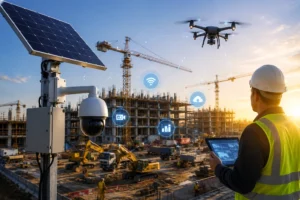
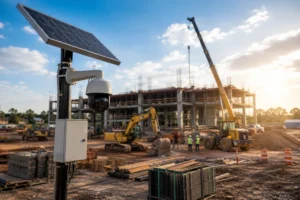
Construction sites are among the most common applications for a solar camera no internet system.
Why?
Because many projects begin before permanent utilities are installed.
No electricity.
No internet.
and no problem.
Solar-powered surveillance can be deployed quickly and relocated as the project evolves.
Contractors often use these cameras to monitor:
- Heavy equipment
- Material storage areas
- Entry gates
- Parking zones
- Temporary offices
A visible camera presence can also discourage theft before it occurs, helping protect valuable assets and reducing costly project delays.
Remote Cabins and Vacation Properties
Many cabins and vacation homes remain vacant for weeks or months at a time.
That creates opportunity for trespassers, vandals, and thieves.
A solar camera no internet setup provides a practical layer of protection without requiring expensive utility installations.
Property owners commonly monitor:
- Driveways
- Main entrances
- Boat docks
- Storage sheds
- Detached garages
Those interested in securing isolated properties can also explore a related guide on Remote Cabin Solar Cameras.
Even if you only visit the property a few times each year, recorded footage can provide valuable evidence when incidents occur.
Parking Areas and Storage Yards
Vehicle lots and equipment storage facilities often cover large open spaces.
Traditional wired systems can be expensive to install.
Solar cameras offer a more flexible solution.
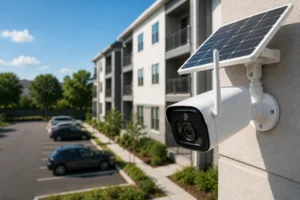
They can be mounted on:
- Light poles
- Fencing
- Storage containers
- Utility poles
- Temporary structures
This allows coverage to expand or shift as operational needs change.
Utility and Infrastructure Sites
Infrastructure assets are frequently located far from populated areas.
Examples include:
- Solar farms
- Water treatment facilities
- Pump stations
- Telecommunications equipment
- Pipeline monitoring points
These locations often benefit from self-sufficient surveillance systems that require little ongoing maintenance.
Advantages of Solar Cameras Without Internet
The popularity of the solar camera no internet market continues to grow because the benefits are substantial.
Easy Installation
One of the biggest advantages is simplicity.
Without power cables or network wiring, installation becomes significantly easier.
In many cases, mounting the camera and positioning the solar panel are the primary tasks.
This can reduce installation costs dramatically.
Energy Independence
Power outages happen.
Storms happen.
Grid failures happen.
A properly configured solar camera continues operating regardless of utility interruptions.
That level of resilience is extremely valuable for critical surveillance applications.
Lower Long-Term Costs
Many security systems create recurring expenses.
Solar-powered offline systems generally avoid:
- Internet bills
- Cloud subscriptions
- Monitoring contracts
Over several years, the savings can become substantial.
Environmentally Friendly Operation
Solar power relies on renewable energy.
That means:
- Reduced electricity consumption
- Lower environmental impact
- Greater sustainability
For environmentally conscious property owners, this is an added benefit.
Potential Limitations to Consider
No security solution is perfect.
Understanding the limitations helps set realistic expectations.
Limited Remote Viewing
The biggest tradeoff involves remote access.
A pure solar camera no internet setup cannot provide live streaming to your phone from anywhere in the world.
The footage remains stored locally.
To review recordings, users typically need physical access to the camera or storage device.
Storage Capacity Constraints
Local storage is finite.
Eventually, memory fills up.
Most systems solve this by automatically overwriting older recordings.
While convenient, it also means footage should be reviewed periodically if long-term retention is important.
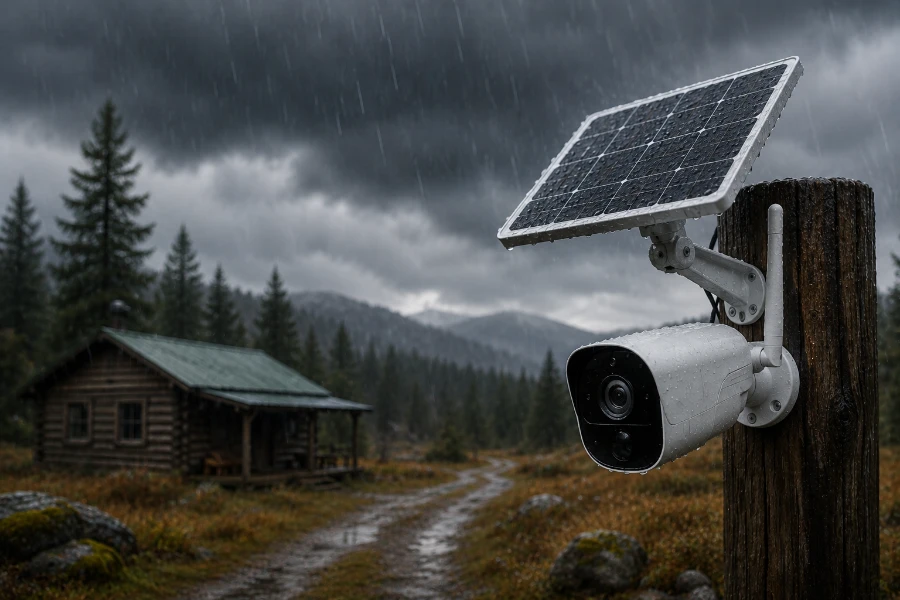
Extended Poor Weather
Modern batteries are remarkably capable.
However, prolonged periods of heavy cloud cover can reduce charging efficiency.
To minimize risk:
- Choose larger batteries
- Optimize solar panel placement
- Reduce unnecessary recording activity
Proper system sizing is crucial for dependable operation.
Solar Camera No Internet vs Cellular Solar Cameras
Many buyers compare offline systems with cellular-connected alternatives.
Both have advantages.
Offline Solar Cameras
Pros
- No monthly data fees
- Greater privacy
- Simpler setup
- Lower operating costs
Cons
- Limited remote access
- Local footage retrieval required
Cellular Solar Cameras
Pros
- Remote live viewing
- Mobile notifications
- Cloud storage options
Cons
- Monthly SIM card costs
- Cellular coverage requirements
- Higher operating expenses
Which Option Is Right for You?
The answer depends on your goals.
| Requirement | Offline Solar Camera | Cellular Solar Camera |
| No Monthly Fees | Excellent | Limited |
| Remote Viewing | Limited | Excellent |
| Remote Locations | Excellent | Depends on Signal |
| Privacy | Excellent | Moderate |
| Ongoing Costs | Low | Higher |
If your primary goal is affordable, dependable surveillance in areas without connectivity, a solar camera no internet solution is often the better choice.
If real-time monitoring is essential, cellular connectivity may justify the additional expense.
Those comparing different off-grid security approaches may also find value in our guide to Off-Grid Solar Security Cameras.
Common Applications for Offline Solar Security Systems
The versatility of these systems continues to expand.
Popular applications include:
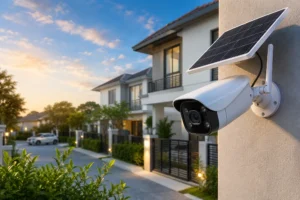
Residential Security
Protecting:
- Homes
- Garages
- Workshops
- Driveways
Rural Property Monitoring
Monitoring:
- Gates
- Pastures
- Equipment yards
- Water sources
Equipment Protection
Securing:
- Tractors
- Excavators
- Generators
- Utility trailers
Wildlife Observation
Many property owners use solar cameras to monitor:
- Wildlife activity
- Hunting areas
- Migration patterns
- Feeding zones
Because the systems operate quietly and independently, they are ideal for observation purposes.
Temporary Event Security
Outdoor events often require short-term surveillance.
Solar cameras can be installed quickly and removed just as easily.
Infrastructure Monitoring
Remote utility sites benefit from ongoing observation without requiring major infrastructure investments.
Installation Tips for Maximum Performance
Even the best camera can underperform if installed incorrectly.
These practical tips can improve reliability significantly.
Position Solar Panels Carefully
Sunlight drives the entire system.
Place panels where they receive maximum daily exposure.
Avoid:
- Tree shade
- Building shadows
- Obstructions
Even small reductions in sunlight can impact charging performance.
Optimize Camera Placement
Think strategically.
Monitor:
- Access points
- Entry gates
- Valuable assets
- High-traffic areas
Camera location often matters more than camera quantity.
Test Motion Detection Zones
Improper detection settings can create problems.
Too sensitive?
You may record every passing animal.
Not sensitive enough?
Important events may be missed.
Testing and adjustment are essential.
Maintain Clean Solar Panels
Dust, dirt, pollen, and debris reduce charging efficiency.
Periodic cleaning helps maintain peak performance.
A simple wipe-down every few weeks can make a noticeable difference.
Review Footage Regularly
Even automated systems benefit from occasional review.
Routine checks help ensure:
- Cameras remain operational
- Storage is functioning correctly
- Motion detection settings remain effective
Preventive maintenance is always easier than troubleshooting after an incident.
Final Thoughts
A solar camera no internet system offers something many traditional surveillance solutions cannot: complete independence.
No internet connection.
No utility power.
and no monthly subscriptions.
Just reliable security where you need it most.
Whether you’re protecting a remote cabin, monitoring a construction site, securing agricultural equipment, or watching over critical infrastructure, these systems provide a practical and cost-effective solution.
The key is choosing the right equipment, sizing the solar and battery components correctly, and installing the system strategically.
Do that, and you’ll gain dependable surveillance coverage almost anywhere. In a world where connectivity is not always available, that kind of flexibility is hard to beat.
FAQs
Yes. A solar camera no internet system can record footage locally using SD cards or internal storage without requiring Wi-Fi or broadband access.
Most offline solar cameras store recordings on microSD cards, internal memory, or a local NVR system installed on the property.
The runtime depends on battery capacity, but many systems can continue operating for several days during cloudy weather or low-light conditions.
Typically, no. A true solar camera no internet setup records footage locally and does not provide remote live viewing unless another communication method is added.
Yes. Solar-powered cameras are ideal for cabins because they provide surveillance without requiring utility power or internet service.
Some models offer continuous recording, while others use motion detection to conserve battery power and storage space.
A 128GB or 256GB microSD card is sufficient for most users, though higher capacities provide longer recording retention.
Yes. Most quality solar cameras are designed for year-round operation, although battery performance may decrease in extremely cold temperatures.
No. Most systems require only basic mounting and proper solar panel placement, making installation much easier than traditional wired cameras.
The biggest advantage is complete independence from utility power and internet service, allowing reliable surveillance in remote and off-grid locations.