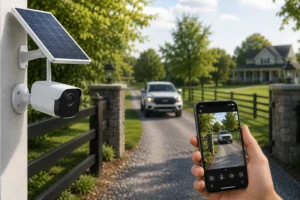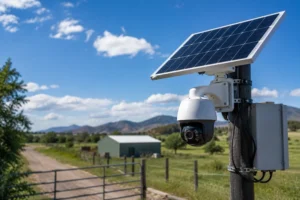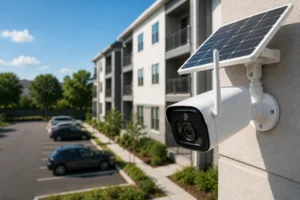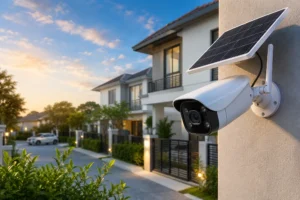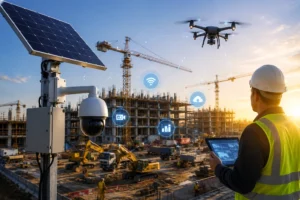
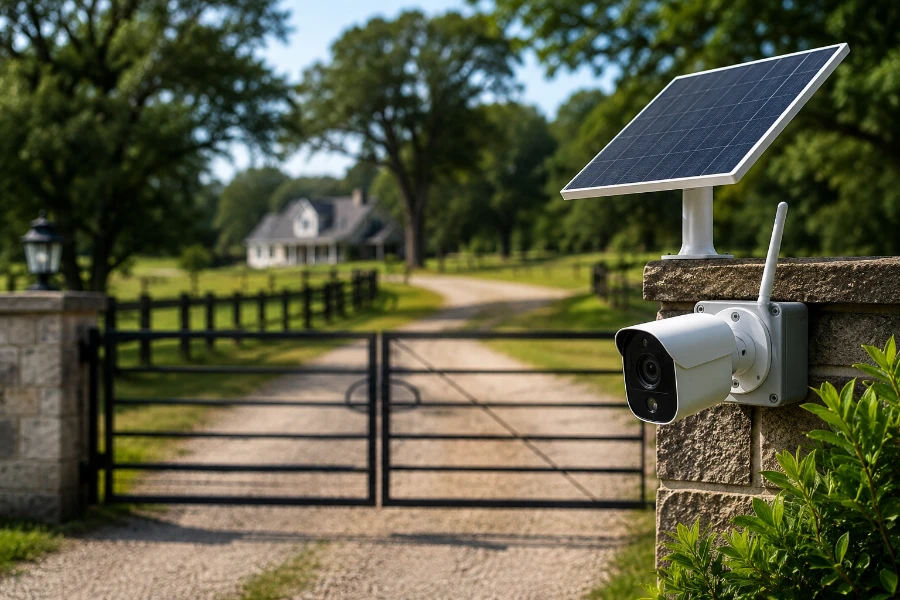
A gate is often the first point of contact between your property and the outside world. Whether you own a home, farm, ranch, business, construction site, or vacation property, securing that entrance should be a priority. That’s where a solar gate camera becomes incredibly valuable.
Traditional security cameras work well in many situations. However, gates are frequently located far from buildings, making electrical wiring expensive and complicated. A solar-powered solution changes everything. Instead of digging trenches and running power cables, property owners can install a camera that generates its own energy from sunlight.
The result is simple. Better security. Easier installation. Lower operating costs.
Today, more homeowners and business owners are turning to solar surveillance technology because it offers a practical way to monitor entrances without relying on the electrical grid. Let’s explore why.
What Is a Solar Gate Camera?
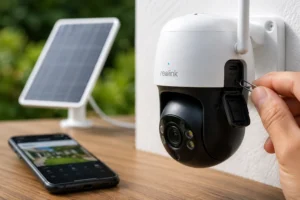
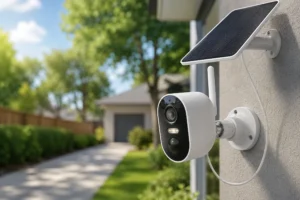
A solar gate camera is a surveillance camera powered primarily by solar energy. It combines a solar panel, rechargeable battery, motion detection system, wireless communication technology, and video recording capabilities into one security solution.
Unlike traditional wired cameras, these systems can operate independently from household electricity.
A typical setup includes:
- Solar panel
- Rechargeable battery
- HD camera
- Motion sensor
- Wireless transmitter
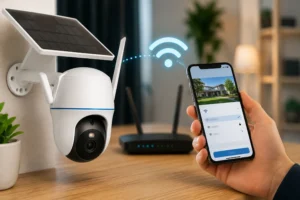
- Mobile app connectivity
The solar panel captures energy throughout the day and stores excess power inside the battery. This stored energy keeps the camera functioning during nighttime hours and cloudy weather conditions.
For remote entrances, long driveways, and rural properties, this design offers tremendous flexibility.
How Solar Gate Cameras Work
The technology behind a solar gate camera is surprisingly efficient.
During daylight hours:
- Solar panels collect sunlight.
- Energy is converted into electricity.
- Excess power charges the internal battery.
- The camera remains active and recording.
Interestingly, solar panels rely on a scientific principle known as the photovoltaic effect, which converts sunlight directly into electricity.
During nighttime operation:
- The battery supplies power.
- Motion detection remains active.
- Night vision engages automatically.
- Alerts continue to be delivered to users.
Most modern systems are engineered to maximize battery efficiency, allowing several days of operation even when sunlight is limited.
Why Property Owners Are Choosing Solar Gate Cameras
The popularity of the solar gate camera continues to grow because it solves several common security challenges at once.
No Need for Electrical Wiring
One of the biggest advantages is the elimination of costly electrical work.
Imagine a gate located 500 feet from your house.
Installing a traditional camera may require:
- Underground trenching
- Electrical conduit
- Wiring permits
- Licensed electricians
- Landscape restoration
Costs can quickly escalate.
A solar-powered gate camera eliminates most of these expenses.
Lower Installation Costs
Because wiring is unnecessary, installation becomes dramatically simpler.
| Feature | Solar Gate Camera | Wired Camera |
| Electrical Connection | Not Required | Required |
| Trenching | Usually No | Often Necessary |
| Installation Time | Several Hours | Multiple Days |
| Expansion | Easy | More Difficult |
| Relocation | Simple | Complex |
For many property owners, this cost savings alone justifies choosing solar technology.
Reliable During Power Outages
Security shouldn’t stop because the power goes out.
Storms, hurricanes, grid failures, and severe weather events can leave properties vulnerable.
Since a solar security camera for gate installations relies on battery storage, surveillance can continue even when the electrical grid is offline.
This makes solar-powered systems especially valuable in rural and remote locations.
Environmentally Friendly Security
Many users appreciate the sustainability benefits.
Solar-powered surveillance reduces energy consumption while still delivering reliable performance.
Rather than drawing electricity continuously from the grid, the system generates its own renewable power.
Best Locations for Solar Gate Cameras
The flexibility of solar power makes these cameras suitable for many environments.
Residential Driveway Gates
Driveways are often the primary access point to a property.
A driveway gate camera allows homeowners to:
- Monitor visitors
- Screen deliveries
- Identify unfamiliar vehicles
- Receive real-time alerts
Knowing who arrives before they reach your home provides an additional layer of security.
Farms and Ranches
Agricultural properties often cover large areas.
Gate entrances may be located hundreds or even thousands of feet from buildings.
A solar gate camera can help monitor:
- Livestock areas
- Equipment entrances
- Service roads
- Storage facilities
Without requiring extensive infrastructure.
Commercial Properties
Businesses use solar surveillance to secure:
- Employee entrances
- Fleet yards
- Warehouse access points
- Service gates
Because installation is straightforward, expanding security coverage becomes easier over time.
Construction Sites
Construction projects face unique security challenges.
Equipment theft remains a major concern.
Since sites frequently lack permanent power infrastructure, solar cameras provide an ideal temporary security solution.
Remote Cabins and Vacation Properties
Vacant properties are attractive targets for trespassers and thieves.
A remote gate security camera provides visibility even when owners are hundreds of miles away.
With smartphone access, users can check activity anytime.
Key Features to Look for in a Solar Gate Camera
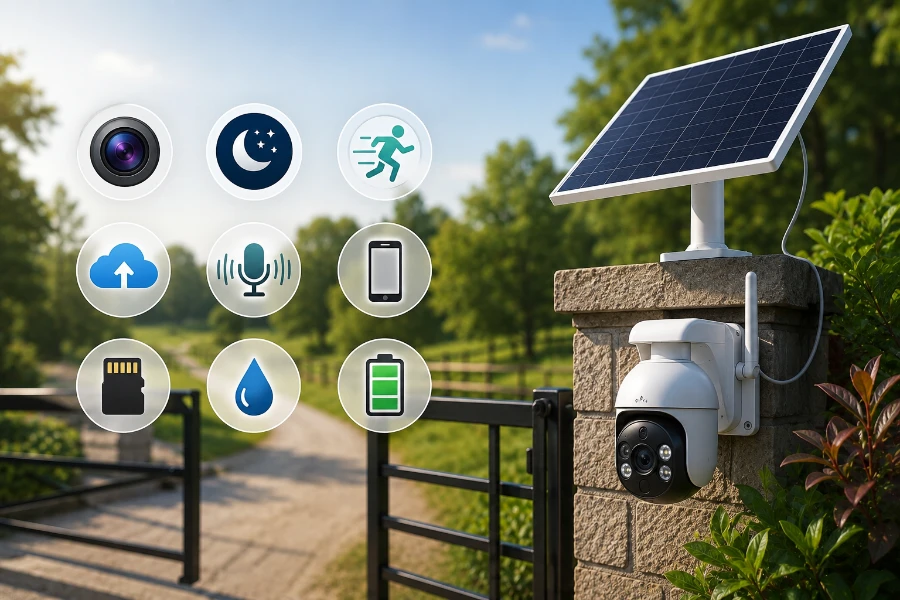
Not all cameras deliver the same performance.
Choosing the right features can significantly impact security effectiveness.
High-Definition Video Quality
Video clarity matters.
If an incident occurs, poor footage may provide little value.
Look for:
- 1080p resolution minimum
- 2K video for greater detail
- 4K options for larger properties
Higher resolutions make it easier to identify faces, vehicles, and license plates.
Night Vision Capabilities
Many security events occur after dark.
Strong night vision should be considered essential.
Common options include:
Infrared Night Vision
Benefits include:
- Long viewing distances
- Reliable low-light performance
- Lower power consumption
Color Night Vision
Advantages include:
- Better identification
- Improved evidence collection
- Enhanced image detail
Premium systems increasingly include full-color nighttime recording.
Motion Detection Technology
Modern cameras do more than simply detect movement.
Advanced systems can distinguish between:
- People
- Vehicles
- Animals
- Environmental activity
This reduces unnecessary alerts and improves monitoring accuracy.
Weather Resistance
Outdoor cameras must withstand challenging environmental conditions.
Rain.
Dust.
Heat.
Snow.
Humidity.
Everything.
Many manufacturers measure durability using an Ingress Protection (IP) rating, which classifies resistance against dust and water intrusion.
When evaluating cameras, look for ratings such as:
| Rating | Protection Level |
| IP65 | Water-resistant and dust-tight |
| IP66 | Protection against heavy rain |
| IP67 | Enhanced environmental protection |
Higher ratings generally indicate greater durability.
Two-Way Audio
Many solar cameras include built-in microphones and speakers.
This feature allows users to:
- Speak with visitors
- Give delivery instructions
- Verify identities
- Deter unwanted activity
Sometimes simply speaking through the camera is enough to prevent problems.
Mobile App Integration
Smartphone access has become standard.
The best systems provide:
- Live viewing
- Motion alerts
- Remote playback
- Camera controls
- System health monitoring
Instant access can significantly improve response times.
Storage Options
Recorded footage must be stored somewhere.
Common options include:
Local Storage
- MicroSD cards
- No monthly fees
- Quick access
Cloud Storage
- Remote backup
- Greater protection against theft
- Access from anywhere
Hybrid Storage
Many users prefer combining local and cloud storage for maximum protection.
How Solar Gate Cameras Work Without Constant Sunlight
A common concern involves cloudy weather.
Fortunately, modern battery technology is highly efficient.
Many systems can operate for several days without direct sunlight.
If you’re evaluating battery performance and backup capabilities, our guide on How Long Do Solar Cameras Last Without Sun? provides a deeper look at what to expect under different weather conditions.
Solar Gate Camera vs Traditional Wired Camera
Choosing between wired and solar surveillance often depends on property layout.
| Feature | Solar Camera | Wired Camera |
| Installation Cost | Lower | Higher |
| Flexibility | Excellent | Limited |
| Mobility | Easy | Difficult |
| Power Outage Protection | Strong | Depends on Backup Systems |
| Remote Gate Suitability | Excellent | Often Challenging |
For remote entrances, solar systems frequently provide the more practical solution.
How to Choose the Right Solar Gate Camera
Not every property requires the same type of security system.
A small residential driveway has very different requirements than a commercial yard or a large ranch. Choosing the right solar gate camera starts with understanding your specific needs.
Consider Property Size
The larger the property, the more important camera range becomes.
For example:
| Property Type | Recommended Camera Features |
| Small Home | 1080p, Wi-Fi Connectivity |
| Large Residence | 2K or 4K Resolution, Wide Viewing Angle |
| Farm or Ranch | Cellular Connectivity, Extended Battery Life |
| Commercial Site | Multiple Cameras, Cloud Storage |
| Remote Property | Solar Panel with Large Battery Capacity |
A camera that works perfectly on a suburban driveway may not provide sufficient coverage for a large agricultural entrance.
Evaluate Sunlight Availability
Solar cameras depend on sunlight.
Before installation, examine:
- Tree coverage
- Building shadows
- Seasonal sun exposure
- Panel orientation opportunities
Ideally, the solar panel should receive several hours of direct sunlight daily.
Determine Connectivity Requirements
Many solar cameras connect through Wi-Fi.
However, gates located far from buildings may require alternative solutions such as:
- Cellular LTE connectivity
- Signal repeaters
- Wireless bridges
Connectivity is often overlooked during the buying process, yet it can make or break system performance.
Choose the Right Storage Capacity
Storage needs vary depending on recording habits.
Ask yourself:
- Do you want continuous recording?
- Motion-triggered recording only?
- Cloud backup?
- Local storage?
Higher-resolution footage requires more storage space, so plan accordingly.
Compare Available Models
Before making a purchase, it is worth comparing today’s leading products to understand differences in image quality, battery performance, detection accuracy, and connectivity options. Our guide to the Best Solar Security Cameras 2026 can help narrow your options and identify the right camera for your property.
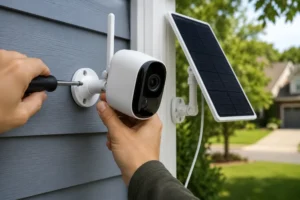
Installation Tips for Maximum Performance
Even the best camera can perform poorly if installed incorrectly.
A little planning goes a long way.
Position the Solar Panel Correctly
Solar panels need sunlight.
That sounds obvious, but many installations fail because panels are mounted in shaded locations.
For optimal performance:
- Face panels toward the strongest daily sunlight
- Avoid trees and roof overhangs
- Check seasonal shading patterns
- Clean panels regularly
A properly positioned panel can dramatically improve battery life.
Choose the Best Camera Angle
Camera placement affects image quality and coverage.
Try to:
- Capture approaching vehicles
- Monitor pedestrian traffic
- Minimize blind spots
- Avoid direct sun glare
The goal is to identify activity clearly rather than simply recording movement.
Optimize Motion Detection Zones
Motion detection can become frustrating when configured incorrectly.
Common causes of false alerts include:
- Moving branches
- Passing animals
- Road traffic
- Shadows
Most modern systems allow custom motion zones that focus on important areas while ignoring distractions.
Maintain Strong Wireless Signals
If your camera relies on Wi-Fi, signal strength matters.
Poor connectivity may cause:
- Delayed notifications
- Video buffering
- Missed recordings
- Connection failures
Test signal strength before permanently mounting the camera.
Common Challenges and How to Overcome Them
Every security system has limitations.
The good news is that most issues are preventable.
Limited Sunlight Exposure
Properties with dense tree coverage may struggle with solar charging.
Solutions include:
- Relocating the solar panel
- Using extension cables
- Selecting larger solar panels
- Choosing cameras with higher-capacity batteries
Weak Wi-Fi Signals
Long driveways often exceed normal Wi-Fi range.
Potential fixes include:
- Mesh Wi-Fi systems
- Outdoor access points
- Wireless bridges
- Cellular-enabled cameras
False Motion Alerts
Excessive notifications quickly become annoying.
Reduce false alarms by:
- Adjusting sensitivity settings
- Creating motion zones
- Enabling AI detection
- Repositioning the camera
Battery Performance During Winter
Cold temperatures can affect battery efficiency.
To improve performance:
- Keep panels clean
- Maximize sunlight exposure
- Choose cameras designed for extreme weather
- Consider larger battery capacities
Poor Camera Placement
Many security issues result from improper positioning rather than equipment failure.
Before final installation:
- Test camera angles
- Review sample footage
- Verify night vision performance
- Check coverage zones
A few adjustments can significantly improve results.
Smart Features That Enhance Gate Security
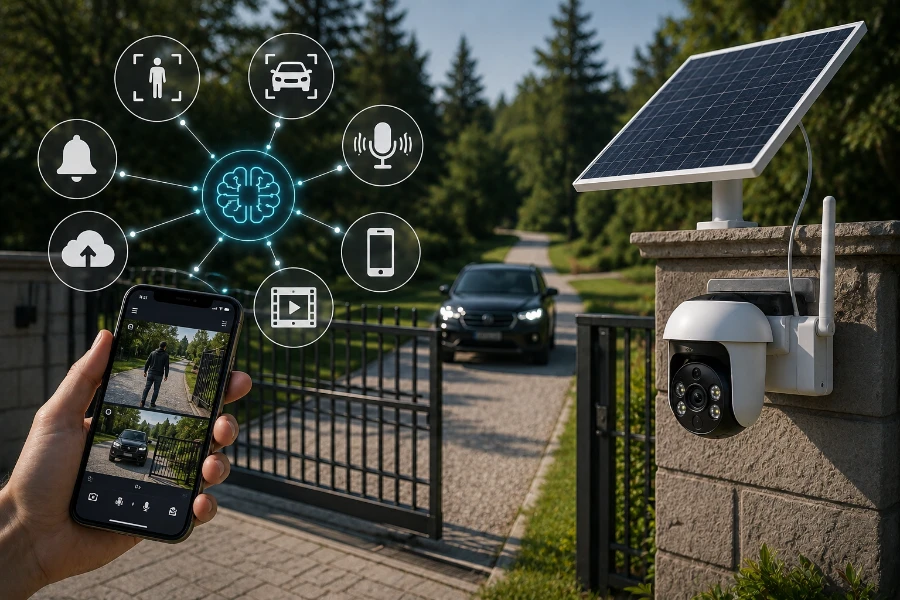
Modern solar surveillance systems are becoming increasingly intelligent.
Today’s cameras do much more than record video.
AI-Powered Detection
Artificial intelligence helps cameras distinguish between different types of movement.
This allows the system to identify:
- Humans
- Vehicles
- Animals
As a result, alerts become more accurate and useful.
License Plate Recognition
Some advanced systems can capture and identify license plate information.
This feature is particularly useful for:
- Businesses
- Gated communities
- Farms
- Commercial facilities
Smart Home Integration
Many solar cameras integrate with:
- Smart displays
- Voice assistants
- Mobile automation systems
This creates a more seamless security experience.
Remote Access Control
Some systems can work alongside:
- Automatic gate openers
- Access control systems
- Intercoms
This allows users to monitor and manage property access from virtually anywhere.
Instant Notifications
Real-time alerts remain one of the most valuable security features.
When someone approaches the gate, the system can immediately send a notification to your phone.
Faster awareness often leads to faster responses.
Solar Gate Cameras for Different Property Types
The ideal setup varies depending on how the property is used.
Homeowners
Residential users often prioritize:
- Visitor monitoring
- Package protection
- Family safety
- Ease of installation
Farmers and Ranch Owners
Agricultural properties typically require:
- Long-range coverage
- Cellular connectivity
- Rugged construction
- Extended battery life
Business Owners
Commercial users frequently focus on:
- Vehicle tracking
- Employee access
- Asset protection
- Incident documentation
Property Managers
Managers benefit from:
- Remote access
- Multiple-camera systems
- Cloud storage
- Easy scalability
Remote Landowners
Owners of vacant properties often need:
- Reliable battery performance
- Cellular communication
- Real-time alerts
- Minimal maintenance
Cost Breakdown: What to Expect
One of the biggest questions buyers ask is simple.
How much does a solar gate camera cost?
Entry-Level Systems
Typical Price Range:
$80–$200
Common features:
- 1080p video
- Basic motion detection
- Local storage
- Smaller batteries
Mid-Range Systems
Typical Price Range:
$200–$500
Features often include:
- 2K resolution
- AI detection
- Improved night vision
- Larger batteries
Premium Systems
Typical Price Range:
$500–$1,500+
Advanced features may include:
- 4K video
- Cellular connectivity
- License plate recognition
- Enterprise-level cloud storage
Long-Term Savings
Although premium cameras cost more initially, they often save money over time by reducing:
- Electrical installation expenses
- Maintenance costs
- Security risks
- Property losses
Maintenance and Care Tips
Solar cameras require surprisingly little maintenance.
Still, regular attention helps maximize performance.
Clean the Solar Panel
Dust, pollen, and debris reduce charging efficiency.
Clean panels every few months using:
- Water
- Soft cloths
- Non-abrasive cleaning materials
Check Battery Health
Inspect battery performance periodically.
Warning signs may include:
- Reduced runtime
- Frequent low-power alerts
- Charging inconsistencies
Update Firmware
Manufacturers regularly release updates that improve:
- Security
- Stability
- Feature performance
Enable automatic updates whenever possible.
Test Motion Detection
Occasionally walk through detection zones to verify:
- Recording activation
- Alert delivery
- Detection accuracy
Testing helps identify problems before they become serious.
Review Footage Quality
Environmental conditions change over time.
Trees grow.
Landscaping evolves.
Lighting conditions shift.
Periodic footage reviews ensure continued coverage effectiveness.
Future Trends in Solar Gate Camera Technology
Solar surveillance technology continues to evolve rapidly.
Several developments are shaping the future.
Improved Solar Efficiency
Solar panels are becoming more efficient at converting sunlight into usable power.
This means:
- Faster charging
- Smaller panels
- Better performance during cloudy weather
Better Battery Technology
Battery improvements are extending operating times while reducing charging requirements.
Future systems may provide weeks of operation without direct sunlight.
Advanced AI Detection
Artificial intelligence continues to improve.
Future cameras will likely offer:
- Enhanced facial recognition
- Smarter threat assessment
- Improved vehicle identification
- More accurate alert filtering
Expanded Connectivity Options
Cellular networks and wireless technologies continue to improve.
This will make remote monitoring easier than ever before.
Integrated Security Ecosystems
Future solar gate camera systems will increasingly work alongside:
- Smart locks
- Access control systems
- Lighting controls
- Alarm systems
Creating a unified security platform.
Conclusion
A solar gate camera offers one of the most practical ways to secure a property entrance. It combines flexibility, reliability, and convenience into a system that can operate almost anywhere sunlight is available.
For homeowners, it provides peace of mind. For businesses, it strengthens access control and for farms, ranches, and remote properties, it delivers security where traditional wired systems often become expensive or impractical.
The best results come from choosing the right camera, installing it correctly, and matching its features to your property’s needs. With improvements in solar technology, battery capacity, and artificial intelligence, today’s solar-powered gate cameras are more capable than ever.
If protecting your entrance is a priority, investing in a high-quality solar gate camera may be one of the smartest security decisions you make.
FAQs
A solar gate camera is a security camera powered by solar energy and rechargeable batteries, designed to monitor gates, driveways, and property entrances.
Yes. They store energy in built-in batteries during the day and use that power to operate after dark.
Many models can operate for several days without direct sunlight, depending on battery capacity and camera usage.
Not always. Some cameras use cellular networks, while others connect through Wi-Fi for remote access and alerts.
No. Most solar gate cameras are easier to install than wired systems because they do not require electrical trenching or power cables.
Some models support continuous recording, while others record only when motion is detected to conserve battery power.
Most quality models are designed for outdoor use and feature weather-resistant ratings that protect against rain, dust, and extreme temperatures.
Yes. Most modern systems include mobile apps that allow you to watch live video, receive alerts, and review recordings from anywhere.
Prices typically range from around $80 for basic models to over $1,500 for advanced systems with premium features.
Yes. They are especially useful for locations where electrical power is unavailable or costly to install.