Choosing the right security system used to be simple. Not anymore. Today, the debate around Solar Camera vs Wired Security Camera is front and center—and for good reason. Technology has evolved fast, and both options now offer serious advantages depending on your setup, location, and expectations.
I’ve seen homeowners install the wrong system and regret it within weeks. Not because the camera was bad—but because it didn’t fit their situation. That’s the key. This isn’t about which is “better” overall. It’s about which is better for you.
In this guide, we’ll break down everything that matters—installation, reliability, cost, performance, and real-world use cases—so you can make a confident, informed decision.
What Is a Solar Security Camera?
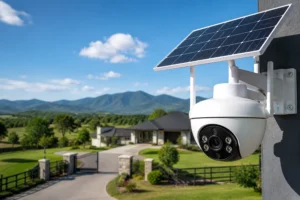
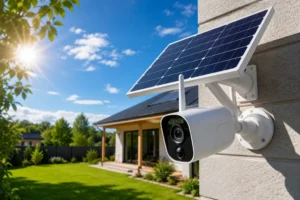
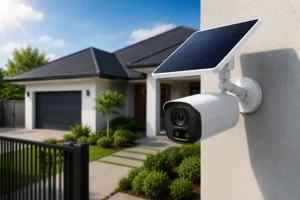
A solar security camera is exactly what it sounds like. It runs on sunlight.
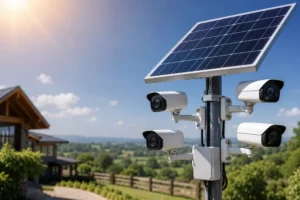
It uses a small solar panel to charge a built-in rechargeable battery, allowing the camera to operate without being plugged into a power source. Most models are wireless, meaning they connect via Wi-Fi or cellular networks.
Simple. Clean. Flexible.
Key Components:
- Solar panel (mounted or built-in)
- Rechargeable battery
- Wireless camera unit
- App-based monitoring system
Where It Shines:
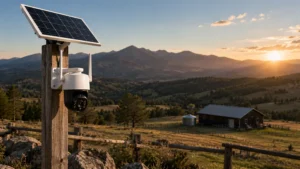
- Remote locations without power access
- Outdoor areas like farms, cabins, or large yards
- Quick DIY installations
If you hate dealing with wires, this option feels like freedom.
What Is a Wired Security Camera?
A wired security camera connects directly to a power source and often to a recording system via cables. These systems can use Power over Ethernet (PoE), coaxial cables, or traditional electrical wiring.
They’re stable. Consistent. Built for permanence.
Types of Wired Systems:
- PoE (Power over Ethernet)
- Analog CCTV systems
- Hardwired IP cameras
Where It Excels:
- Homes with structured layouts
- Offices and commercial properties
- Long-term security setups
If you want reliability above all else, wired systems have a strong reputation for a reason.
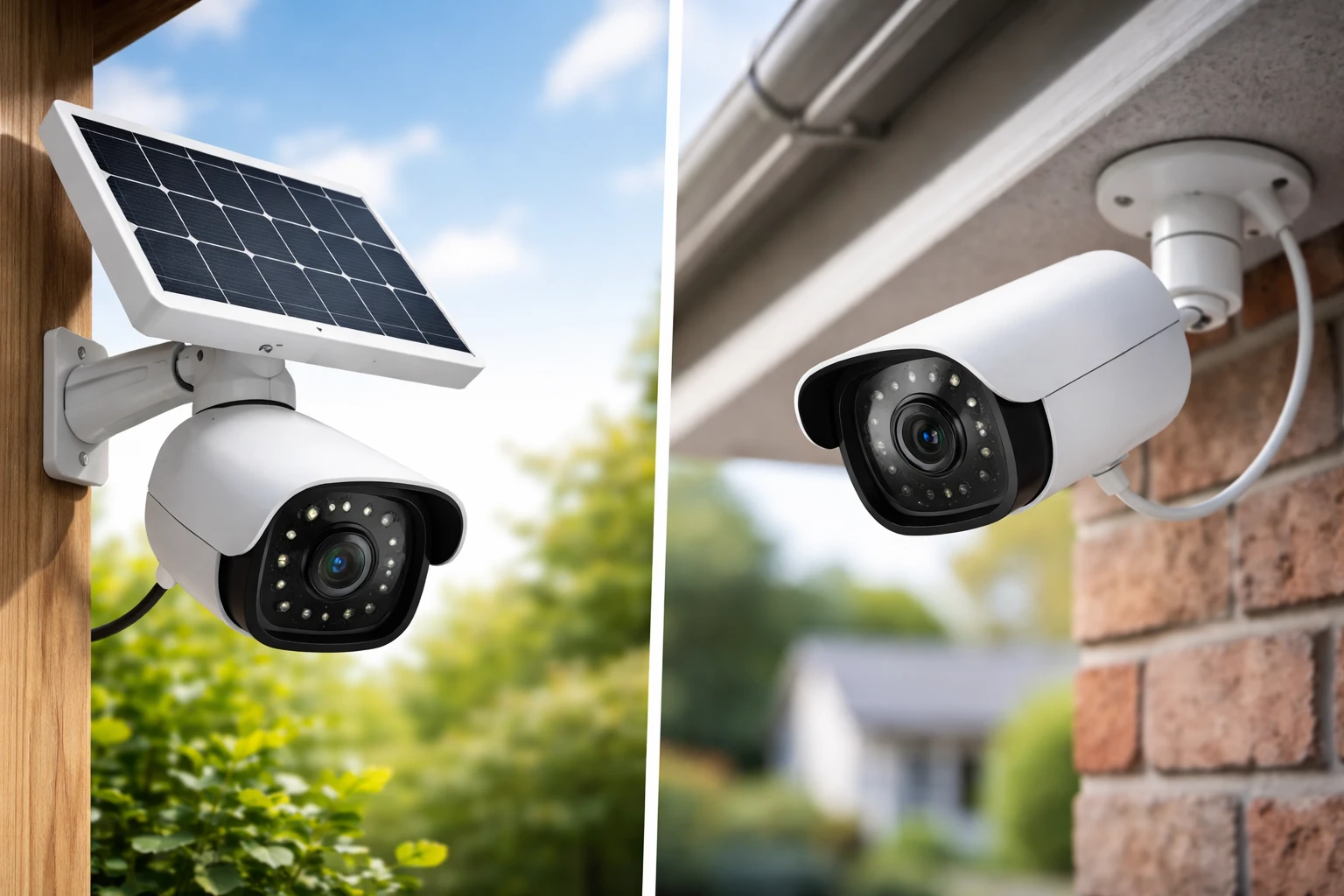
Solar Camera vs Wired Security Camera: Quick Comparison
Here’s where things get clear.
| Feature | Solar Camera | Wired Security Camera |
| Power Source | Solar + Battery | Direct electrical |
| Installation | Easy (DIY) | Complex (often professional) |
| Reliability | Weather-dependent | Very stable |
| Video Quality | Good to excellent | Excellent |
| Maintenance | Moderate | Low to moderate |
| Flexibility | High | Low |
| Cost (Upfront) | Medium | High |
| Cost (Long-Term) | Low | Medium |
No surprises here. Trade-offs exist. Always.
Installation: Which Is Easier?
Let’s be honest. This is where most people decide.
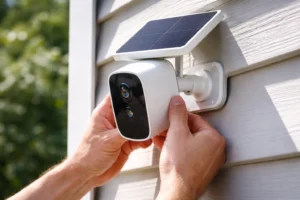
Solar cameras are almost plug-and-play. Mount the camera, position the panel toward sunlight, connect to an app—and you’re live. You can do it in under an hour.
Wired cameras? Different story.
Running cables through walls, drilling, setting up a DVR or NVR system—it’s not beginner-friendly. Many people hire professionals, which adds to the cost.
Quick Take:
- Want speed and simplicity? Go solar
- Want a permanent system? Go wired
Power & Reliability
Here’s where the Solar Camera vs Wired Security Camera debate gets serious.
Solar cameras depend on sunlight. No sunlight means relying on battery reserves. Most modern units can last several days without sun, but extended cloudy weather can become an issue.
Wired cameras don’t care about the weather. They run as long as power is available.
Real-World Insight:
- Solar works great in sunny regions
- Wired wins in areas with inconsistent weather or heavy shade
If reliability is your top priority, wired systems still have the edge.
Video Quality & Performance
Let’s talk clarity.
Both solar and wired cameras now offer HD, 2K, and even 4K resolution. The gap has narrowed significantly. But performance isn’t just about resolution.
It’s about consistency.
Solar cameras may reduce performance to conserve battery—lower frame rates, delayed uploads, or limited recording times.
Wired systems? They run at full capacity 24/7.
Performance Comparison:
- Solar: Great quality, but sometimes optimized for battery
- Wired: Consistent, uninterrupted performance
If you need constant recording with zero compromise, wired wins again.
Cost Breakdown (Upfront vs Long-Term)
Money matters. Let’s break it down clearly.
Solar Cameras:
- Moderate upfront cost
- No wiring expenses
- Minimal electricity costs
Wired Cameras:
- Higher upfront cost (equipment + installation)
- Ongoing electricity usage
- Possible maintenance on wiring
Quick Comparison:
| Cost Factor | Solar | Wired |
| Installation | Low | High |
| Equipment | Medium | Medium to High |
| Energy Costs | Low | Medium |
| Long-Term ROI | Strong | Moderate |
If you’re budget-conscious upfront, solar is appealing. If you’re thinking long-term durability, wired might justify the investment.
Maintenance & Durability
Nothing is truly “set and forget.” Not even security cameras.
Solar cameras require:
- Occasional panel cleaning
- Battery health checks
Wired systems require:
- Cable inspections
- System troubleshooting if something fails
Honest Take:
Solar needs small, regular attention. Wired needs less frequent but sometimes more complex fixes.
Flexibility & Placement Options
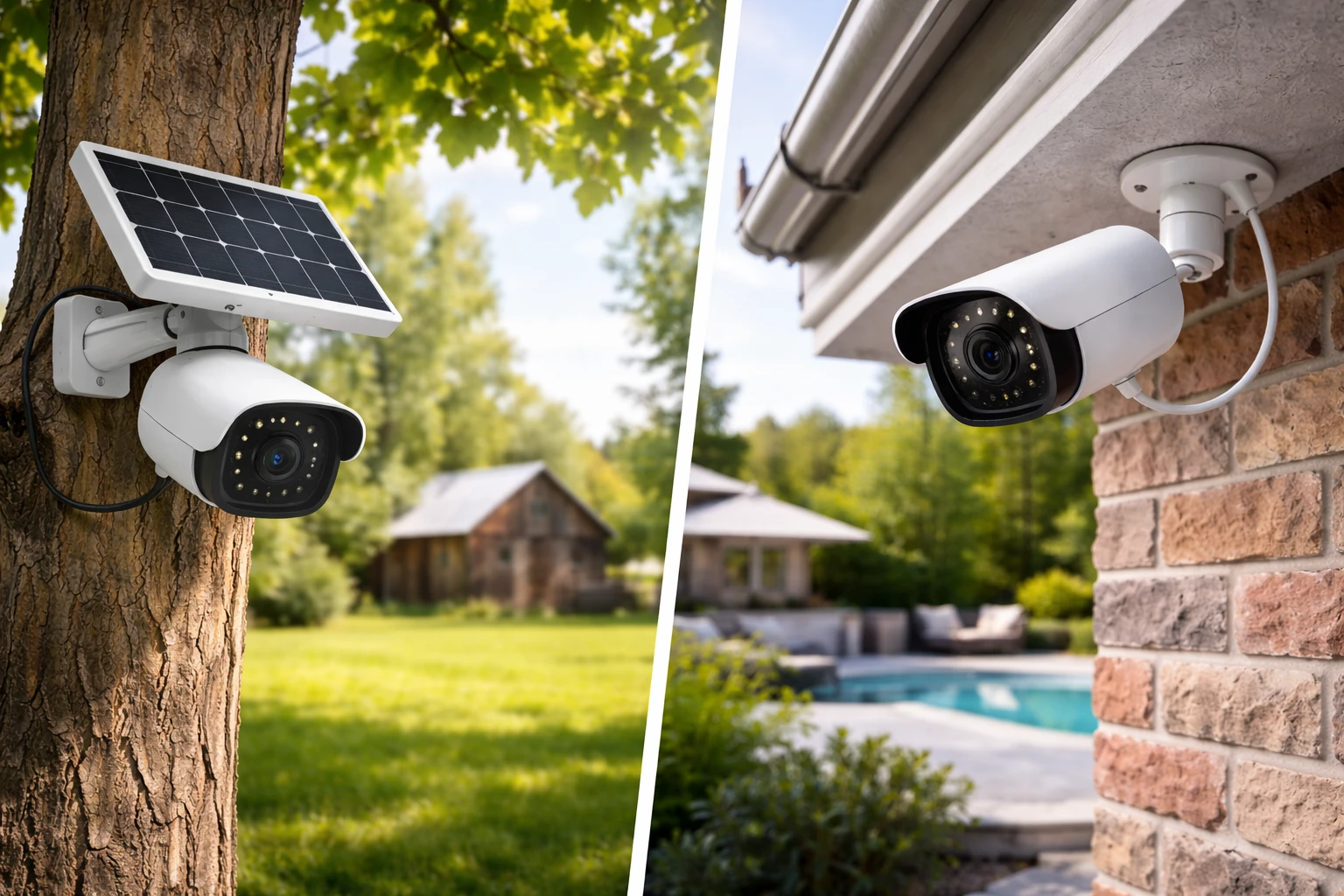
This is where solar cameras dominate.
You can install them almost anywhere. Backyard. Fence. Tree. Detached garage. No wires holding you back.
Wired cameras are limited by infrastructure. If there’s no wiring access, installation becomes expensive or impractical.
Best Use Cases:
- Solar = flexibility, mobility, expansion
- Wired = structured, permanent setups
If you think you might move or expand your system later, solar gives you room to adapt.
Security & Data Protection
Now let’s talk digital safety.
Solar cameras typically rely on wireless connections and cloud storage. That introduces potential vulnerabilities—but modern encryption has improved significantly.
Wired systems often use closed networks and local storage, making them harder to hack.
Key Differences:
- Wireless = convenience with slight risk
- Wired = controlled environment with stronger security
No system is immune. But wired setups offer more control.
Pros and Cons of Solar Cameras
Pros:
- Easy installation
- No wiring required
- Flexible placement
- Lower long-term energy cost
Cons:
- Dependent on sunlight
- Battery limitations
- Potential performance adjustments
Pros and Cons of Wired Security Cameras
Pros:
- Stable power and performance
- Continuous recording
- Strong reliability
Cons:
- Complex installation
- Higher upfront cost
- Limited flexibility
Best Use Cases: Which One Should You Choose?
This is the question everyone asks. And the answer depends on your situation.
Choose Solar Cameras If:
- You need quick installation
- You’re covering remote or outdoor areas
- You want flexibility and portability
Choose Wired Cameras If:
- You need constant monitoring
- You’re securing a business or large home
- You want maximum reliability
The Solar Camera vs Wired Security Camera decision becomes much easier when you define your priorities first.
Hybrid Setups: The Smart Middle Ground
Here’s something most people overlook.
You don’t have to choose just one.
Many homeowners combine both systems:
- Wired cameras for main entry points
- Solar cameras for outdoor or hard-to-reach areas
This hybrid approach gives you the best of both worlds.
Reliable where it matters most. Flexible where you need it.
Common Mistakes to Avoid
I’ve seen these mistakes too many times.
Avoid These:
- Installing solar panels in shaded areas
- Underestimating wiring complexity
- Ignoring internet strength
- Choosing based on price alone
Security is not where you cut corners. Ever.
Future Trends in Security Cameras
The industry isn’t slowing down.
Expect:
- Smarter AI detection
- Longer battery life for solar cameras
- Better integration with smart homes
- Increased adoption of hybrid systems
The gap in the Solar Camera vs Wired Security Camera debate is shrinking every year.
Conclusion
So, which is better?
It depends.
If you want flexibility, easy installation, and a clean setup, solar cameras are a strong choice. If you want reliability, constant performance, and a long-term system, wired cameras still lead.
The smartest move? Match the system to your environment.
The Solar Camera vs Wired Security Camera comparison isn’t about picking a winner. It’s about choosing what works best for your space, your budget, and your expectations.
Make that decision carefully—and you’ll get a system that actually protects what matters.
FAQs
Yes, they are reliable in areas with consistent sunlight, especially when paired with high-capacity batteries.
Yes, they use stored battery power to operate at night, including motion detection and recording.
Wired cameras are more consistent, but solar cameras offer flexibility—so the better option depends on your needs.
Absolutely. Most solar cameras are designed for quick DIY installation with minimal tools.
Not unless they are connected to a backup power source like a UPS or generator.
Most last several days without sunlight, depending on usage and battery capacity.
Solar cameras are usually cheaper upfront, while wired systems may cost more due to installation.
Yes, they are ideal for remote locations where running power lines is difficult or expensive.
Yes, a hybrid system is often the best solution for combining reliability and flexibility.
Most do, but some models offer cellular connectivity for areas without internet access.