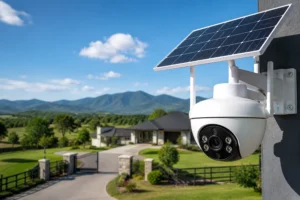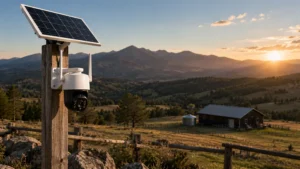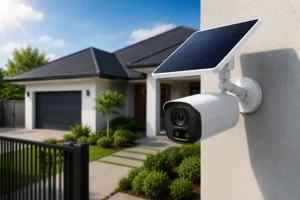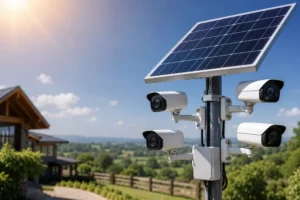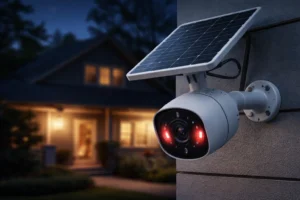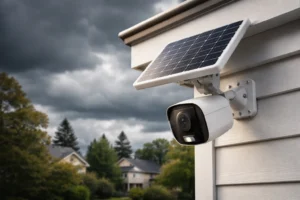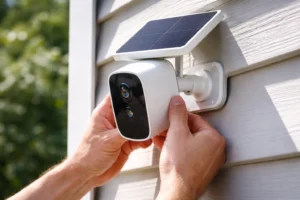
If you are researching whether solar cameras need direct sunlight, you are asking the right question before buying. Too many people assume solar security cameras can operate flawlessly anywhere outdoors simply because they have a solar panel attached. Reality is a little more nuanced.
The good news? Modern solar CCTV systems are far more capable than many buyers realize. They can continue operating during cloudy weather, partial shade, and even rainy stretches if they are installed properly and paired with efficient batteries. But placement still matters. A lot.
I’ve seen homeowners install solar cameras under roof overhangs, behind trees, or on permanently shaded walls and then wonder why the batteries constantly die. The issue usually is not the camera itself. It is the environment.
Understanding how solar-powered security cameras actually work helps you avoid expensive mistakes and frustrating performance problems later. Let’s break it all down clearly.
How Solar Cameras Actually Generate Power
Solar security cameras work using a fairly simple system.
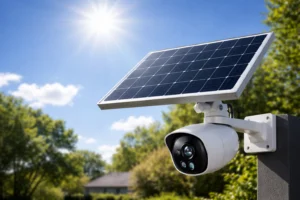
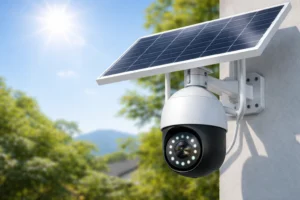
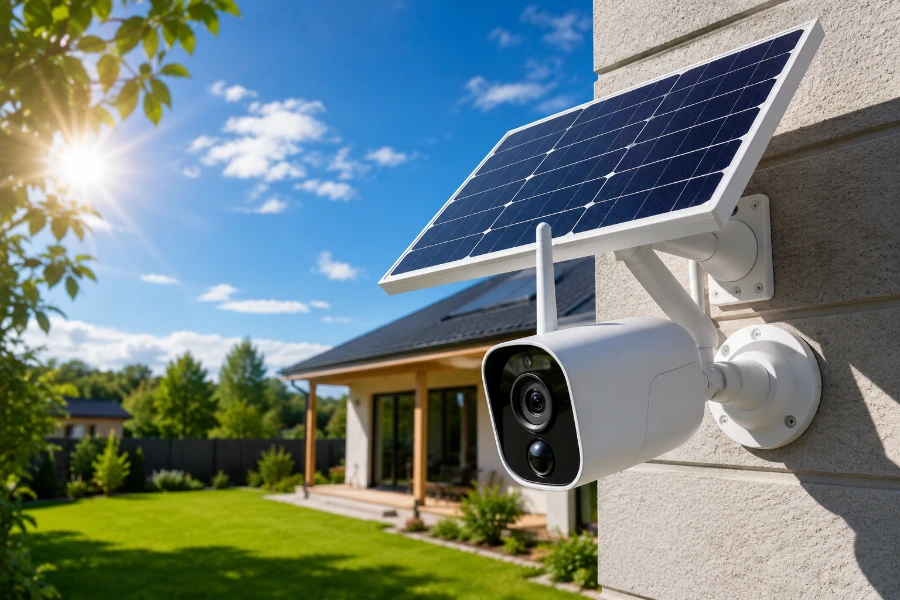
The solar panel captures sunlight and converts it into electrical energy. That energy charges an internal rechargeable battery. The camera then uses that stored power to operate throughout the day and night.
This is where many buyers get confused.
The camera is not running directly from the sunlight in real time every second. Instead, the battery acts like a storage tank. During sunny hours, the battery charges. During nighttime or cloudy periods, the camera pulls energy from the stored reserve.
That battery is everything.
A high-quality battery allows the camera to continue functioning long after the sun disappears. A weak battery creates problems quickly, especially in poor weather conditions.
Modern solar panels rely on advances in Photovoltaics technology, which allows solar cells to convert sunlight into usable electrical energy far more efficiently than older systems.
The Two Core Components
| Component | Purpose |
| Solar Panel | Collects solar energy |
| Rechargeable Battery | Stores energy for camera operation |
Without proper battery storage, solar cameras would stop working every evening. Thankfully, modern systems are much smarter than that.
Do Solar Cameras Need Direct Sunlight?
Here’s the short answer.
No. Solar cameras do not always need direct sunlight to function.
But they absolutely perform best with direct sunlight exposure.
That distinction matters.
A solar panel can still collect energy from indirect sunlight, ambient daylight, and even cloudy skies. However, charging efficiency drops significantly when panels are heavily shaded or exposed to weak sunlight for long periods.
Think about your phone charger.
A fast charger fills your battery quickly. A weak charger still works, but much more slowly. Solar panels behave similarly.
Direct Sunlight vs Indirect Sunlight
Direct sunlight occurs when the solar panel receives unobstructed sun exposure. No trees. No roof shadows and no walls blocking the light.
Indirect sunlight happens when daylight reaches the panel through clouds, reflected surfaces, or partial shade.
Both generate power.
One simply does it better.
Here’s a simple comparison:
| Lighting Condition | Charging Performance |
| Full direct sunlight | Excellent |
| Partial shade | Moderate |
| Bright cloudy conditions | Reduced but usable |
| Heavy overcast weather | Slow charging |
| Deep shade all day | Poor performance |
This explains why some homeowners have fantastic results while others struggle constantly.
Placement changes everything.
Can Solar Cameras Work on Cloudy Days?
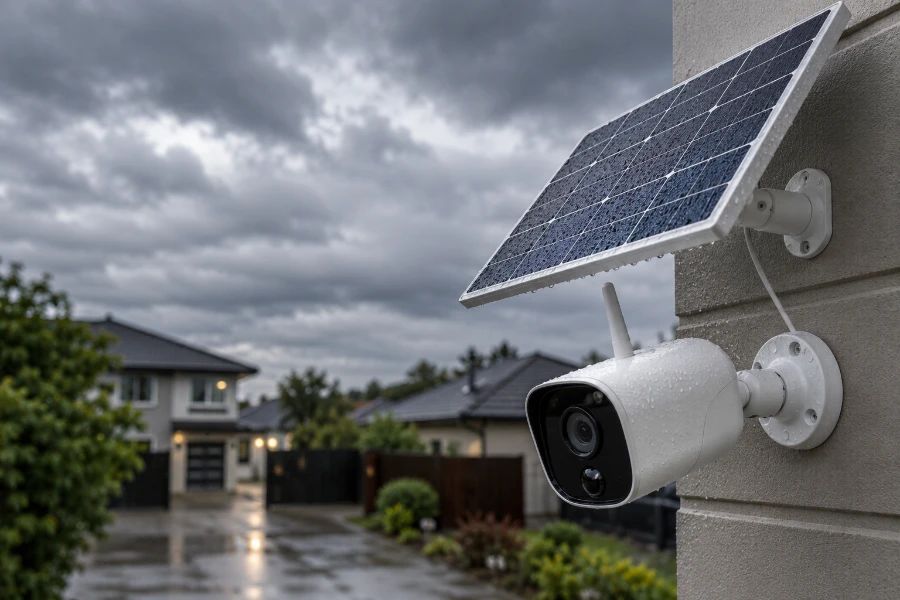
Yes, they can.
Modern solar cameras are designed specifically to handle less-than-perfect weather. Manufacturers know solar systems cannot depend on constant blue skies.
Even during cloudy weather, solar panels continue collecting some energy. The charging speed simply becomes slower.
According to the U.S. Department of Energy Solar Basics guide, solar energy systems can still generate electricity during cloudy conditions, although production levels are reduced compared to direct sunlight exposure.
This is why battery capacity matters so much.
If the camera stored enough energy during sunny days, it can continue operating through several cloudy days without issue.
However, extended periods of bad weather can create problems.
For example:
- Continuous rain for five days
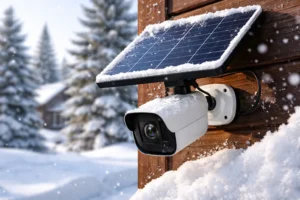
- Heavy snow coverage
- Dense tree shading
- Winter seasons with short daylight hours
These conditions reduce charging opportunities dramatically.
Higher-end cameras handle this better because they use:
- Larger batteries
- More efficient solar panels
- Smarter motion detection systems
- Lower standby power consumption
Cheap solar cameras usually struggle first.
Factors That Affect Solar Camera Charging Performance
Not all solar cameras perform equally. Several factors influence how effectively the system charges and operates.
Solar Panel Size
Bigger panels usually collect more energy.
A small solar panel may work fine for a low-traffic backyard camera. But areas with frequent motion detection events often require larger charging capacity.
Panel wattage matters more than most buyers realize.
Tiny panels can become overwhelmed if:
- Motion recording triggers constantly
- Spotlights activate repeatedly
- Night vision runs heavily
- Two-way audio gets used frequently
More power consumption requires more charging capability.
Battery Capacity
Battery size determines how long the camera can survive without sunlight.
Larger batteries provide:
- Better overnight performance
- Longer backup during storms
- Greater reliability in winter
This becomes critical in regions with unpredictable weather.
A camera with a weak battery may function perfectly in Arizona but struggle badly in heavily overcast climates.
Climate matters. A lot.
Camera Features
Some features drain batteries faster than others.
High-power functions include:
- Continuous recording
- Bright floodlights
- AI processing
- Constant live streaming
- Frequent notifications
Meanwhile, motion-activated recording conserves power far more efficiently.
Buyers sometimes enable every feature simultaneously and then wonder why battery performance drops. Energy management is part of owning solar CCTV systems.
Installation Placement Is Everything
If you only remember one thing from this article, remember this:
The installation location often matters more than the camera brand itself.
You can buy an expensive solar camera and still get poor results if the panel placement is terrible.
Common Placement Mistakes
I see these repeatedly:
- Mounting under roof eaves
- Installing behind tree coverage
- Facing panels away from sunlight
- Placing cameras in permanently shaded alleys
- Ignoring seasonal sun angle changes
Even partial daily shade can affect charging performance over time.
Best Installation Practices
For better charging consistency:
- Mount panels where they receive maximum daytime sun
- Avoid large tree shadows
- Keep panels tilted properly
- Test sunlight exposure throughout the day
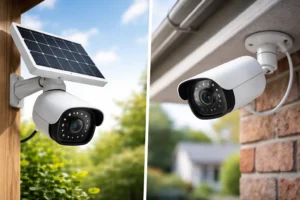
- Position panels separately from cameras if possible
Many systems now allow detached solar panels connected via cable. That flexibility helps tremendously.
How Many Hours of Sunlight Do Solar Cameras Need?
Most solar security cameras perform best with around 4 to 6 hours of good sunlight daily.
That does not necessarily mean six hours of intense direct sunlight every single day. It means sufficient overall solar exposure to recharge the battery properly.
Lower-power cameras may require less.
Feature-heavy cameras may require more.
Factors That Change Sunlight Requirements
Several things influence charging needs:
- Camera resolution
- Recording frequency
- Motion activity levels
- Spotlight usage
- Battery size
- Weather conditions
A quiet backyard camera records far less activity than a busy driveway camera facing traffic all day.
Usage patterns affect power consumption significantly.
Seasonal Weather Changes Matter
Summer performance and winter performance are rarely identical.
During summer:
- Longer daylight hours help charging
- Stronger sunlight improves efficiency
- Batteries recharge faster
Winter introduces challenges:
- Shorter daylight hours
- Lower sun angles
- Increased cloud cover
- Snow accumulation
This is one reason why buyers in northern climates should prioritize larger batteries and efficient panels.
Underpowered systems often fail first during winter.
Common Reasons Solar Cameras Stop Charging Properly
When people search “do solar cameras need direct sunlight,” they are often troubleshooting existing problems.
Usually, the issue involves one of several common mistakes.
Dirty Solar Panels
Dust buildup matters more than you think.
Pollen, leaves, bird droppings, and grime reduce solar efficiency over time. Even thin surface debris can limit charging capability.
Cleaning panels periodically helps restore performance quickly.
Simple maintenance goes a long way.
Excessive Motion Recording
Busy environments create constant battery drain.
Examples include:
- Streets with traffic
- Windy trees triggering motion
- Busy sidewalks
- Constant animal activity
Frequent recording events force the camera to consume far more energy than expected.
Adjusting sensitivity settings often improves battery life immediately.
Poor Wi-Fi Signal
Weak Wi-Fi connections can indirectly drain batteries faster because cameras repeatedly attempt reconnection.
A stable connection improves overall energy efficiency.
Best Places to Install Solar Cameras
Some locations naturally work better for solar-powered systems.
Excellent Residential Locations
Good installation areas include:
- Driveways
- Garage roofs
- Backyard fences
- Open side yards
- Front entryways with sun exposure
The key is balancing visibility, security coverage, and solar charging access.
Ideal Commercial Applications
Solar CCTV cameras perform especially well in:
- Construction sites
- Parking lots
- Remote warehouses
- Agricultural properties
- Equipment yards
These locations often lack convenient electrical wiring, making solar solutions incredibly attractive.
Off-Grid Security Is Where Solar Cameras Shine
This is where solar systems truly become impressive.
For remote locations without electrical infrastructure, solar cameras provide tremendous flexibility.
Great examples include:
- Farms
- Cabins
- RV storage lots
- Rural gates
- Hunting properties
Running traditional electrical wiring to these locations can become extremely expensive.
Solar eliminates much of that hassle.
Tips to Improve Solar Camera Efficiency
Want better performance? Start here.
Optimize Solar Panel Positioning
Track where sunlight hits throughout the day.
Many people install cameras quickly without evaluating actual sun exposure patterns. Morning sun alone may not be enough.
Aim for the longest possible daily exposure.
Reduce Unnecessary Battery Drain
Lower power consumption whenever possible.
Helpful adjustments include:
- Shorter recording clips
- Reduced spotlight activation
- Smart AI detection zones
- Lower notification frequency
Small changes create major battery improvements.
Clean Panels Regularly
Maintenance matters.
Wipe panels gently using:
- Soft cloths
- Water
- Non-abrasive cleaning methods
Avoid harsh chemicals that could damage the surface coating.
Are Solar Cameras Reliable Year-Round?
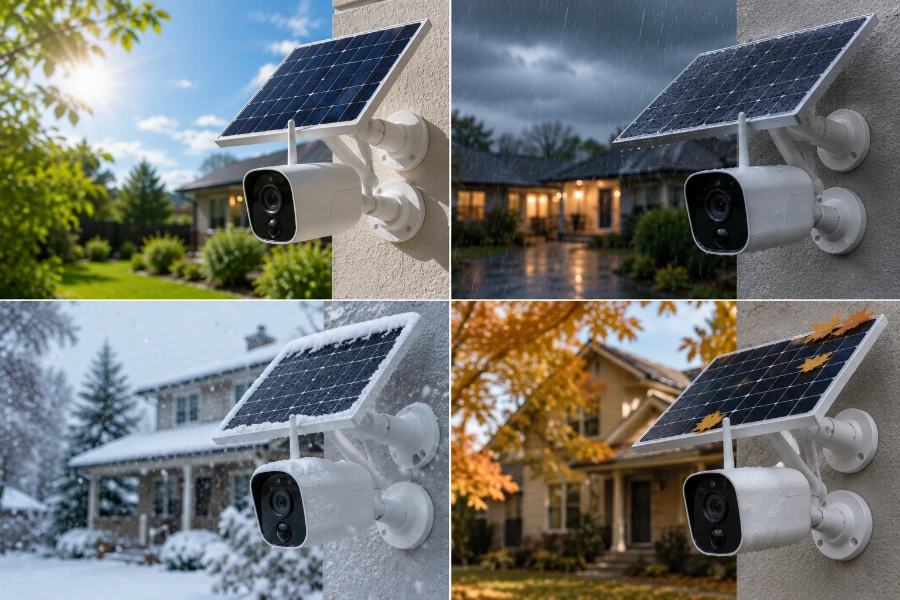
In many cases, yes.
Modern solar security cameras have improved dramatically over the past several years. Better batteries, smarter software, and more efficient solar panels have made them far more dependable.
Still, expectations should remain realistic.
Solar Cameras Are Excellent For:
- Motion-triggered surveillance
- Remote locations
- Flexible installations
- Wire-free setups
- Moderate traffic environments
Wired Cameras Are Better For:
- Continuous 24/7 recording
- Extremely busy environments
- Critical enterprise surveillance
- Areas with poor sunlight exposure
There is no perfect solution for every scenario.
The best system depends on the environment.
Comparing Solar Cameras and Wired Security Cameras
| Feature | Solar Cameras | Wired Cameras |
| Installation Complexity | Easier | More difficult |
| Dependence on Sunlight | Yes | No |
| Mobility | Excellent | Limited |
| Long-Term Energy Cost | Lower | Higher |
| Best for Remote Areas | Excellent | Poor |
| Continuous Recording | Limited | Excellent |
Each system has strengths.
The smartest buyers evaluate the environment first before choosing either option.
What to Look for When Buying a Solar Camera
If you are shopping now, focus on these features.
Large Battery Capacity
Bigger batteries improve reliability during bad weather.
Efficient Solar Panels
High-efficiency panels generate more power from limited sunlight.
Smart Motion Detection
AI-powered detection reduces unnecessary recording activity.
Weather Resistance
Outdoor systems should handle:
- Rain
- Heat
- Snow
- Wind
- Humidity
Flexible Solar Panel Placement
Detachable solar panels provide better installation flexibility.
That feature alone can dramatically improve charging consistency.
Final Thoughts
So, do solar cameras need direct sunlight?
Not constantly. But they definitely perform best when they receive strong direct sunlight regularly.
Modern solar cameras can still function using indirect daylight and cloudy conditions thanks to rechargeable battery storage. However, poor placement, heavy shade, weak batteries, and excessive power consumption can quickly create charging problems.
The key is realistic planning.
Choose the right camera for your environment. Install the solar panel where it receives meaningful daylight exposure. Adjust settings intelligently. Maintain the equipment periodically.
Do that, and a solar CCTV system can provide reliable security for years without requiring complicated electrical wiring.
That is exactly why solar security cameras continue growing in popularity. They offer flexibility, convenience, and surprisingly strong performance when installed correctly.
FAQs
No. Most solar cameras only need several hours of good sunlight exposure daily to keep their batteries charged.
Yes. Solar panels still collect energy during cloudy conditions, although charging efficiency is lower compared to direct sunlight.
Yes! Solar cameras use rechargeable batteries that store energy during the day and power the camera overnight.
Most systems perform best with around 4 to 6 hours of sunlight per day, depending on battery size and camera activity.
They can work in partial shade, but heavy or constant shade may prevent the battery from charging properly.
Not necessarily. However, shorter daylight hours and snow buildup can reduce charging performance during winter months.
Common causes include poor panel placement, excessive motion recording, weak Wi-Fi signals, or dirty solar panels.
Yes, many modern solar cameras are reliable year-round when installed correctly and paired with adequate battery capacity.
Many models allow separate solar panel placement, which helps position the panel in a sunnier location for better charging.
It depends on the environment. Solar cameras are excellent for flexible and remote installations, while wired systems are better for continuous 24/7 recording.