Security cameras have changed fast over the last few years. Bulky wired systems are slowly losing ground to smarter, cleaner, and more flexible solutions. One product getting serious attention right now is the 360 degree solar camera. And honestly, it makes sense.
People want wide coverage. They want fewer blind spots. They want something easy to install without digging trenches for power cables or paying huge electricity bills every month. A modern 360 degree solar camera checks nearly all those boxes.
For homeowners, business owners, construction managers, farmers, and even cabin owners, these cameras are becoming one of the most practical outdoor security solutions available today. One device can monitor a huge area while running primarily on sunlight. That changes everything!
If you’re considering upgrading your security setup, understanding how these systems actually work — and where they shine — can save you money, frustration, and installation headaches later.
What Is a 360 Degree Solar Camera?
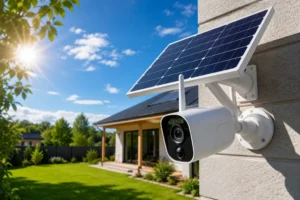
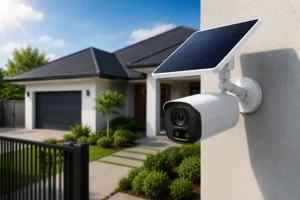
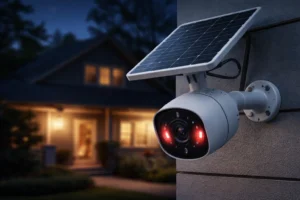
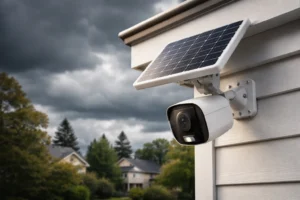
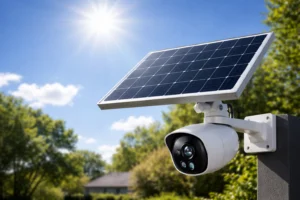
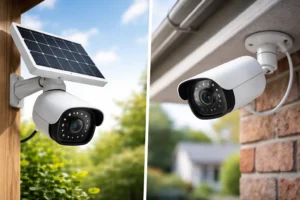
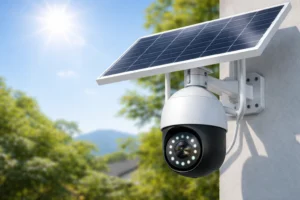
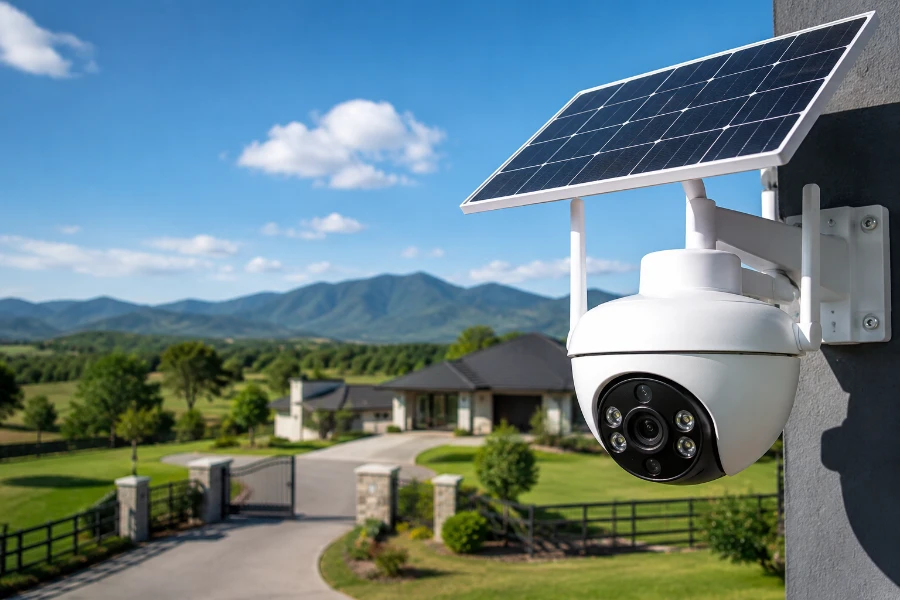
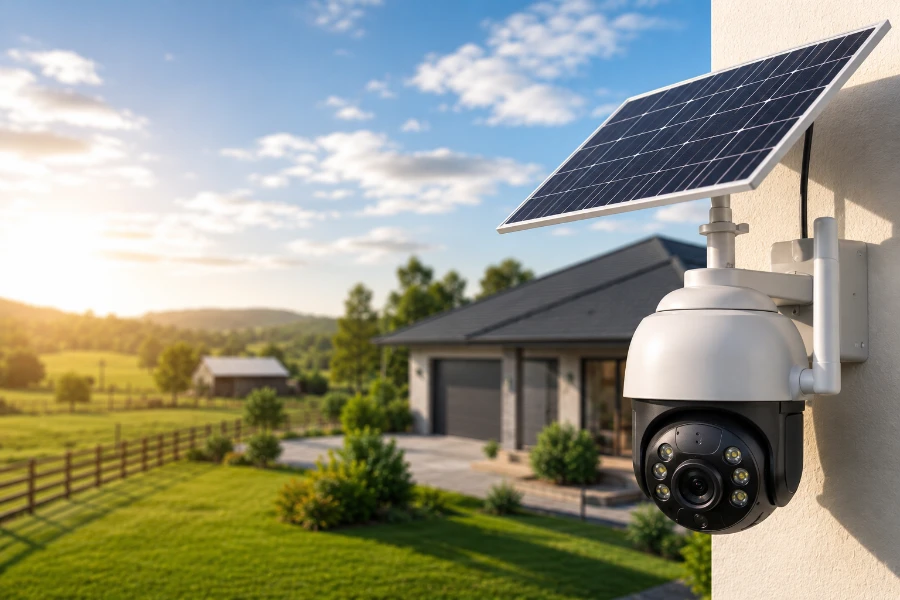
A 360 degree solar camera is a wireless security camera designed to provide panoramic viewing coverage while being powered by solar energy. Instead of relying entirely on traditional electrical wiring, the camera uses solar panels and rechargeable batteries to stay operational.
The “360 degree” part refers to its ability to monitor an extremely wide area. Some models achieve this with fisheye lenses. Others use dual-lens or rotating PTZ systems.
The result?
Far fewer blind spots compared to standard fixed-position CCTV cameras.
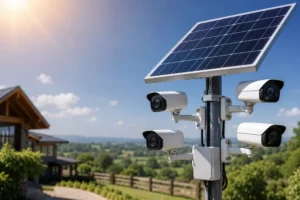
Traditional cameras usually point in one direction only. That means large properties often require several cameras installed at different angles. A panoramic solar camera can reduce the number of devices needed while simplifying installation.
That’s a major reason why demand keeps rising.
How a 360 Degree Solar Camera Works
The technology behind these systems is surprisingly straightforward.
The solar panel captures sunlight during the day. That energy charges an internal rechargeable battery, which powers the camera both day and night.
Most systems include:
- Solar panel
- Rechargeable lithium battery
- Wide-angle or rotating camera lens
- Motion detection sensors
- Wireless connectivity
- Mobile app integration
Many modern cameras also support:
| Feature | Purpose |
| AI Human Detection | Reduces false alerts |
| 4G LTE Connectivity | Works without WiFi |
| Cloud Storage | Remote footage access |
| Two-Way Audio | Real-time communication |
| Color Night Vision | Better nighttime detail |
Once installed, the camera continuously monitors the area or activates when motion is detected.
Some advanced models can even track movement automatically across the viewing area. That’s especially useful for large outdoor spaces.
Modern solar charging systems also rely heavily on advances in photovoltaics, allowing smaller panels to generate more usable power for outdoor surveillance equipment.
Why 360 Degree Solar Cameras Are Becoming So Popular
People are tired of complicated installations.
That’s really the heart of it.
Running electrical lines through walls, ceilings, or outdoor spaces can become expensive fast. Add labor costs, trenching, waterproofing, and power requirements, and traditional surveillance systems suddenly become a much bigger project than expected.
A 360 degree solar camera eliminates much of that hassle.
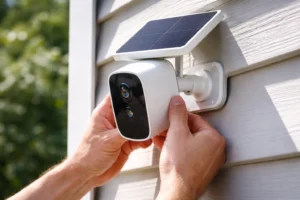
You can mount it almost anywhere sunlight reaches the solar panel. No nearby outlet required. No extensive rewiring and no monthly energy drain.
For remote locations, that flexibility is huge.
I’ve seen these systems used in places where traditional CCTV simply wouldn’t be practical:
- Farms
- Construction sites
- Remote cabins
- Vacant lots
- Parking areas
- Outdoor storage yards
- Ranch properties
The combination of panoramic viewing and solar charging makes these cameras incredibly versatile.
Key Features That Matter Most
Not all solar cameras are equal. Some perform exceptionally well. Others struggle under real-world conditions.
These are the features that actually matter.
Panoramic Viewing Capability
Coverage is the entire point.
A good 360 degree solar camera should minimize blind spots while maintaining usable image quality across the viewing area.
Some cameras provide:
- 180-degree panoramic viewing
- Full 360-degree fisheye coverage
- Motorized PTZ rotation
Wide-angle coverage works especially well for:
- Driveways
- Parking lots
- Front yards
- Warehouses
- Open fields
The fewer cameras you need, the lower your total installation cost becomes.
Battery Capacity
Battery performance often determines whether the camera feels reliable or frustrating.
A larger battery helps maintain operation during:
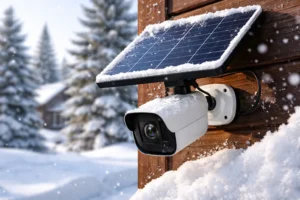
- Cloudy weather
- Rainy seasons
- Winter months
- High nighttime activity
Cheap cameras sometimes fail here.
A weak battery paired with a small solar panel can cause shutdowns after several low-sunlight days. That’s why battery size matters more than many buyers realize.
Motion Detection
Modern cameras are much smarter than older motion systems.
Good models can distinguish between:
- Humans
- Animals
- Vehicles
- Random environmental movement
That reduces false alerts significantly.
Nobody wants constant notifications every time leaves move in the wind.
Night Vision Performance
Outdoor security matters most at night.
That’s why infrared quality matters.
Higher-end models now include:
- Infrared night vision
- Color night vision
- Spotlights
- Smart low-light enhancement
A strong night system makes identifying faces, vehicles, and movement far easier.
Best Places to Install a 360 Degree Solar Camera
Placement affects everything.
Even an expensive camera performs poorly if installed incorrectly.
Residential Properties
For homes, popular installation points include:
- Garage areas
- Front entrances
- Backyard fences
- Rooftops
- Driveways
Mounting higher generally improves coverage while reducing tampering risk.
Farms and Rural Properties
This is where solar cameras really shine.
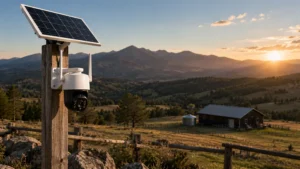
Many rural areas lack convenient power access. A 360 degree solar camera can monitor:
- Livestock areas
- Barn entrances
- Equipment storage
- Fence lines
- Remote gates
Because they operate wire-free, installation becomes dramatically easier.
Construction Sites
Construction theft is a serious issue.
Temporary surveillance systems powered by solar energy allow contractors to monitor:
- Equipment
- Materials
- Vehicle access
- Worker safety zones
And since the systems are portable, they can move as the project evolves.
Commercial Properties
Businesses use panoramic solar cameras for:
- Parking lots
- Loading docks
- Outdoor inventory areas
- Perimeter security
Wide coverage reduces the number of cameras needed across larger outdoor spaces.
Businesses deploying connected security devices should also follow cybersecurity recommendations outlined by the National Institute of Standards and Technology to help protect remote camera networks from unauthorized access.
Solar Panel Positioning Matters More Than Buyers Expect
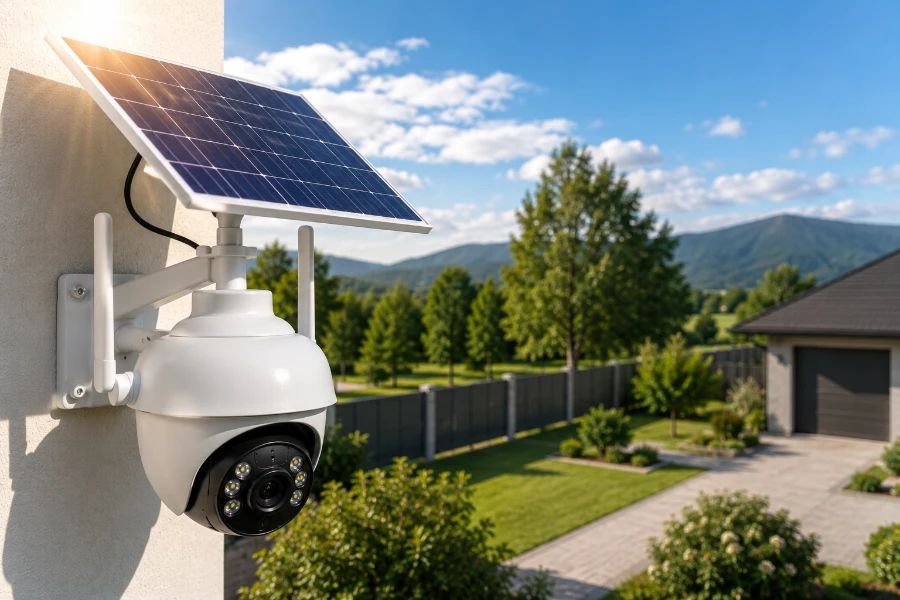
A lot of people underestimate this part.
Poor solar placement causes many camera performance problems.
For best results:
| Solar Placement Tip | Why It Matters |
| Face panels toward direct sunlight | Maximizes charging |
| Avoid tree shade | Prevents charging interruptions |
| Minimize dust buildup | Improves efficiency |
| Tilt correctly | Captures more sunlight |
| Avoid artificial shadows | Prevents weak charging |
Even the best camera struggles if the panel receives poor sunlight exposure.
In heavily shaded areas, LTE cameras with larger batteries often perform better than budget models.
FAQs
A 360 degree solar camera is a wireless security camera powered by solar energy that provides panoramic surveillance coverage with minimal blind spots.
Yes, most models include infrared or full-color night vision to monitor outdoor areas even in complete darkness.
Yes, built-in rechargeable batteries store power collected during sunny periods and help the camera operate during cloudy days.
Not always. Some models use 4G LTE SIM cards instead of WiFi, making them ideal for remote locations.
Battery life varies by model, but many can operate for several days without direct sunlight when fully charged.
Most outdoor models are weatherproof and designed to handle rain, dust, heat, and wind with IP65 or IP66 protection ratings.
The best location is an elevated area with strong sunlight exposure and a wide viewing angle, such as rooftops, poles, or garage exteriors.
Some advanced models support continuous recording, but many use motion-triggered recording to conserve battery power and storage space.
Yes, their panoramic coverage makes them especially useful for farms, parking lots, warehouses, construction sites, and large residential areas.
Very little. Occasional cleaning of the solar panel and camera lens, along with firmware updates, is usually enough to keep the system running efficiently.