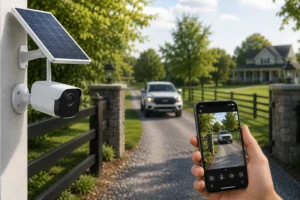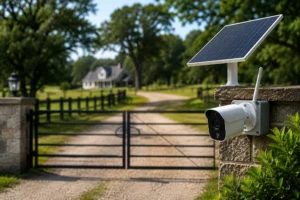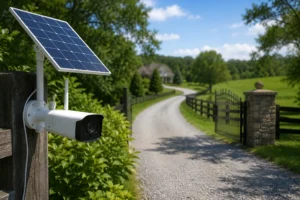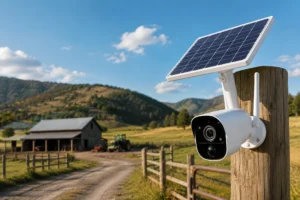
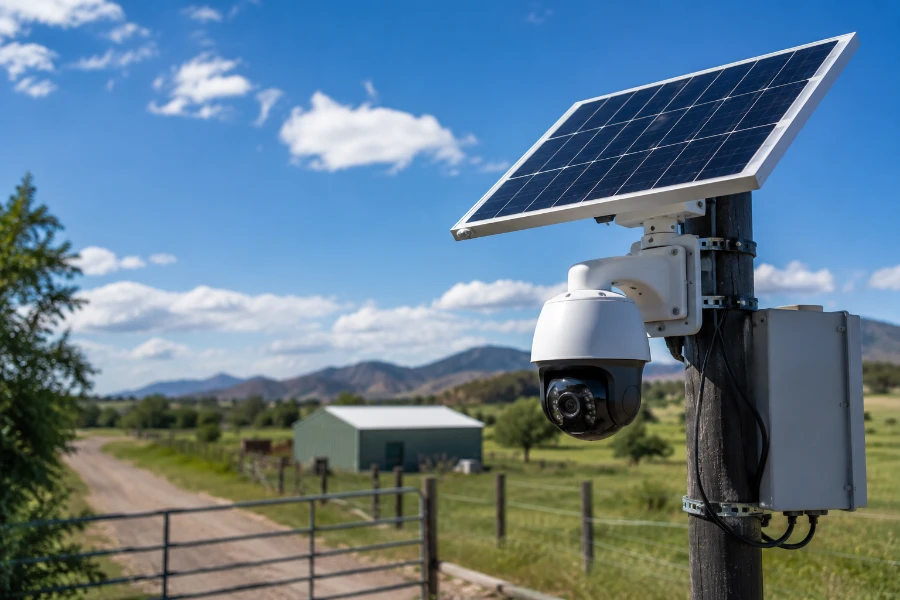
Security becomes much more complicated when there is no power source nearby.
A vacant construction site. A remote farm. A utility yard miles away from the nearest building. These locations often contain valuable assets, yet traditional security systems struggle to protect them. Running electrical lines can be expensive. Installing internet infrastructure may be impractical. In many cases, property owners simply accept the risk.
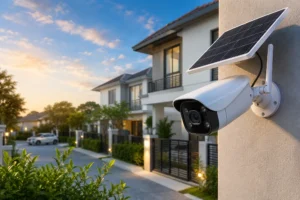
That is exactly why the off-grid security camera solar solution has become one of the fastest-growing surveillance technologies available today.
By combining solar energy, battery storage, wireless connectivity, and modern camera technology, these systems provide around-the-clock protection without relying on conventional utilities. They can be installed almost anywhere and begin protecting assets immediately.
For property managers, business owners, contractors, farmers, and security professionals, understanding how these systems work can make the difference between reactive security and proactive protection.
In this guide, we’ll explore everything you need to know about choosing, deploying, and maximizing an off-grid security camera solar system.
What Is an Off-Grid Security Camera Solar System?
An off-grid solar surveillance system operates independently from traditional power and internet infrastructure.
Instead of drawing electricity from the utility grid, the system generates its own power through solar panels. Energy is stored in rechargeable batteries and used to operate cameras, communications equipment, and monitoring systems.
The result?
A completely self-sufficient security solution.
How It Differs From Traditional Security Systems
Traditional security cameras typically depend on:
- Electrical wiring
- Wi-Fi networks
- Local internet connections
- Fixed installation locations
An off-grid security camera solar setup removes these dependencies.
The camera generates power through sunlight and transmits data using cellular networks or other wireless communication methods. This flexibility allows surveillance in locations where conventional systems simply cannot operate.
Core Components of an Off-Grid Solar Security Camera System
Every system contains several key elements.
| Component | Purpose |
| Solar Panel | Collects sunlight and generates electricity |
| Battery Bank | Stores energy for nighttime and cloudy conditions |
| Security Camera | Captures video and images |
| Cellular Modem | Provides remote connectivity |
| Mounting System | Secures equipment in place |
| Storage Platform | Saves footage locally or in the cloud |
Each component must work together to ensure reliable operation year-round.
Why Property Owners Are Choosing Off-Grid Solar Security Cameras
The appeal is easy to understand.
Traditional surveillance systems often require significant infrastructure investments before a single camera is installed.
Off-grid solar solutions change that equation.
No Utility Power Required
This is perhaps the biggest advantage.
Extending power lines across large properties can cost thousands of dollars. Remote locations often make electrical installation prohibitively expensive.
Solar-powered surveillance eliminates that challenge entirely.
Once installed, the system generates its own energy every day.
Lower Long-Term Costs
While there is an upfront investment, operating expenses are typically much lower.
There are no recurring electrical costs associated with powering the cameras.
For organizations managing multiple remote locations, these savings can become substantial over time.
For organizations evaluating remote surveillance options, understanding the differences between solar-powered systems and traditional security infrastructure is essential. Our guide on solar security camera systems explains important considerations when selecting a dependable solution for remote monitoring.
Faster Deployment
Time matters.
Whether securing a construction site or monitoring a remote asset, delays create vulnerability.
Since there is no need for trenching, electrical work, or extensive network installation, many off-grid security camera solar systems can be operational within hours rather than weeks.
Environmental Benefits
Security and sustainability can work together.
Solar-powered systems reduce dependence on traditional energy sources and help organizations meet environmental initiatives without sacrificing protection.
Improvements in solar technology continue to increase system efficiency and reliability. The U.S. Department of Energy provides extensive information about solar energy technologies and the innovations driving modern off-grid power systems.
Best Applications for Off-Grid Solar Security Camera Systems
Not every location requires off-grid surveillance.
But certain environments benefit enormously from it.
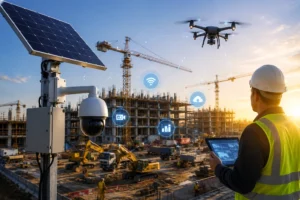
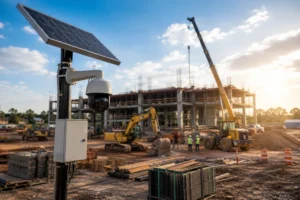
Construction Sites
Construction equipment is expensive.
Thefts can halt projects, increase insurance claims, and delay schedules.
Solar surveillance allows contractors to monitor:
- Heavy machinery
- Building materials
- Fuel storage
- Employee activity
- Site access points
Real-time alerts can help stop incidents before losses occur.
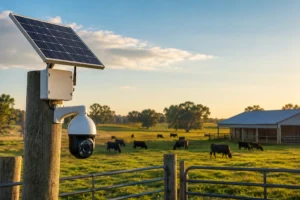
Farms and Agricultural Properties
Agricultural operations often cover vast areas.
Traditional security infrastructure rarely extends across entire properties.
An off-grid security camera solar system can monitor:
- Livestock
- Barns
- Equipment yards
- Feed storage
- Irrigation systems
- Remote gates
The ability to access live video from anywhere provides tremendous peace of mind.
Vacant Properties
Empty buildings attract problems.
Trespassing. Vandalism. Theft.
Vacant properties often remain unmonitored for extended periods, making them vulnerable targets.
Solar-powered cameras allow property owners to maintain visibility without maintaining active utilities.
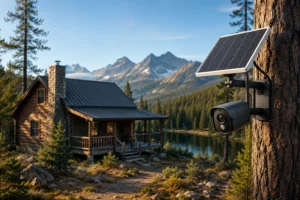
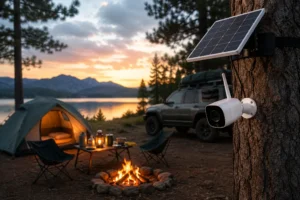
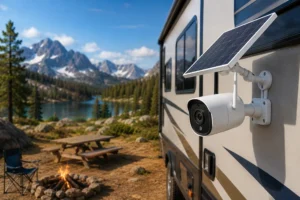
Remote Cabins and Vacation Homes
Many seasonal properties sit unattended for months.
Property owners want reassurance without paying for full-time utility services.
Solar surveillance fills this gap perfectly.
Owners can receive alerts instantly and verify conditions from their mobile devices regardless of location.
Utility and Infrastructure Sites
Critical infrastructure requires continuous monitoring.
Examples include:
- Water treatment facilities
- Electrical substations
- Solar farms
- Telecommunications towers
- Pipeline stations
Many of these assets exist in isolated areas where traditional security systems are difficult to deploy.
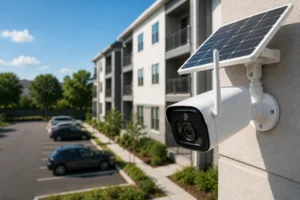
Storage Yards and Parking Areas
Open-air storage facilities face constant security risks.
Vehicles, trailers, equipment, and inventory are attractive targets.
Solar-powered surveillance can monitor these locations without requiring costly infrastructure upgrades.
How Off-Grid Solar Security Cameras Work
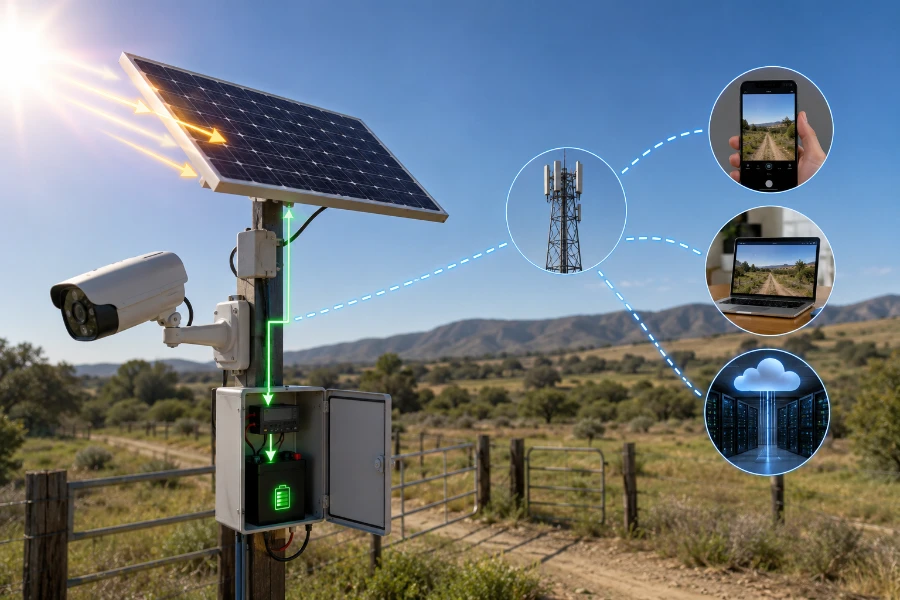
Understanding the technology helps buyers make better decisions.
Fortunately, the process is surprisingly straightforward.
Solar Energy Collection
During daylight hours, solar panels absorb sunlight and convert it into electrical energy.
This electricity powers the camera while simultaneously charging the battery system.
Even moderate sunlight can generate substantial energy when panels are properly sized.
Solar panels rely on the photovoltaic effect to convert sunlight into usable electricity. Understanding this principle helps explain why modern off-grid surveillance systems can operate efficiently with minimal external resources.
Battery Energy Storage
The battery acts as the system’s reserve fuel tank.
When sunlight disappears, stored energy keeps everything running.
Quality systems are designed with enough battery capacity to maintain operation through multiple cloudy days.
This backup capacity is critical.
A camera that only works when the sun shines isn’t truly providing security.
Motion Detection Technology
Most modern systems use intelligent motion detection.
Instead of recording continuously, cameras can activate when activity occurs.
Benefits include:
- Reduced power consumption
- Lower storage requirements
- Faster incident review
- More relevant alerts
Advanced systems now incorporate AI-powered detection capable of distinguishing between people, vehicles, and environmental movement.
Cellular Connectivity
Remote monitoring requires communication.
Because Wi-Fi is often unavailable in remote locations, most off-grid systems rely on cellular networks.
Popular options include:
- 4G LTE
- 5G
- Private cellular networks
This connectivity allows users to:
- View live footage
- Receive alerts
- Access recordings
- Manage settings remotely
The result feels similar to managing a traditional security system, even when the camera is located miles away from civilization.
Essential Features to Look For in an Off-Grid Security Camera Solar System
Not all solar surveillance systems perform equally.
Some excel in harsh conditions. Others struggle when weather, connectivity, or power demands increase.
Before investing in an off-grid security camera solar solution, evaluate these features carefully.
High-Definition Video Quality
Image quality matters.
Footage that cannot clearly identify people, vehicles, or incidents has limited value.
Consider these common options:
| Resolution | Best Use |
| 1080p | Basic property monitoring |
| 2K | Enhanced detail and clarity |
| 4K | High-security environments |
For most remote sites, 2K resolution provides an excellent balance between image quality and storage efficiency.
Night Vision Capabilities
Security threats rarely follow business hours.
Look for systems offering:
- Infrared night vision
- Color night vision
- Long-range illumination
- Low-light enhancement
Clear nighttime footage often becomes the most important evidence after an incident.
Battery Capacity
Battery performance directly affects reliability.
A properly designed system should continue operating during cloudy conditions, storms, and extended periods of low sunlight.
When comparing systems, pay attention to:
- Battery size
- Estimated runtime
- Recharge speed
- Battery chemistry
Larger battery reserves typically provide greater resilience.
Weather Resistance
Outdoor environments can be unforgiving.
Rain, dust, snow, wind, humidity, and extreme temperatures place constant stress on equipment.
Look for:
- IP66 or IP67 ratings
- Corrosion-resistant enclosures
- UV-resistant materials
- Wide operating temperature ranges
Durability becomes especially important when equipment is located far from maintenance personnel.
Smart Alerts and Analytics
Modern surveillance is becoming smarter.
Advanced systems can provide:
- Human detection
- Vehicle detection
- Intrusion zones
- Line-crossing alerts
- Scheduled monitoring
These capabilities help reduce false alarms while improving situational awareness.
Remote Access
A security system is only useful if you can access it when needed.
Look for mobile and web platforms that allow:
- Live viewing
- Video playback
- Alert management
- Camera configuration
- User permissions
Remote management saves time and reduces site visits.
Two-Way Audio
This feature is often overlooked.
However, the ability to communicate directly through the camera can help deter trespassers and improve site management.
A simple voice warning may prevent a minor issue from becoming a major problem.
Advantages of Off-Grid Solar Security Cameras Over Traditional Systems
Many organizations initially compare solar surveillance to conventional camera systems.
Once the numbers are reviewed, the benefits become obvious.
Lower Installation Costs
Traditional security deployments often require:
- Electrical trenching
- Utility connections
- Network infrastructure
- Specialized contractors
These costs add up quickly.
An off-grid security camera solar installation can dramatically reduce infrastructure expenses.
Flexible Deployment
Need surveillance at a remote gate?
A temporary jobsite?
A newly acquired property?
Solar-powered systems can often be relocated and redeployed with minimal effort.
That flexibility creates long-term value.
Easy Expansion
As security requirements grow, additional cameras can be added without major infrastructure upgrades.
Organizations can scale surveillance gradually rather than committing to large upfront investments.
Minimal Infrastructure Requirements
The fewer dependencies a system has, the fewer potential failure points exist.
Solar-powered cameras operate independently, reducing vulnerability to power outages and infrastructure disruptions.
Common Challenges and How to Overcome Them
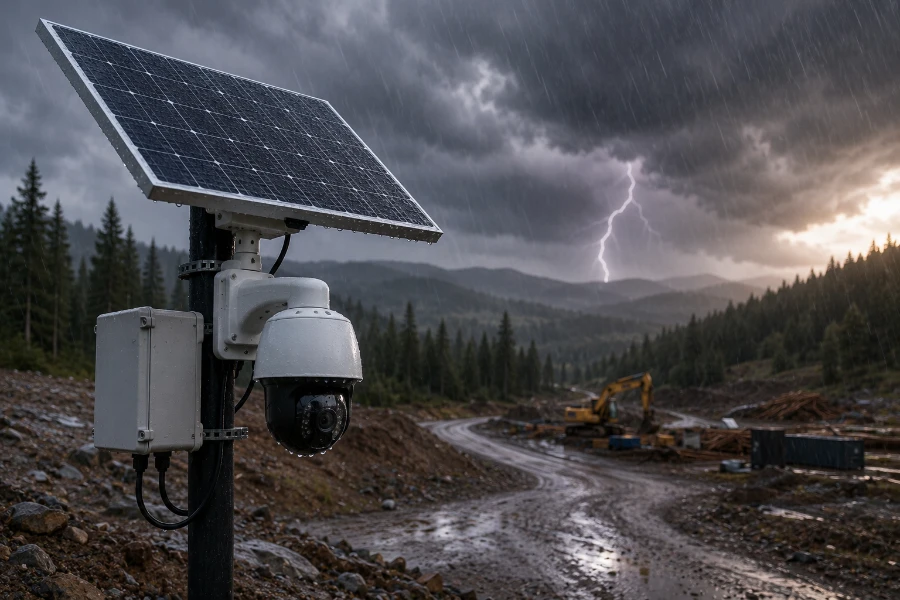
Every technology has limitations.
Understanding them helps ensure success.
Limited Sunlight Exposure
Heavy shade can reduce charging efficiency.
To maximize performance:
- Position solar panels facing optimal sunlight
- Avoid tree cover when possible
- Use adjustable mounting brackets
- Consider larger solar panels in low-sunlight regions
Proper placement often solves most charging concerns.
Cellular Signal Limitations
Connectivity challenges occasionally occur in remote areas.
Before deployment:
- Test cellular coverage
- Verify carrier availability
- Consider external antennas
- Evaluate signal strength at installation height
A site survey can prevent future frustration.
Battery Performance During Extreme Weather
Very cold temperatures can reduce battery efficiency.
Very hot temperatures can shorten battery lifespan.
Mitigation strategies include:
- Weather-rated battery enclosures
- High-quality lithium batteries
- Proper ventilation
- Manufacturer-recommended operating conditions
Storage Management
Video files accumulate quickly.
Organizations should establish retention policies that balance storage costs with security requirements.
Options include:
- Motion-only recording
- Cloud storage
- Local storage
- Hybrid storage solutions
How to Choose the Right Off-Grid Security Camera Solar Solution
Selecting the right system starts with understanding your objectives.
Not every property has the same requirements.
Assess Property Size
Larger properties often require:
- Multiple cameras
- Higher-capacity solar systems
- Expanded connectivity coverage
Start by identifying critical monitoring zones.
Define Security Goals
Ask simple questions:
- What am I protecting?
- What incidents concern me most?
- Do I need real-time alerts?
- Is evidence collection the primary objective?
The answers will guide equipment selection.
Evaluate Environmental Conditions
Weather influences system performance.
Consider:
- Average sunlight
- Temperature extremes
- Wind exposure
- Dust levels
- Seasonal changes
The environment should influence hardware selection.
Consider Connectivity Requirements
Connectivity is often the deciding factor in remote surveillance performance. If your location lacks Wi-Fi access, a 4G solar security camera may provide the most reliable method for receiving live alerts and viewing footage from virtually anywhere.
Plan for Future Growth
Security needs rarely remain static.
Choose systems that allow:
- Additional cameras
- Expanded storage
- Software upgrades
- Enhanced analytics
Scalability protects your investment.
Installation Best Practices
A quality system deserves a quality installation.
Conduct a Site Assessment
Before mounting anything:
- Identify security risks
- Map surveillance coverage
- Evaluate sunlight exposure
- Test cellular connectivity
Preparation prevents costly mistakes.
Optimize Solar Panel Placement
Solar panels should receive maximum daily sunlight.
Avoid:
- Roof overhangs
- Trees
- Utility poles
- Nearby structures
Even partial shading can reduce efficiency.
Position Cameras Strategically
Focus on:
- Entry points
- Access roads
- Equipment storage
- High-value assets
Avoid pointing cameras directly into the sun whenever possible.
Test Everything
Before leaving the site:
- Verify charging performance
- Confirm remote access
- Test alerts
- Review video quality
- Check recording functionality
A few minutes of testing can prevent weeks of troubleshooting.
The Future of Off-Grid Solar Surveillance
The technology continues to improve rapidly.
Several trends are shaping the next generation of systems.
Artificial Intelligence
AI is becoming increasingly powerful.
Future systems will provide:
- Better threat detection
- Faster event classification
- Reduced false alarms
- Automated reporting
Improved Battery Technology
Battery advancements are increasing:
- Runtime
- Reliability
- Lifespan
- Charging efficiency
This will further improve system independence.
More Efficient Solar Panels
Solar efficiency continues to improve.
As panel performance increases, systems will generate more power from smaller footprints.
Smarter Remote Management
Cloud-based platforms are becoming more sophisticated.
Administrators can manage entire fleets of cameras from a single dashboard while receiving actionable intelligence in real time.
Conclusion
Security challenges do not disappear simply because a property lacks electricity or internet access.
In fact, remote locations often face greater risks.
That is why the demand for the off-grid security camera solar solution continues to grow. These systems combine renewable energy, wireless communication, intelligent monitoring, and flexible deployment into a powerful security platform capable of protecting assets virtually anywhere.
Whether you are securing a construction site, farm, utility facility, storage yard, or vacation property, solar-powered surveillance offers a practical alternative to traditional infrastructure-heavy security systems.
Most importantly, the right off-grid security camera solar system delivers something every property owner wants: visibility, control, and peace of mind—even in the most remote locations.
FAQs
An off-grid security camera solar system uses solar panels and batteries to power surveillance cameras without relying on utility electricity or wired internet connections.
Yes. Energy collected during the day is stored in batteries, allowing the cameras to continue operating after sunset and during low-light conditions.
No. Many systems use 4G LTE or 5G cellular networks, making them ideal for remote locations without Wi-Fi access.
The runtime depends on battery capacity, but quality systems can often operate for several days during cloudy weather or limited sunlight.
Absolutely. They are commonly used for construction sites, farms, utility facilities, storage yards, and other commercial properties.
Most systems require occasional cleaning of the solar panel, battery inspections, and periodic checks to ensure cameras and connectivity are functioning properly.
Most systems perform best with several hours of direct sunlight daily, although battery storage helps maintain operation when sunlight is limited.
Yes. Larger solar and battery configurations can support multiple cameras, depending on overall power consumption requirements.
Most professional-grade systems are designed for outdoor use and feature weather-resistant housings capable of handling rain, dust, heat, and cold temperatures.
Focus on video quality, battery capacity, solar panel efficiency, weather resistance, connectivity options, and remote monitoring capabilities.