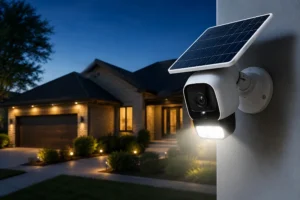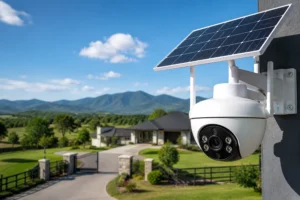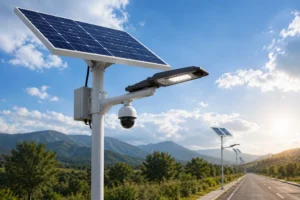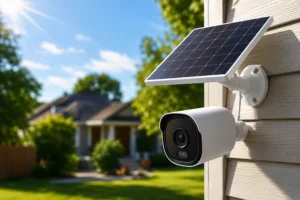
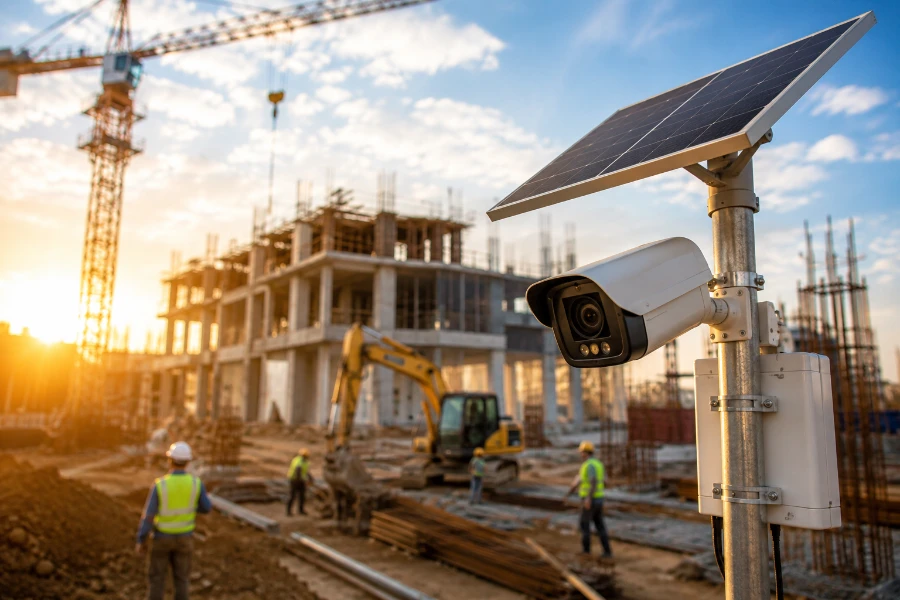
Construction sites attract attention. Not always the good kind.
Expensive machinery sits exposed overnight. Copper wiring disappears. Fuel gets siphoned. Tools vanish. And when nobody is watching, even a small theft can snowball into major project delays. That is exactly why the demand for a solar powered security camera for construction site protection has exploded over the last few years.
I have seen contractors spend thousands replacing stolen materials while simultaneously dealing with missed deadlines and insurance headaches. The frustrating part? Most of it could have been prevented with proper surveillance.
Traditional wired cameras sound good on paper. Then reality hits. No permanent power. Constantly changing layouts. Mud. Dust. Temporary fencing. Half-built structures. Running cables across an active site quickly becomes expensive and impractical.
That is where solar surveillance changes the game.
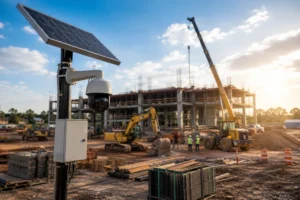
A modern solar powered security camera for construction site use can operate without permanent electricity, provide remote monitoring around the clock, and move with the project as work progresses. Flexible. Fast. Efficient. And honestly, far more practical for temporary job sites.
This guide breaks down exactly how these systems work, what features matter most, where to place cameras, and how construction companies can use them to improve both security and site management.
Why Construction Sites Need Better Security
Construction sites are easy targets because they combine three things criminals love:
- Valuable equipment
- Limited supervision
- Temporary infrastructure
Even small residential projects can contain tens of thousands of dollars in exposed assets. Commercial projects? Sometimes millions.
Here are some of the most commonly stolen construction site items:
| Frequently Stolen Items | Why They Are Targeted |
| Power tools | Easy to resell |
| Copper wiring | High scrap value |
| Fuel | Simple to siphon |
| Heavy equipment | Extremely valuable |
| Lumber and materials | High replacement costs |
| Generators | Portable and expensive |
And theft is only one problem.
Construction companies also deal with:
- Trespassing
- Illegal dumping
- Vandalism
- False liability claims
- Equipment misuse
- Safety violations
Without reliable monitoring, incidents become difficult to investigate. People argue over timelines. Insurance claims drag out. Evidence disappears.
That creates financial pressure fast.
What Is a Solar Powered Security Camera for Construction Site Monitoring?
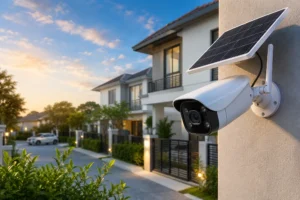
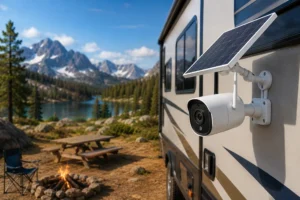
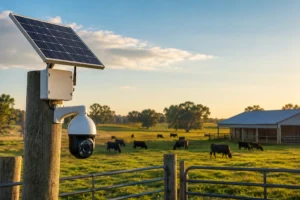
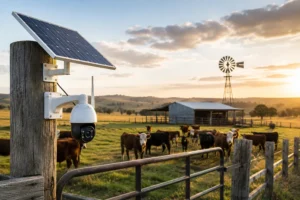
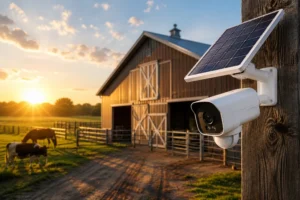
At its core, a solar powered security camera for construction site monitoring is a wireless surveillance system powered primarily by solar energy instead of fixed electrical infrastructure.
The setup usually includes:
- Solar panel
- Rechargeable battery
- Wireless security camera
- Cellular or WiFi connectivity
- Cloud or local video storage
Simple concept. Big impact.
During daylight hours, the solar panel charges the battery. The battery then powers the camera continuously, including overnight operation.
Modern systems are surprisingly advanced. Many now include:
- AI motion detection
- License plate recognition
- Two-way audio
- Remote app access
- Color night vision
- Smart alerts
This is not the grainy surveillance footage people remember from fifteen years ago. The technology has evolved dramatically. Some advanced monitoring systems even use imaging principles similar to Photogrammetry to improve spatial awareness, object tracking, and detailed site documentation across large construction environments.
Why Solar Cameras Work So Well on Construction Sites
No Dependence on Permanent Power
This is the biggest advantage. Period.
Many construction sites do not have reliable electrical infrastructure during early project phases. Running temporary wiring costs money and creates logistical headaches.
Solar eliminates that problem entirely.
You can deploy cameras immediately without waiting for electrical work to finish.
That speed matters.
Cameras Can Move With the Project
Construction sites constantly evolve.
One week, the main risk area is material storage. Two months later, it is the equipment yard or perimeter fencing.
A solar powered security camera for construction site flexibility can easily relocate as priorities shift.
No trenching. No rewiring and no major downtime.
That adaptability saves enormous amounts of labor over long projects.
Lower Installation Costs
Traditional CCTV systems often require:
- Electricians
- Cabling
- Trenching
- Network setup
- Power infrastructure
Solar systems reduce much of that complexity.
Installation becomes faster and cheaper, especially on remote projects.
Remote Monitoring Anywhere
Project managers do not need to physically visit sites every night to check security.
Modern systems allow remote access through mobile apps and desktop dashboards.
That means you can:
- View live footage
- Review recordings
- Receive motion alerts
- Monitor multiple job sites
- Respond immediately to incidents
Honestly, this alone changes operations dramatically for many contractors.
Features That Actually Matter
Not all cameras are built for construction environments.
Consumer-grade systems often fail quickly when exposed to dust, heat, rain, and constant movement.
Here are the features worth prioritizing.
High-Resolution Video
Clarity matters more than people realize.
Blurry footage rarely helps identify suspects or vehicles.
Look for:
- Minimum 1080p resolution
- Preferably 2K or 4K
- Wide dynamic range
- Strong low-light performance
If your footage cannot identify faces or license plates, it loses much of its value.
Night Vision Performance
Most theft happens after hours.
Weak nighttime footage defeats the purpose of surveillance entirely.
There are two primary night vision types:
| Type | Advantage |
| Infrared Night Vision | Reliable in complete darkness |
| Color Night Vision | Better detail and evidence quality |
Color night vision is becoming increasingly popular for construction sites because it improves identification accuracy.
Motion Detection With AI Filtering
Older systems triggered alerts constantly.
Wind. Animals. Moving tarps. Shadows.
That creates alert fatigue fast.
AI-powered motion detection filters events more intelligently by identifying:
- Humans
- Vehicles
- Equipment movement
Fewer false alerts means teams pay attention when real threats appear.
Weather Resistance
Construction sites are rough environments.
Cameras should withstand:
- Heavy rain
- Dust
- Heat
- Wind
- Vibration
Look for IP65 or IP66 weather ratings at minimum.
Cheap cameras often fail long before the project finishes.
Battery Backup Capacity
Solar charging is important. Battery storage matters just as much.
Several cloudy days can reduce charging performance.
Strong systems include large battery reserves that maintain operation during poor weather conditions.
Always ask vendors about real-world battery runtime.
Not marketing estimates. Actual field performance.
Best Places to Install Construction Site Cameras
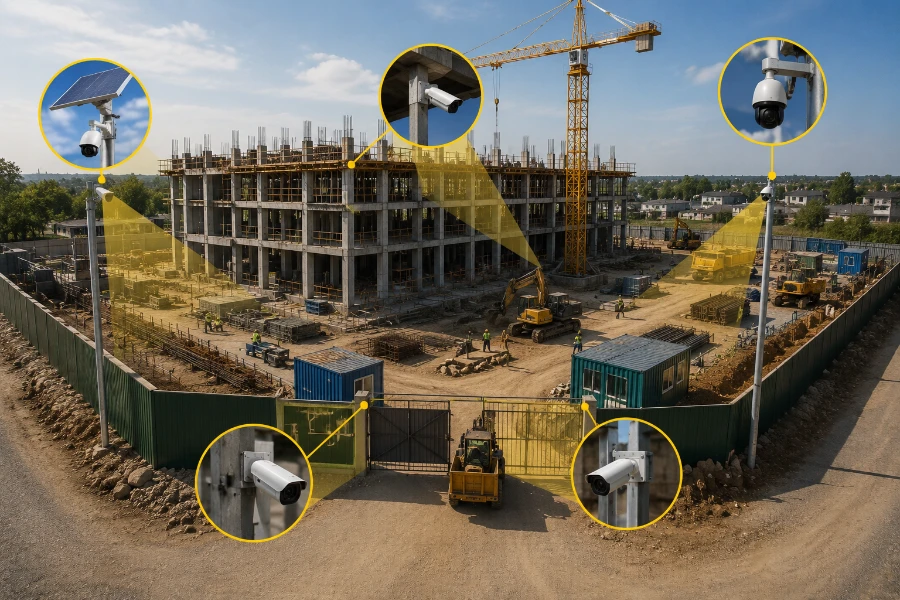
Placement determines whether a system succeeds or fails.
I have seen expensive surveillance setups become nearly useless because cameras were poorly positioned.
Prioritize these locations first.
Entry and Exit Points
Monitor:
- Vehicle traffic
- Worker arrivals
- Deliveries
- After-hours access
Gate coverage creates accountability immediately.
Equipment Storage Areas
Heavy machinery and expensive tools should always remain under active surveillance.
Especially overnight.
Material Staging Zones
Lumber. Copper. HVAC materials. Roofing supplies.
These areas attract theft constantly.
Site Perimeters
Perimeter cameras help detect trespassing before intruders reach core work zones.
Early detection matters.
Elevated Mounting Positions
Higher camera placement improves:
- Coverage range
- Tamper resistance
- Visibility
Poles, temporary towers, and elevated site structures work well.
How Solar Surveillance Improves Site Management
Security is only part of the equation.
A solar powered security camera for construction site operations can also improve project management itself.
That is where things get interesting.
Remote Progress Monitoring
Project managers can verify:
- Deliveries
- Crew activity
- Workflow progression
- Equipment usage
Without driving across town.
For companies managing multiple projects simultaneously, this becomes incredibly valuable.
Safety Oversight
Cameras help monitor:
- PPE compliance
- Restricted areas
- Hazard zones
- Unsafe behavior
Footage also becomes useful when reviewing accidents or disputes. Construction companies should also ensure monitoring procedures align with recommendations from the Occupational Safety and Health Administration (OSHA) Construction Safety guidelines, particularly when overseeing high-risk zones and worker safety practices.
Documentation for Insurance Claims
Video evidence strengthens claims involving:
- Theft
- Vandalism
- Weather damage
- Injuries
- Equipment incidents
Good documentation often accelerates insurance investigations significantly.
Internet Connectivity Options
Construction sites vary widely in connectivity.
Some urban projects have strong WiFi access. Others sit in remote areas with almost no infrastructure.
That is why connectivity planning matters.
WiFi-Based Systems
Best for:
- Urban projects
- Sites with temporary office trailers
- Areas with strong internet infrastructure
Lower ongoing costs. But limited range.
Cellular LTE Cameras
These systems use mobile networks instead of traditional internet.
Ideal for:
- Remote sites
- Infrastructure projects
- Temporary builds
- Rural developments
Many modern solar powered security camera for construction site systems now rely heavily on 4G and 5G connectivity.
Hybrid Systems
Some setups combine both WiFi and cellular backup for added reliability.
More expensive. But highly dependable.
Common Mistakes Contractors Make
Even good equipment can fail if implemented poorly.
Here are the biggest mistakes I repeatedly see.
Choosing Cheap Consumer Cameras
Residential cameras are rarely designed for construction environments.
They often fail due to:
- Dust intrusion
- Extreme temperatures
- Poor battery performance
- Weak mounting hardware
Commercial-grade equipment costs more upfront but lasts far longer.
Ignoring Solar Positioning
Solar panels need proper sunlight exposure.
Poor placement reduces charging efficiency dramatically.
Avoid:
- Shade
- Obstructions
- Improper panel angles
Even strong systems struggle without adequate sunlight.
Poor Camera Angles
Too high? Faces become unrecognizable.
Too low? Easy to vandalize.
Balanced positioning matters.
Not Planning Storage Properly
Video retention requirements vary.
Some contractors need only a few days of footage. Others require months for compliance or insurance purposes.
Understand:
- Cloud storage costs
- Local storage limitations
- Data retention needs
Before deployment.
Comparing Solar Cameras vs Traditional CCTV
Here is where solar systems often separate themselves.
| Feature | Solar Security Cameras | Traditional Wired CCTV |
| Installation Speed | Fast | Slower |
| Mobility | Excellent | Limited |
| Infrastructure Needs | Minimal | Extensive |
| Remote Site Suitability | Excellent | Challenging |
| Scalability | Flexible | Complex |
| Upfront Costs | Moderate | Often higher |
Traditional CCTV still works well for permanent facilities.
But temporary construction sites operate differently.
Flexibility wins.
Industries Benefiting From Solar Construction Surveillance
This technology is spreading rapidly across multiple sectors.
Residential Construction
Home builders use cameras to monitor:
- Material deliveries
- Subcontractor activity
- Neighborhood security
Commercial Developments
Large commercial projects often deploy multi-camera systems across expansive sites.
Infrastructure Projects
Roadwork. Bridges. Pipelines.
These remote projects are ideal candidates for solar surveillance.
Energy Sector Construction
Solar farms and wind energy developments frequently rely on off-grid security systems during construction phases.
Future Trends in Construction Site Security
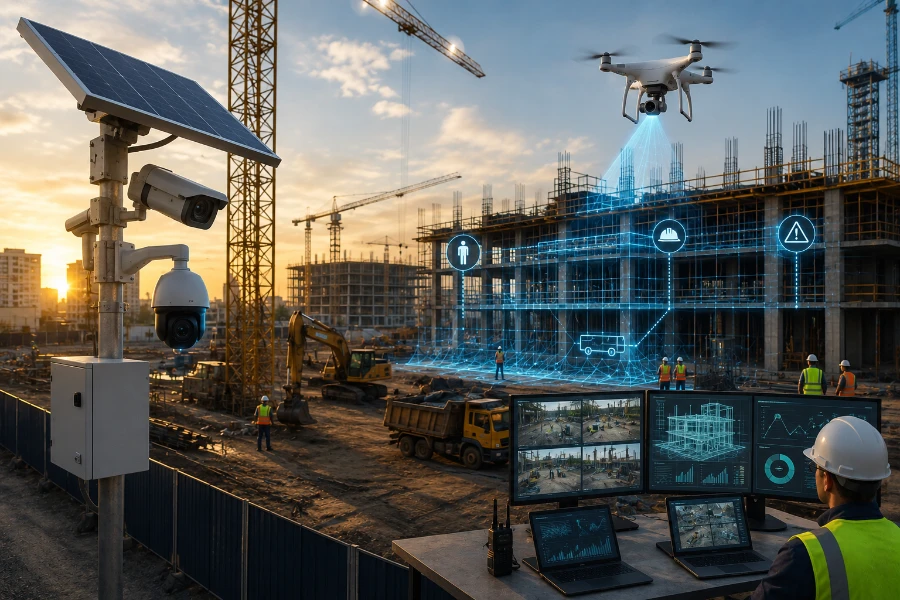
Construction surveillance is evolving fast.
Several technologies are reshaping the industry already.
AI Threat Detection
Systems increasingly recognize suspicious behavior automatically.
Not just motion.
Actual threat patterns.
Smart Analytics
Future platforms will analyze:
- Worker movement
- Productivity trends
- Safety compliance
- Equipment utilization
Automatically.
Drone Integration
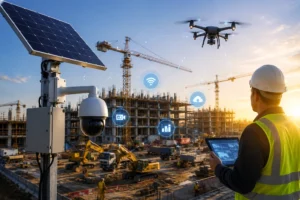
Some sites already combine fixed solar cameras with drone surveillance for broader coverage.
That trend will continue growing.
Fully Autonomous Security Systems
Eventually, many systems may combine:
- Solar power
- AI analytics
- Cellular connectivity
- Autonomous alerts
- Remote deterrence
Into highly automated security ecosystems.
The construction industry is moving there faster than many people realize.
How to Choose the Right Solar Security System
Every site is different.
Before purchasing a system, ask these questions:
How Large Is the Site?
Small residential builds need different coverage than industrial projects.
Is Reliable Internet Available?
Connectivity affects system selection heavily.
What Are the Primary Risks?
Some sites prioritize theft prevention. Others focus more on safety monitoring or liability documentation.
Will Cameras Need Frequent Relocation?
Highly dynamic sites benefit from portable systems.
What Is the Budget?
Cheap systems often become expensive after repeated failures or poor footage quality.
Focus on long-term value instead.
Final Thoughts
Construction sites are chaotic by nature. Valuable assets sit exposed. Schedules shift constantly. Risks evolve daily.
That is exactly why flexible surveillance matters so much.
A modern solar powered security camera for construction site monitoring provides something traditional systems often struggle to deliver: mobility, independence, and real-world practicality.
No permanent wiring. No dependence on completed infrastructure and no waiting around for power installation before protecting the site.
Just scalable security that moves with the project.
And honestly, that flexibility is becoming essential.
As construction projects become larger, timelines tighter, and theft more sophisticated, contractors are under increasing pressure to protect both assets and operations. Solar surveillance systems help bridge that gap efficiently.
The companies investing in proactive monitoring today are not simply buying cameras.
They are protecting schedules. Reducing liability. Improving oversight. And creating stronger operational control across every stage of construction.
FAQs
The camera uses solar panels to charge built-in batteries during the day, allowing it to operate continuously without permanent electrical power.
Yes. Most commercial-grade systems include battery backups that can keep cameras running for several days with limited sunlight.
Not always. Some systems use local storage, while others connect through WiFi or 4G LTE cellular networks for remote monitoring.
Most professional systems are designed with weather-resistant ratings like IP65 or IP66 to handle rain, dust, and harsh outdoor conditions.
Many solar powered camera systems can be installed within a few hours since they do not require trenching or permanent wiring.
Yes. Recorded footage provides visual evidence that can support theft claims, accident investigations, and property damage documentation.
High-traffic areas like entry gates, equipment storage zones, perimeter fencing, and material staging areas are usually the best starting points.
Yes. One major advantage of a solar powered security camera for construction site flexibility is that cameras can be relocated as the project evolves.
Absolutely. Most systems include infrared or color night vision technology for clear overnight monitoring and recording.
Focus on video quality, battery capacity, weather resistance, connectivity options, night vision performance, and remote monitoring capabilities.